
Products compared
AMD
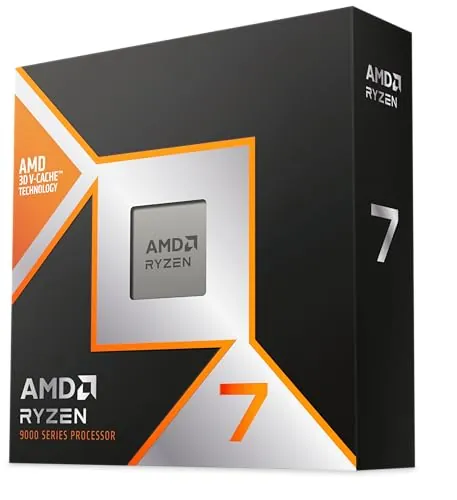
AMD Ryzen 7 9800X3D Desktop Processor
The selected listing is the boxed Ryzen 7 9800X3D, part 100-100001084WOF. AMD lists 8 cores, 16 threads, 96 MB L3 cache, 120 W default TDP, and the AM5 socket. Its thermal solution is not included.
Model Ryzen 7 9800X3D / 100-100001084WOF
Amazon ASIN B0DKFMSMYK
AMD
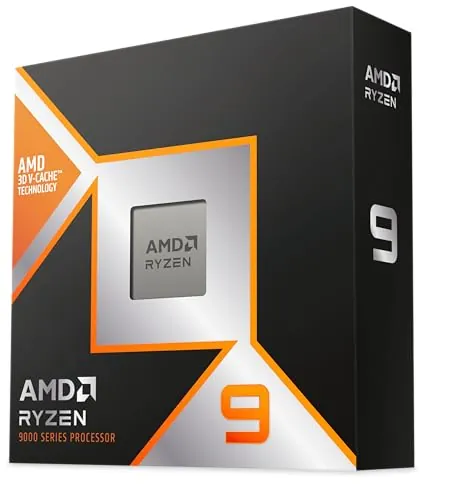
AMD Ryzen 9 9950X3D Gaming and Content Creation Processor
The selected listing is the boxed Ryzen 9 9950X3D, part 100-100000719WOF. AMD lists 16 cores, 32 threads, 128 MB L3 cache, 170 W default TDP, and the AM5 socket. Its thermal solution is not included.
Model Ryzen 9 9950X3D / 100-100000719WOF
Amazon ASIN B0DVZSG8D5
Differences that matter
What matters most to you?
Choose a priority to see what it changes.
Sources for A bounded gaming result, not a universal gaming rank
Sources for Core/thread headroom and the tested creator workloads
Sources for AM5 platform, memory population, and cooler planning
Sources for Cache labels: keep L3 distinct from L2 plus L3
Start with the work, not the tier number
The useful distinction is between workloads, not simply Ryzen 7 versus Ryzen 9. In Tom's Hardware's cited 16-game average, the two were nearly tied; in the review's named multi-threaded creator tests, the 9950X3D led. If the PC is mainly for gaming, start by checking whether that test suite resembles your games and setup. If rendering or encoding is a frequent task, compare the creator tests to the software you use.
The review's gaming result used 1080p High/Ultra settings and an RTX 5090. It reported 195.5 average FPS for the 9800X3D and 194.8 for the 9950X3D, with 1% lows of 134 and 136 FPS. Those summary figures do not erase game-by-game differences or transfer automatically to another GPU, resolution, or system.
When threaded creator work is a regular part of the build
AMD lists 8 cores and 16 threads for the 9800X3D, versus 16 cores and 32 threads for the 9950X3D. The additional listed cores are useful context for a mixed-use decision, but core count by itself does not quantify a program's speed. The more direct comparison here is the cited head-to-head: it reports the 9950X3D ahead by 43% in Cinebench 2024 multi-core, 69% in POV-Ray multi-core, and 63% in HandBrake x265.
Those are specific multi-threaded tests. Consider the 9950X3D if you repeatedly run similar rendering or encoding jobs; check independent results for your exact software if it is a different workload. A one-off export or a loosely similar app is not enough to assume the same margin.
Check cooling and memory as part of the platform plan
Both processors use AM5 and AMD lists the same chipset support families for each. The board still needs the correct processor support and BIOS. AMD's memory table lists DDR5-5600 with two DIMMs and DDR5-3600 with four DIMMs on both product pages; validate the exact kit and motherboard configuration rather than assuming one memory rating applies to every population.
AMD lists 120 W default TDP for the 9800X3D and 170 W for the 9950X3D. These are default TDP ratings, not measured whole-system consumption. Both boxed parts list no thermal solution, and AMD recommends a liquid cooler for optimal performance. Budget for a separate cooling solution, then check the exact cooler's support and your case layout; the published guidance is not a test of a particular cooler.
Product details
AMD Ryzen 7 9800X3D Desktop Processor
- Core and cache specification
- 8 cores / 16 threads; 8 MB L2 and 96 MB L3 Source
- Platform, rated power, and cooler
- AM5; 120 W default TDP; thermal solution not included; AMD recommends a liquid cooler for optimal performance Source
- Official memory-speed table
- DDR5; listed maximum is DDR5-5600 for two DIMMs and DDR5-3600 for four DIMMs Source
AMD Ryzen 9 9950X3D Gaming and Content Creation Processor
- Core and cache specification
- 16 cores / 32 threads; 16 MB L2 and 128 MB L3 Source
- Platform, rated power, and cooler
- AM5; 170 W default TDP; thermal solution not included; AMD recommends a liquid cooler for optimal performance Source
- Official memory-speed table
- DDR5; listed maximum is DDR5-5600 for two DIMMs and DDR5-3600 for four DIMMs Source
Before you buy
Community discussions
A buyer lists creator apps before weighing the higher-tier CPU
AMD Ryzen 9 9950X3D Gaming and Content Creation Processor
A shopper comparing the 9950X3D and 9800X3D wanted to know how each would fit their regular Blender rendering and video-editing work.
What to check
List the applications and recurring tasks that take up your time. Look for comparable results in those programs before choosing.
A prebuilt buyer considers switching CPUs for named software
AMD Ryzen 9 9950X3D Gaming and Content Creation Processor
A buyer reconsidering the CPU in a prebuilt order named both 3D design software and gaming as planned uses.
What to check
If you are changing a prebuilt order, check what changes besides the CPU. Compare evidence for the applications and games you expect to use most.
Common questions
Did the 9950X3D clearly beat the 9800X3D in the cited gaming average?
No. Tom's Hardware's reported 16-game geometric mean was 195.5 average FPS for the 9800X3D and 194.8 for the 9950X3D at 1080p High/Ultra with an RTX 5090. The 1% lows and individual games differed, so this is one test setup rather than a universal result.AMD Ryzen 7 9800X3D vs AMD Ryzen 9 9950X3D faceoff
When is the 9950X3D's creator-test lead relevant?
When your recurring work resembles the named multi-threaded tests. In that review, the 9950X3D led Cinebench 2024 multi-core, POV-Ray multi-core, and HandBrake x265; those reported percentages should not be assumed for other applications.AMD Ryzen 7 9800X3D vs AMD Ryzen 9 9950X3D faceoff
Can I reuse the same AM5 motherboard for either processor?
AMD lists both processors for AM5 and the same supported chipset families, but verify the specific motherboard's CPU support and BIOS version. A matching socket does not by itself establish firmware support for a particular board.AMD Ryzen 7 9800X3D Desktop ProcessorAMD Ryzen 9 9950X3D Gaming and Content Creation Processor
Does either boxed CPU include a cooler?
AMD lists the thermal solution as not included for both. Its product pages recommend a liquid cooler for optimal performance, so plan a separate cooling solution and check its support for the exact processor and case.AMD Ryzen 7 9800X3D Desktop ProcessorAMD Ryzen 9 9950X3D Gaming and Content Creation Processor
Sources and scope
The gaming figures are from Tom's Hardware's named 16-game geometric mean at 1080p High/Ultra with an RTX 5090; the creator figures are its specified multi-threaded Cinebench 2024, POV-Ray, and HandBrake x265 tests. These are not tests for this guide and do not predict every game, application, system, or settings combination. AMD's default TDP is a processor rating, not measured system power or cooling demand. AMD lists no thermal solution in either boxed CPU and recommends a liquid cooler for optimal performance; this is the maker's guidance, not a claim that one specific cooler is required or sufficient. Verify the exact motherboard BIOS and memory configuration before a build.
Related comparisons
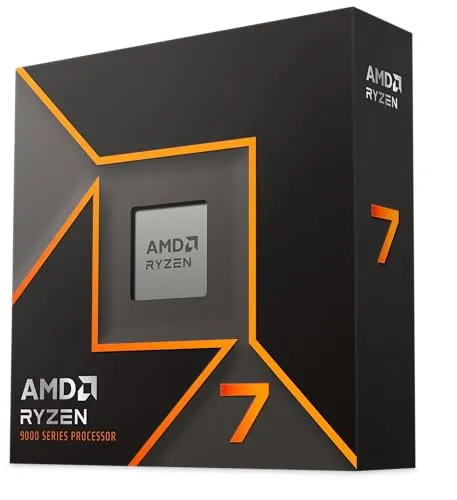
Ryzen 7 9700X vs 9800X3D: Cache, Cooling and AM5 Build Checks
The 9700X lists 32 MB L3, a 65W default TDP and AMD’s premium-air-cooler recommendation; the 9800X3D lists 96 MB L3 with second-generation 3D V-Cache, a 120W default TDP and AMD’s liquid-cooler recommendation. Both have the same listed AM5 chipset families and DDR5 limits. Check your exact board’s BIOS support; this guide does not claim a workload performance winner.
Read comparison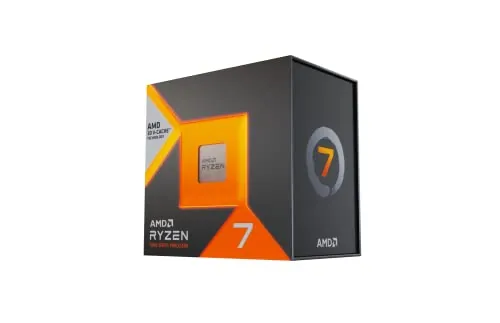
Ryzen 7 9800X3D vs 7800X3D: Choose by Your Games, Not the Generation Label
TechSpot’s September 2025 retest put the Ryzen 7 9800X3D 8% ahead on average across 12 games at both medium and ultra settings, but its title results ranged from about 1% in Marvel Rivals to 20–23% in Baldur’s Gate 3. Three separate game shader-compilation tests also favored the 9800X3D by 4–14%. Those are review results, not a prediction for every PC. Both chips are AM5 8-core/16-thread X3D processors, so an existing board’s exact CPU list and BIOS may matter more to an upgrade decision than the generation name.
Read comparison