
Products compared
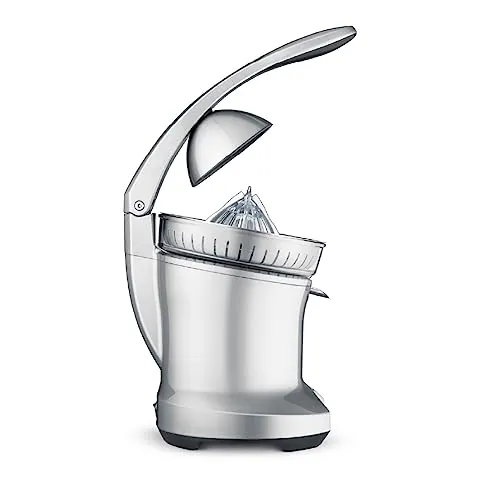
Breville
Breville the Citrus Press BCP600SIL
Motorized citrus press with a handle-operated arm, magnetic fruit dome, one-size cone, internal juice collector, filter, and flip-up anti-drip spout. Breville's manual says to set a separate vessel below the spout.
Model BCP600SIL
Amazon ASIN B00VGGVQ5K
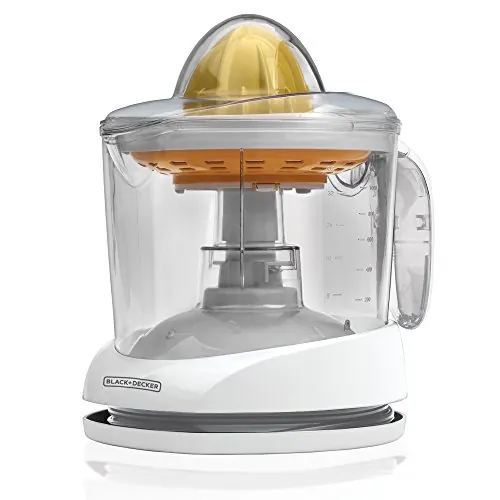
BLACK+DECKER
BLACK+DECKER CJ625 Citrus Juicer
Pressure-activated citrus juicer with small and large cones, adjustable pulp control, and a clear marked collection pitcher with handle and pouring spout. Official product page and manual state 34 oz / 1 liter.
Model CJ625
Amazon ASIN B001EU9VSM
Differences that matter
What matters most to you?
Choose a priority to see what it changes.
Sources for How the fruit is pressed and the motor starts
Sources for After-use cleaning
Choose the pressing motion you want to repeat
The Breville BCP600SIL places a magnetic dome on the cut fruit and uses a handle-operated arm. Its manual says the cone starts after the arm comes down and the dome applies pressure, then stops when the arm is raised. The BLACK+DECKER CJ625 starts when you press the fruit half directly onto its cone and stops when pressure is released; the manual also describes automatic reverse rotation at intervals and when pressure is released and reapplied.
Both machines need your hand to keep pressure on the fruit. The documented difference is where you apply that pressure, not proof that one is easier, extracts more, or produces better juice.
Decide whether you want to pour from a pitcher
Breville's cone and internal collector send juice through a spout; its manual asks you to set a glass or vessel below the spout before starting. Flip the spout up afterward to use its anti-drip position. Plan to supply the final cup or measuring vessel yourself.
CJ625 collects juice in its included clear pitcher, with printed measurements, a handle, and a pour spout. BLACK+DECKER's page and manual specify 34 ounces / 1 liter. For recipe quantities, read the jar's markings rather than assuming a particular amount of juice will come from a given number of fruit halves.
Match the cone and pulp controls to your fruit
Breville describes a single cone for citrus and a magnetic fruit dome; its filter catches pulp and seeds. CJ625 supplies two cones, with its manual recommending the small one for smaller fruit such as lemons and the larger one for grapefruit. It also has adjustable pulp control.
If you want a choice of pulp setting or separate cone sizes, CJ625 makes those options explicit. The sources do not show that either setup yields more juice, so treat this as a parts and preference decision.
Measure your space before assigning a permanent spot
Breville's current US page lists the BCP600 at 8 × 12.8 × 18 inches (W × D × H), while its US manual lists different outside measurements: 9.5 × 7.5 × 18.1 inches (L × W × H). Do not use either set alone to decide a tight fit; measure the unit and allow room to lift and lower the arm.
BLACK+DECKER lists the CJ625 at 7.75 × 7.75 × 9.5 inches (L × W × H). The manual gives no numeric operating clearance. This information is not enough to call one universally smaller or better for your counter.
Compare the parts you will rinse after juicing
Breville says to switch off and unplug before cleaning. Its cone, juice collector, filter, and fruit dome can go on the dishwasher's top shelf; wipe the base and press arm with a damp cloth. The manual suggests rinsing removable parts soon after use to clear wet pulp.
CJ625's manual allows top-rack washing for the cover, small and large cones, strainer, and pitcher. Separate the cones, then wipe the base without immersing it. Both manufacturers describe removable-part dishwashing and a wipe-clean base, so there is no sourced cleaning-time winner.
Product details
Breville the Citrus Press BCP600SIL
The BCP600SIL is the documented fit if you prefer to lower a handle and dome over the fruit and serve directly into a separate glass or vessel. It does not include the final receiving cup in the described collection path.
- Pressing
- Lower the handle and fruit dome onto a halved citrus fruit; the cone starts when pressure reaches the fruit. Lift the arm to stop. Source
- Collection
- Juice passes through an internal collector and spout into a separate vessel you place below; the spout flips up for its anti-drip position. Source
- Cleanup
- The cone, collector, filter, and magnetic fruit dome are removable and dishwasher-safe; wipe the base and press arm with a soft damp cloth. Source
- Placement
- The US product page lists 8 × 12.8 × 18 in (W × D × H); the manual gives different outside measurements. Confirm the actual unit's footprint before a close fit. Source
BLACK+DECKER CJ625 Citrus Juicer
The CJ625 is the documented fit if you want to press each fruit half directly onto a cone and collect, measure, and pour from the included pitcher. Its two cone sizes and adjustable pulp control add choices for fruit size and pulp preference.
- Pressing
- Press a halved citrus fruit directly onto the cone to start the juicer; it stops when pressure is released. The manual describes automatic reverse rotation at intervals and when pressure is released and reapplied. Source
- Fruit and pulp
- The small cone is recommended for smaller fruit such as lemons; the large cone is recommended for larger fruit such as grapefruit. The strainer has adjustable pulp control. Source
- Collection
- The clear pitcher locks onto the base, has measurement markings, a handle and pouring spout, and is listed by the manufacturer as 34 oz / 1 liter. Source
- Cleanup
- The manual allows top-rack dishwasher cleaning for the cover, cones, strainer, and pitcher; wipe the base and do not immerse it. Source
Before you buy
Common questions
Does the Breville include the glass that catches juice?
The BCP600 manual describes an internal collector feeding a spout and tells you to place a separate container under it before juicing. The listed collection path means you should supply the glass or vessel you want to use.The Citrus Press Instruction Book, model BCP600 (US/Canada/Mexico)
Which juicer gives more juice or takes less effort?
The sources do not compare measured yield or pressing force. They document different hand motions: lowering Breville's handle/dome or pressing fruit directly onto the CJ625 cone. Choose the method you prefer, not a promised extraction or effort advantage.Citrus Press - Citrus Fruit Juicer | Breville (US), BCP600The Citrus Press Instruction Book, model BCP600 (US/Canada/Mexico)CJ625 34 oz / 1 liter Use and Care Manual
Can I adjust pulp or change cones on the CJ625?
Yes. The CJ625 product page describes adjustable pulp control, and its manual recommends the smaller cone for smaller citrus and the larger cone for grapefruit. This documents setup options, not a comparative yield result.Citrus Juicer | BLACK+DECKER, model CJ625CJ625 34 oz / 1 liter Use and Care Manual
Are the motor bases dishwasher-safe?
No. Both manuals say to wipe the base rather than immerse it; the dishwasher guidance applies to removable parts. Follow the exact model's cleaning steps and unplug it before cleaning.The Citrus Press Instruction Book, model BCP600 (US/Canada/Mexico)CJ625 34 oz / 1 liter Use and Care Manual
Which machine fits a narrow countertop?
The reviewed sources do not establish a dependable footprint winner: Breville's product page and its manual give conflicting outside dimensions, and neither maker source gives a numeric operating clearance. Measure the actual unit and allow room for the press arm's movement.Citrus Press - Citrus Fruit Juicer | Breville (US), BCP600The Citrus Press Instruction Book, model BCP600 (US/Canada/Mexico)Citrus Juicer | BLACK+DECKER, model CJ625
Sources and scope
This is a source-based workflow comparison, not a citrus-yield or juicing-effort test. Neither manufacturer's documentation establishes a measured yield, pressing-force, speed, noise, cleaning-time, durability, or reliability winner. Breville's current US product page and BCP600 manual list conflicting outside dimensions; verify the physical unit before relying on a tight-space fit. The official CJ625 product page and manual state 34 oz / 1 liter, while the selected listing title says 32 oz; check the exact pitcher markings if the maximum batch amount is important.
Related comparisons
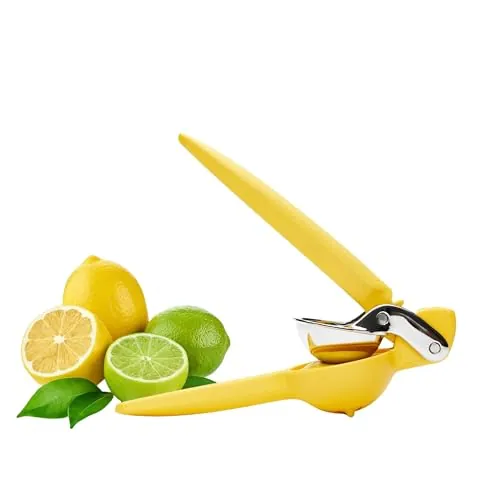
BLACK+DECKER CJ625 vs Chef’n FreshForce: Measured Pitcher or Hand Press?
The BLACK+DECKER CJ625 is a corded, pressure-activated reamer that collects juice in a marked pitcher; Chef’n FreshForce is a handheld geared press for lemon and lime halves. Compare where you want the juice to collect, how you prefer to press each half and the cleanup routine. The CJ625 manual and product page state 1 L / 34 oz, while the retailer title says 32 oz, so check the pitcher markings if volume matters.
Read comparison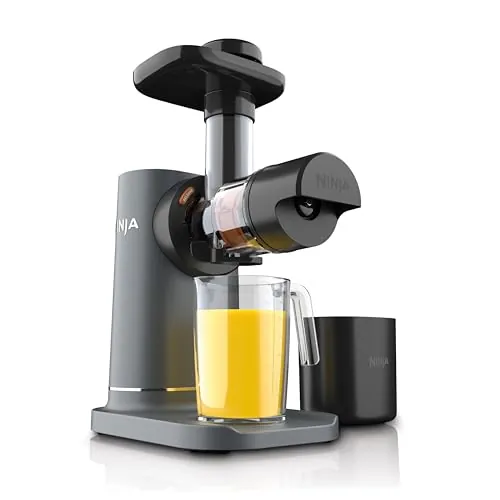
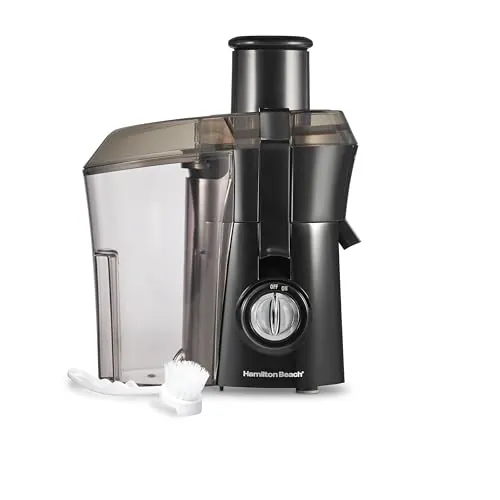
Ninja JC151 vs Hamilton Beach 67601A: Produce Prep, Filters and Cleanup
The Ninja NeverClog JC151 includes two interchangeable pulp filters and uses a gradual feed routine with prepared ingredients. Hamilton Beach's Big Mouth 67601A has a 3-inch round chute and stainless-steel micro-mesh cutter/strainer, but whole-food feeding still depends on what fits and the model's peeling and pitting directions. Compare your usual produce, filter setup and cleanup steps—not wattage or juicer type as a shortcut to a yield or taste winner. One Ninja page also conflicts on juice-jug size, so verify the exact seller packout if that capacity matters.
Read comparison