
Products compared
Cuisinart
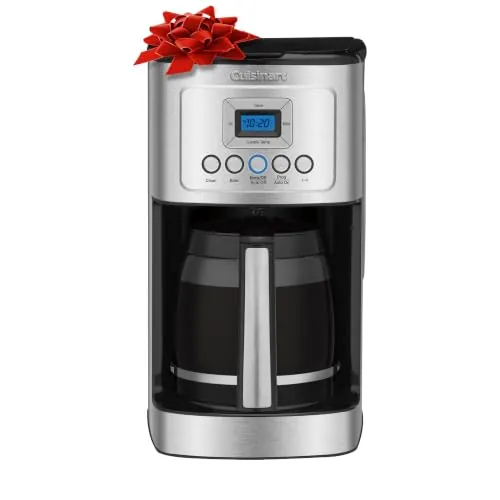
Cuisinart PerfecTemp DCC-3200 14-Cup Programmable Coffeemaker
Carafe-brewing model. Its DCC-3200P1 instruction booklet documents a 1–4-cup setting, Bold or Regular strength, Low/Medium/High carafe warming-plate settings and a 14-cup glass carafe. It does not document a separate single-mug brew path.
Model DCC-3200P1
Amazon ASIN B00MVWGQX0
Hamilton Beach
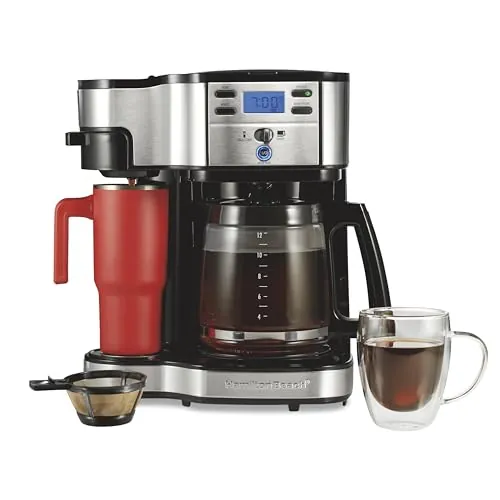
Hamilton Beach 2-Way Programmable Coffee Maker 49980RG
The exact 49980RG product page describes a single-cup route alongside a 12-cup glass carafe, two separate easy-fill reservoirs and an included single-serve mesh scoop. Its linked 2-Way Brewer guide says the machine brews only one side at a time and gives different care directions for the single-serve and carafe sides.
Model 49980RG
Amazon ASIN B00EI7DPPI
Differences that matter
What matters most to you?
Choose a priority to see what it changes.
Sources for Maker capacity labels
Choose by the serving vessel you reach for
The Cuisinart is the more direct fit when the household pours from a shared carafe but sometimes makes a smaller carafe batch: the P1 booklet lists a 1–4-cup setting and three warming-plate levels. The Hamilton Beach changes the workflow by adding a single-serve side beside its carafe. If you routinely alternate between an individual mug and a pot, that second path is the meaningful distinction; it is not evidence of better coffee or faster brewing.
The Hamilton Beach’s single-serve side is described for a cup or travel mug up to 14 oz. The manual says to brew one side at a time. Decide which vessel you plan to use, then verify it fits beneath the brew area and that you can reach the appropriate reservoir.
Read capacity labels as fill marks, not your mug count
The Cuisinart booklet calls its glass carafe 14 cups and shows 4–14 cup markings. Hamilton Beach defines its 12-cup carafe mark as 60 oz and separately lists the single-serve route up to 14 oz. Those labels help with planning, but they are not a controlled comparison of output or a guarantee that either “cup” matches your mug. Measure the vessel and batch you use most.
Hamilton Beach lists a 13.9 in high × 12.2 in wide × 11.1 in deep body. Check your counter’s depth and leave practical access for filling either reservoir, placing the mug, and lifting the carafe. The manufacturer dimensions describe the appliance body; they do not certify your specific counter layout.
Account for the care you will maintain
Cuisinart’s P1 booklet identifies #4 paper or gold-tone filter use and a charcoal water-filter replacement recommendation of every 60 days or 60 uses, with more frequent changes for hard water. Hamilton Beach uses two separate reservoirs and its Use & Care guide describes separate maintenance procedures for the single-serve and carafe sides.
Choose around the routine you expect to use. A carafe-only household can focus on the Cuisinart’s carafe controls and filter tasks; a household using both Hamilton Beach sides should be comfortable maintaining both paths. The written instructions do not tell us which takes less time or effort to clean.
Product details
Cuisinart PerfecTemp DCC-3200 14-Cup Programmable Coffeemaker
- Carafe capacity label
- 14-cup glass carafe; the booklet shows 4–14 cup markings. Source
- Small-batch and warming controls
- 1–4-cup setting, Bold/Regular strength and Low/Medium/High warming-plate temperature. Source
- Filter and water-filter care
- Accepts a #4 paper or gold-tone filter; booklet recommends changing the charcoal water filter every 60 days or 60 uses, more often with hard water. Source
Hamilton Beach 2-Way Programmable Coffee Maker 49980RG
- Single-serve and carafe routes
- Single serving up to 14 oz alongside a separately selected carafe side. Source
- Carafe fill mark
- The Use & Care guide defines the 12-cup mark as 60 oz; single-serve brewing is limited to one side at a time. Source
- Separate reservoirs
- Two separate easy-fill water reservoirs, one for each brewing side. Source
- Published body dimensions
- 13.9 in H × 12.2 in W × 11.1 in D; measure counter depth and space for mug/carafe access. Source
Before you buy
Community discussions
Switching from one-cup brewing to a carafe
Cuisinart PerfecTemp DCC-3200 14-Cup Programmable Coffeemaker
A Keurig user wanted to brew several servings for iced coffee at once and included the Cuisinart DCC-3200P1 on their shortlist.
What to check
Measure the volume you want to refrigerate and compare it with the carafe marks. If you also brew one mug at a time, check whether you want a separate single-serve side.
Common questions
Can the Hamilton Beach brew a mug and carafe at the same time?
No. Its Use & Care guide says the appliance brews only one side at a time.Hamilton Beach 2-Way Brewer Use & Care Guide 840199604
Does the Hamilton Beach 12-cup label mean twelve full mugs?
The manual defines its carafe 12-cup mark as 60 oz. Compare that stated amount with the vessel you serve from instead of assuming one maker cup equals one household mug.Hamilton Beach 2-Way Brewer Use & Care Guide 840199604
Which is set up for a smaller carafe batch?
The Cuisinart booklet documents a 1–4-cup setting while brewing into its carafe. The Hamilton Beach offers a separate single-serve side if you want an individual mug rather than a smaller carafe batch.Cuisinart PerfecTemp DCC-3200P1 Instruction BookletHamilton Beach 2-Way Coffee Maker, Single-Serve & 12 Cup Carafe, Stainless (49980RG)
What care should I plan for?
Cuisinart documents paper or gold-tone carafe filters and periodic charcoal water-filter replacement. Hamilton Beach gives distinct care instructions for the single-serve and carafe sides. Follow the exact booklet for your model.Cuisinart PerfecTemp DCC-3200P1 Instruction BookletHamilton Beach 2-Way Brewer Use & Care Guide 840199604
Sources and scope
This is a source-based feature-fit guide, not a brewing, taste, speed or cleanup test. The Cuisinart DCC-3200P1 booklet is Cuisinart-authored and available on ManualsLib. Hamilton Beach defines the 49980 carafe’s 12-cup mark as 60 ounces; compare the actual mug and serving size you use rather than assuming that a labeled cup equals a typical mug.
Related comparisons
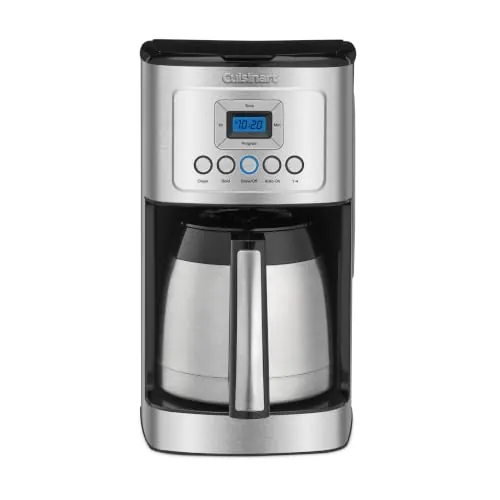
Cuisinart DCC-3200 vs DCC-3400NAS: Glass or Thermal Carafe?
The assigned DCC-3200P1 is the 14-cup glass-carafe choice with a warming plate and Low/Medium/High plate settings documented for the DCC-3200 family. The DCC-3400NAS is a 12-cup thermal-carafe model for serving from its insulated pot. Both manuals document a 1–4 cup setting and a water-level window; neither maker's cup count should be treated as your mug size. Match replacement carafes by exact model and part number before ordering.
Read comparison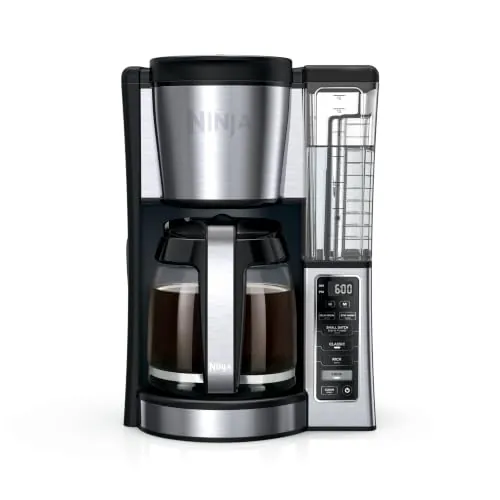
Cuisinart DCC-3200 vs Ninja CE251: Carafe Size, Filling and Cleanup
The Cuisinart DCC-3200 is listed with a 14-cup glass carafe and built-in water window; the Ninja CE251 is a 12-cup brewer with a reservoir you can lift out to fill. Both support scheduled brewing and up-to-four-hour keep-warm settings, but their cup markings are not standardized servings. Choose the refill and warming controls that suit your routine, and verify the exact Cuisinart revision if its family-manual controls decide the purchase.
Read comparison