
Products compared
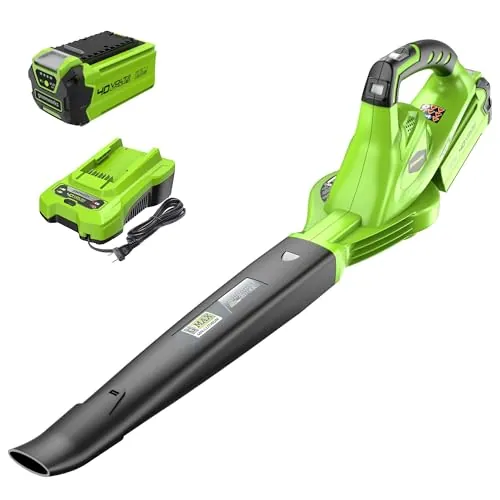
Greenworks
Greenworks 40V 135 CFM Cordless Leaf Blower Kit
U.S. 40V kit listed with one 2.0 Ah lithium-ion battery and charger.
Model 24252
Amazon ASIN B00AW72V4O
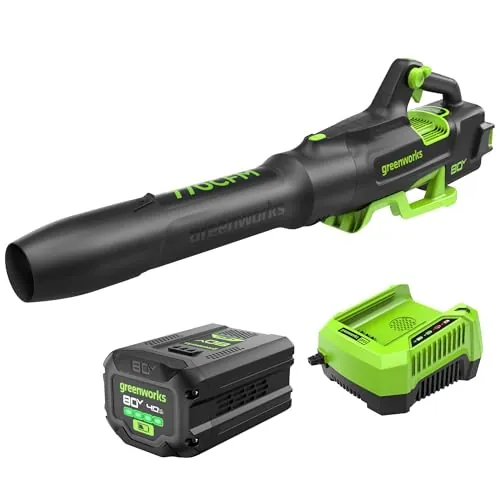
Greenworks
Greenworks 80V 770 CFM Cordless Battery Blower Kit
U.S. 80V kit listed with one 4.0 Ah lithium-ion battery and charger.
Model BL80L414
Amazon ASIN B0CLSF9WK3
Differences that matter
What matters most to you?
Choose a priority to see what it changes.
Sources for Published airflow and air speed
Sources for How you regulate airflow
Sources for Platform fit by intended work
Start with the battery family you already use
This is a platform choice before it is an airflow comparison. Greenworks lists the 24252 as a 40V model and the BL80L414 as an 80V model, with different battery packs and chargers in the box. If your garage already has Greenworks batteries, check their labels and the tool manual first; the maker advises choosing one voltage family for sharing packs.
If you are starting from scratch, Greenworks describes its 40V range for homeowners and residential use, and its 80V range for larger yards and tougher jobs. Those are the manufacturer's general platform descriptions, not measured boundaries for your property.
Translate the control list into your routine
The 24252 uses a variable-speed dial and an adjustable airflow tip. Greenworks describes it for moving leaves and debris from hard surfaces and patios. This gives you a compact control set to compare against your own cleanup routine.
The BL80L414 lists a variable-speed trigger, cruise control, turbo button and a concentrator nozzle. If those controls are the ones you want to operate, that is a concrete reason to choose its kit; the feature list does not establish that it is easier or more effective in use.
Use the airflow figures as labels, not a field test
Greenworks lists 135 CFM and 150 MPH for the 24252, versus 770 CFM and 180 MPH for the BL80L414. Its support FAQ describes CFM as air volume and MPH as the air's exit speed. Those different measurements can help you understand the spec sheet, but they do not answer which model clears your leaves, wet debris or walkway faster.
For a practical pre-buy check, write down the areas you need to clear, the debris you typically encounter, the Greenworks battery family you own and the controls you prefer. Then verify the exact model and kit in the offer. If you need a proven outcome for your conditions, look for a comparable test; neither the product listings nor this guide supply one.
Product details
Greenworks 40V 135 CFM Cordless Leaf Blower Kit
Before you buy
Common questions
Can I use a Greenworks 40V battery in the BL80L414, or an 80V battery in the 24252?
These exact blowers are listed in separate 40V and 80V families. Greenworks recommends staying within one voltage family for battery interchangeability. Check the pack and tool labels and the applicable manual; do not assume a 40V pack fits an 80V tool or vice versa.Greenworks operator manual — 24252 blower, pp. 7–980V 770 CFM Cordless Battery Blower, 4 Ah Battery and ChargerGreenworks Guide: Choose the Right Voltage for Your Yard
Does 770 CFM mean the BL80L414 will clear my yard faster?
Not from this evidence. Greenworks lists 770 CFM/180 MPH for the BL80L414 and 135 CFM/150 MPH for the 24252. Greenworks describes CFM as air volume and MPH as exit speed, but no matched test here establishes clearing speed for a particular yard or debris.Greenworks operator manual — 24252 blower, pp. 7–980V BL80L414 product support and blower FAQ
What comes with each assigned kit?
Greenworks lists one 2.0 Ah battery and charger with model 24252, and one 4.0 Ah battery and charger with model BL80L414. Confirm the model code on the exact offer before ordering because similar family listings can describe different tool-only or kit configurations.Greenworks operator manual — 24252 blower, pp. 7–980V BL80L414 product support and blower FAQ
Sources and scope
Greenworks' 24252 manual covers several related package numbers. Check the 24252 seller listing for the battery and charger. The airflow ratings describe published specifications.
Related comparisons
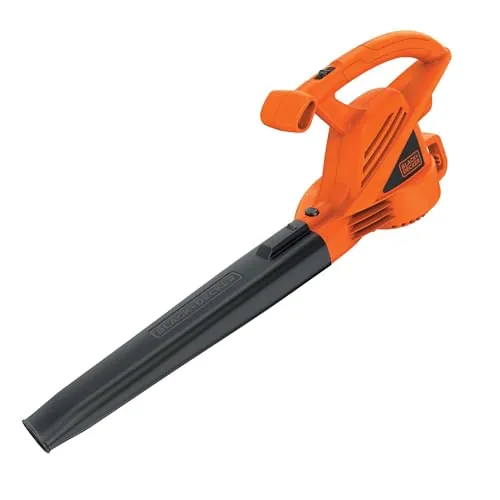
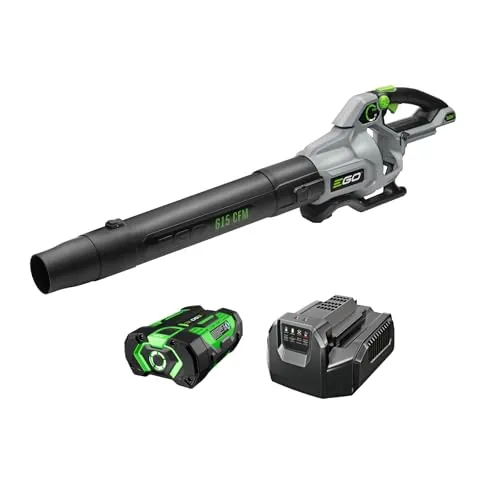
BLACK+DECKER LB700 vs EGO LB6151: Corded Route or Battery Kit?
BLACK+DECKER LB700 uses a cord and a simple on/off switch. EGO’s LB6151 kit includes a 2.5Ah battery and standard charger. Its LB6150 tool provides a variable trigger, a speed and lock-on dial, and a boost button. Check the route you plan to cover and the controls you want.
Read comparison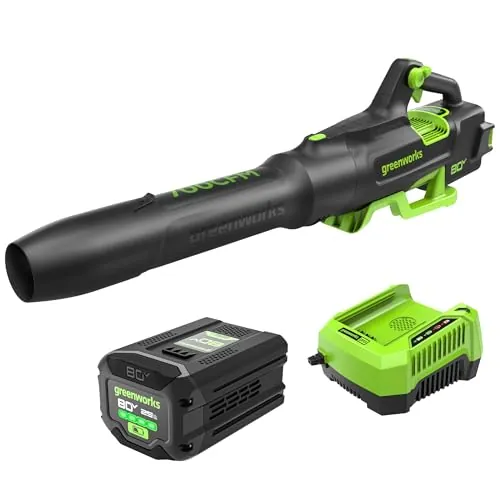
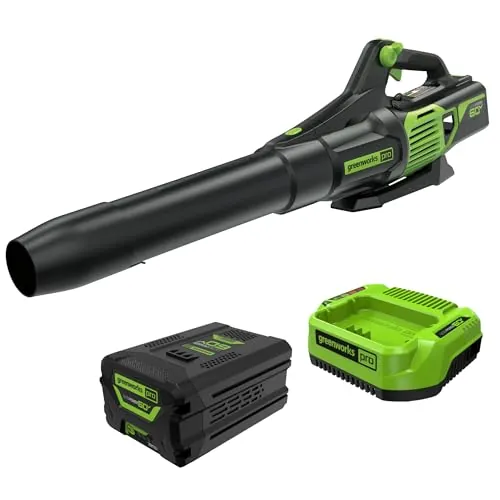
Greenworks BL80L2515 vs BL60L251: Ratings, Controls, and Battery Fit
Greenworks lists the BL80L2515 at 700 CFM and 170 MPH, while the BL60L251 is listed at 610 CFM and 130 MPH. Both product pages show variable-speed control, cruise control, a turbo button, and a 2.5 Ah battery-and-charger kit. The practical split is the 80V versus 60V battery platform; the maker’s ratings do not prove which clears a particular yard faster.
Read comparison