
Products compared
Intel
Intel Core Ultra 7 270K Plus
24-core hybrid desktop processor (8 Performance-cores + 16 Efficient-cores), 24 threads, for LGA1851 / Intel 800-series boards.
Model 270K Plus (BX80768270K)
Amazon ASIN B0GMLJCBBM
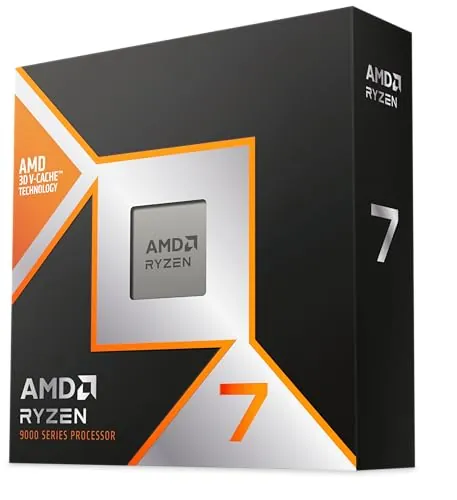
AMD
AMD Ryzen 7 9800X3D
8-core, 16-thread Zen 5 desktop processor with 2nd Gen AMD 3D V-Cache for AM5.
Model 9800X3D (boxed 100-100001084WOF)
Amazon ASIN B0DKFMSMYK
Differences that matter
What matters most to you?
Choose a priority to see what it changes.
Sources for Gaming in one CPU-focused test setup
Sources for Multi-threaded creation and computation
Sources for Socket and motherboard
Sources for DDR5 support and review memory configuration
The short answer
For a gaming-first PC, Club386's direct test points toward the Ryzen 7 9800X3D in the sampled 1080p games, with the Core Ultra 7 270K Plus winning Civilization VI. For CPU-heavy creation and computation, the same review points toward Intel in several multi-threaded apps, with Photoshop as a clear AMD counterexample. Neither result is universal; match the test titles and applications to your own workload.
The practical difference starts before performance: Intel requires an LGA1851 / 800-series motherboard, while AMD uses AM5. The review also tested DDR5-7200 CL34 on its Intel system and DDR5-6000 CL32 on its AMD system, so the measurements include platform and memory configuration differences.
Gaming: use the review as a title-specific map
Club386 tested games at 1080p High settings without upscaling where possible, using a GeForce RTX 5090 Founders Edition. Its benches shared the cooler, case, storage and power supply, but ran on different motherboard platforms and memory configurations. The 9800X3D led the 270K Plus in tests including Cyberpunk 2077, F1 25, Final Fantasy XIV: Dawntrail and Rainbow Six Siege; 270K Plus completed the Civilization VI turn test slightly faster.
These tests can help a buyer whose games and settings resemble the review. If you play another title, use a different resolution or GPU, or mostly hit a graphics-card limit, don't carry over the review's percentages as expected frame rates.
Creator work: Intel's many-core advantage has exceptions
The 270K Plus has 24 cores—8 Performance-cores and 16 Efficient-cores—and 24 threads; the 9800X3D has 8 cores and 16 threads. In Club386's exact-pair tests, Intel led multi-threaded Cinebench 2026, Corona 10 and 7-Zip compression, while AMD scored 18% higher in Photoshop and Intel was 8% ahead in Premiere Pro. These are named tests, not a general rule that more cores win every creator workload.
Club386 used Intel Binary Performance Optimization in some Intel benchmark runs; the review reports different results for Geekbench with and without that profile. The platform memory speeds also differed, so do not treat this suite as a perfect CPU-only isolation. Check the exact tools and settings you use.
Build checks: board, memory, cooling and media path
Before choosing, check the exact motherboard model and BIOS. Intel lists LGA1851 with Intel 800-series platform guidance for Core Ultra Desktop Series 2; AMD lists 9800X3D for AM5 and says a BIOS update may be needed on some 600-series boards. AMD has announced AM5 support through 2029, but that does not guarantee future CPU compatibility on every AM5 board.
Both support DDR5, but the official published memory limits and reviewed memory differ. Use the CPU specification as a reference, then check the board's memory QVL and DIMM plan. Club386's comparison ran 32 GB DDR5-7200 CL34 on Intel and 32 GB DDR5-6000 CL32 on AMD.
Plan a separate cooler with either boxed CPU. Intel names the 270K Plus among models shipped without a fan heatsink, and specifies 125 W base and 250 W maximum turbo power. AMD lists 120 W default TDP, ships the 9800X3D without a thermal solution, and recommends liquid cooling. The power labels describe different quantities.
If editing or playback relies on integrated graphics, Intel lists Quick Sync and H.264/H.265/AV1 encode/decode support for 270K Plus. AMD's 9800X3D page lists Radeon Graphics with two graphics cores but not an equivalent codec list. Confirm the application, codec, motherboard video outputs and driver path rather than assuming feature parity or absence.
Product details
Intel Core Ultra 7 270K Plus
- Cores and threads
- 24 cores (8 P-cores + 16 E-cores), 24 threads; 36 MB Intel Smart Cache and 40 MB L2 Source
- Board and memory
- FCLGA1851 with Intel 800-series chipsets; DDR5 up to 7200 MT/s listed by Intel Source
- Power and integrated media features
- 125 W processor base power and 250 W maximum turbo power; Intel lists Intel Graphics, Quick Sync Video, and H.264/H.265/AV1 encode/decode Source
AMD Ryzen 7 9800X3D
- Cores and cache
- 8 cores, 16 threads, 96 MB L3 cache Source
- Board and memory
- AM5 with DDR5; AMD lists DDR5-5600 for two-DIMM configurations and DDR5-3600 for four-DIMM configurations on its specification page Source
- Power, cooler and integrated graphics
- 120 W default TDP; thermal solution not included and liquid cooler recommended; AMD lists Radeon Graphics with 2 graphics cores Source
Before you buy
Community discussions
A 270K Plus build has a four-module memory question
Intel Core Ultra 7 270K Plus
A shopper planning a 270K Plus build asked whether their ASUS Z890 board would support the four DDR5 modules they wanted to use.
What to check
If your work needs several memory modules, price and check the complete processor, motherboard and verified memory configuration on each platform.
A bundle buyer checks the actual board before assembling
Intel Core Ultra 7 270K Plus
A shopper who bought a 270K Plus with a Gigabyte Z890 board noticed its manufacturing date and asked how to confirm CPU support before starting their build.
What to check
Use the board maker’s exact CPU support list and confirm the board and version in a bundle before comparing platforms.
Common questions
Which is faster for gaming?
Club386's direct comparison favored the 9800X3D across several named games in a 1080p High, RTX 5090 FE setup, while the 270K Plus won its Civilization VI turn-time test. The review also used different memory speeds and boards, so treat this as workload-specific evidence, not a result for every build.Intel Core Ultra 7 270K Plus vs AMD Ryzen 7 9800X3D
Which is better for creator apps?
The 270K Plus led several heavily threaded tests in Club386's suite, including multi-threaded Cinebench 2026 and Corona 10; the 9800X3D led in Photoshop. Check results for your exact app and project rather than assuming one chip wins all creative work.Intel Core Ultra 7 270K Plus vs AMD Ryzen 7 9800X3D
Can I use the same motherboard with both CPUs?
No. Intel specifies FCLGA1851 for 270K Plus and Intel pairs Core Ultra desktop Series 2 with 800-series chipsets. AMD specifies AM5 for 9800X3D. Check the exact board and BIOS support for the CPU you choose.Intel® Core™ Ultra 7 processor 270K Plus SpecificationsInformation About Intel® Core™ Ultra Boxed Desktop Processors (Series 2)AMD Ryzen™ 7 9800X3D Desktop Processor
Are the benchmark results fully like-for-like?
Not completely. Club386 used the same graphics card, cooler, chassis, storage and power supply, but different Intel and AMD motherboards and memory kits—DDR5-7200 CL34 for Intel and DDR5-6000 CL32 for AMD. It also reported Binary Performance Optimization in some Intel tests. Those conditions belong to the review's results, not a prediction for another system.Intel Core Ultra 7 270K Plus vs AMD Ryzen 7 9800X3D
Sources and scope
This guide did not test either CPU. The performance comparison here uses Club386's exact-pair suite, not a test for this guide. Gaming was tested at 1080p High without upscaling where possible on an RTX 5090 Founders Edition; the test benches used different boards and memory speeds, and Intel Binary Performance Optimization affected some Intel results. Other games, applications, settings and hardware can change the outcome. No like-for-like whole-platform price, power-efficiency or current offer comparison is included.
- Intel® Core™ Ultra 7 processor 270K Plus Specifications
- Information About Intel® Core™ Ultra Boxed Desktop Processors (Series 2)
- AMD Ryzen™ 7 9800X3D Desktop Processor
- AMD Socket AM5 Chipset
- AMD Computex 2026: 10 Years of AM4, AM5 Support Through 2029 and Expanded RDNA 4 Gaming
- Intel Core Ultra 7 270K Plus vs AMD Ryzen 7 9800X3D
- Intel boxed desktop processors shipped without a fan heatsink
Related comparisons
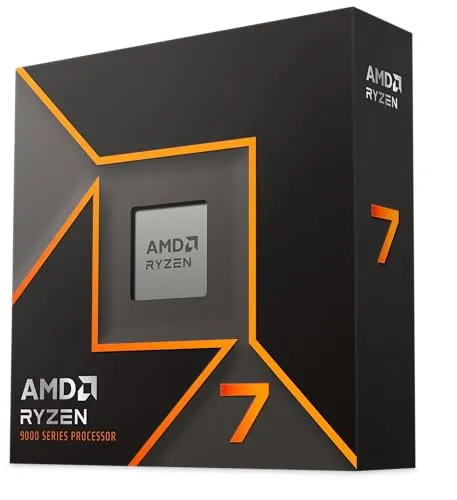
Ryzen 7 9700X vs Core Ultra 7 270K Plus: Match the Workload to the Build
Tom’s Hardware measured a 2.4% lead for the Core Ultra 7 270K Plus in its 17-game 1080p average, with results varying by title. It measured a larger Intel lead in the Blender Junkshop CPU render test. For an upgrade, start with your existing board’s CPU support list. For a fresh build, check the workload, motherboard and cooling before choosing.
Read comparisonRyzen 7 9700X vs 9800X3D: Cache, Cooling and AM5 Build Checks
The 9700X lists 32 MB L3, a 65W default TDP and AMD’s premium-air-cooler recommendation; the 9800X3D lists 96 MB L3 with second-generation 3D V-Cache, a 120W default TDP and AMD’s liquid-cooler recommendation. Both have the same listed AM5 chipset families and DDR5 limits. Check your exact board’s BIOS support; this guide does not claim a workload performance winner.
Read comparison