
Products compared
Intel
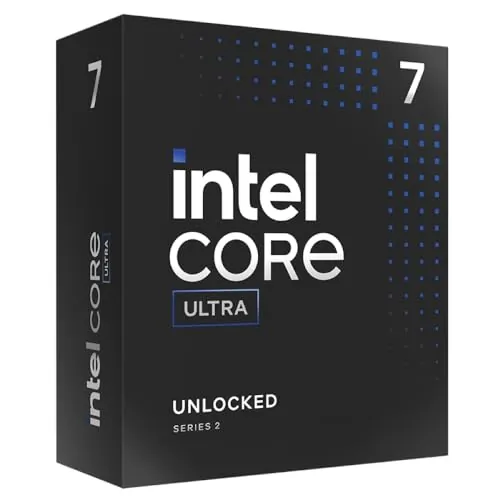
Intel Core Ultra 7 265K
Unlocked desktop CPU with 20 cores (8 Performance-cores plus 12 Efficient-cores) and 20 threads. Intel lists FCLGA1851, DDR5 up to 6400 MT/s, 125 W Processor Base Power and 250 W Maximum Turbo Power. Check the exact board support list and BIOS; Intel says K-suffixed boxed CPUs ship without its fan heatsink.
Model 265K (boxed retail processor; exact US ASIN B0DFK2MH2D)
Amazon ASIN B0DFK2MH2D
Intel
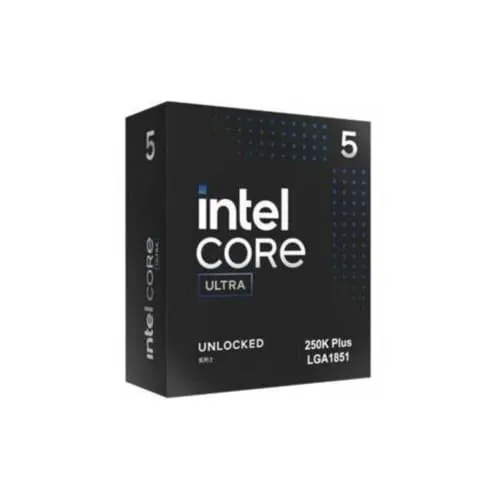
Intel Core Ultra 5 250K Plus
Unlocked desktop CPU with 18 cores (6 Performance-cores plus 12 Efficient-cores) and 18 threads. Intel lists FCLGA1851, DDR5 up to 7200 MT/s, 125 W Processor Base Power and 159 W Maximum Turbo Power. Check the exact board support list and BIOS; Intel says K-suffixed boxed CPUs ship without its fan heatsink.
Model 250K Plus (not the non-Plus 250K; exact US ASIN B0GMKXVVJQ)
Amazon ASIN B0GMKXVVJQ
Differences that matter
What matters most to you?
Choose a priority to see what it changes.
Sources for Core layout and platform specification
Sources for Named multi-core creator and encoding tests
Sources for PC Gamer's five-game 1080p sample
Sources for Application-specific creator results
Decide from the software you actually run
For the specific rendering and encoding workloads measured by PC Gamer, the 265K scored higher in Cinebench 2024 multi-core (1,989 vs 1,817), Blender 4.2.0 (146 vs 132 samples per minute), and a HandBrake 1.8.1 UHD-to-1080p60 encode (115 vs 101 fps). In the same review's Cinebench single-core result, the Plus scored 138 to the 265K's 135. These are measurements from one review, not a promise for every app or project.
Gaming tells a different story in PC Gamer's five-game 1080p sample: the 250K Plus matched or exceeded average FPS in all five titles and had higher 1% lows in each. The reviewer used an RTX 4070, 32 GB DDR5-6000 CL32, and settings selected to highlight CPU differences. A different GPU, resolution, settings or game list may change the result.
Puget Systems also found application-specific results: its 250K Plus was near the 265K in most cited Lightroom Classic camera tests, with an exception for Canon tests, and led the 265K in the reported Fusion workload. The practical choice is therefore the CPU whose tested tasks most resemble your own—not a general gaming or creator winner.
Check board, memory and cooling before ordering
Intel lists both processors for FCLGA1851 and DDR5, but check the motherboard maker's exact CPU support list and required BIOS for the specific board revision you plan to use. Then check its memory QVL for the exact DIMM kit and population. Intel's maximum rates—DDR5-6400 for the 265K and DDR5-7200 for the 250K Plus—are not guarantees that every board and kit will run at those rates.
The official layouts are 20 cores (8P+12E) and 20 threads for the 265K, versus 18 cores (6P+12E) and 18 threads for the 250K Plus. Both show a 125 W Processor Base Power; their Maximum Turbo Power specifications are 250 W and 159 W respectively. Those labels help identify design limits, but they are not whole-PC or measured application draw.
Plan the cooler as a separate component. Intel's support page says its K-suffixed boxed desktop processors ship without Intel's fan heatsink and names the 250K Plus; the 265K falls under the same K rule. Confirm the cooler's case clearance and suitability using the exact case, board and CPU guidance.
Product details
Intel Core Ultra 7 265K
- CPU layout
- 20 cores: 8 Performance-cores plus 12 Efficient-cores; 20 threads Source
- Socket and memory
- FCLGA1851; two memory channels; up to DDR5-6400 MT/s and 256 GB, dependent on memory type Source
- Published power labels
- 125 W Processor Base Power; 250 W Maximum Turbo Power. These are CPU specification limits, not measured system draw. Source
- Cooling package
- Intel says K-suffixed boxed desktop CPUs such as the 265K ship without Intel's fan heatsink; select a separately supplied thermal solution for the build. Source
Intel Core Ultra 5 250K Plus
- CPU layout
- 18 cores: 6 Performance-cores plus 12 Efficient-cores; 18 threads Source
- Socket and memory
- FCLGA1851; two memory channels; up to DDR5-7200 MT/s and 256 GB, dependent on memory type Source
- Published power labels
- 125 W Processor Base Power; 159 W Maximum Turbo Power. These are CPU specification limits, not measured system draw. Source
- Cooling package
- Intel lists the 250K Plus among K-suffixed boxed desktop CPUs shipped without Intel's fan heatsink; select a separately supplied thermal solution for the build. Source
Before you buy
Community discussions
Comparing complete CPU, board, and memory packages
Intel Core Ultra 7 265K
Someone choosing between a 265K and a 250K Plus bundle finds that both include memory but have different motherboards.
What to check
Compare the exact board, memory kit, connections, and other parts still needed. Match the package to what the computer will actually run.
Common questions
Can I reuse an FCLGA1851 motherboard with either processor?
Possibly, but the socket name alone is not enough to confirm it. Check the board maker's support list for the exact 265K or 250K Plus and the required BIOS version, then confirm your memory kit on that board's QVL.Intel Core Ultra 7 Processor 265K SpecificationsIntel Core Ultra 5 Processor 250K Plus Specifications
Which one should I choose for creator work?
Use the closest matching application evidence. PC Gamer's exact 265K vs 250K Plus tests favored the 265K in multi-core Cinebench 2024, Blender 4.2 and its named HandBrake encode. Puget reports near-parity in most cited Lightroom camera tests and a Plus lead in Fusion. None of those runs guarantees a result for a different project or configuration.Intel Core Ultra 5 250K Plus reviewIntel Core Ultra 200S Plus Content Creation Review
Does the 250K Plus have a lower real-world power draw?
Intel lists a lower Maximum Turbo Power specification for the 250K Plus (159 W versus 250 W for the 265K), but these are CPU specification limits, not measurements of whole-system or application power use. Do not treat them as a guaranteed electricity or cooling result.Intel Core Ultra 7 Processor 265K SpecificationsIntel Core Ultra 5 Processor 250K Plus Specifications
Is a CPU cooler included with either boxed model?
Intel's support article says desktop processors with K in the model number do not ship with Intel's fan heatsink and explicitly names the 250K Plus; its rule also covers the 265K. Plan a separately supplied thermal solution and verify it for your exact build.Intel boxed desktop processors shipped without fan heatsink
Sources and scope
This is a specification and independent-review comparison, not a test for this guide or universal performance ranking. PC Gamer's results apply to its named software, games, settings and test PC; Puget Systems uses its own workflows and reports a different JEDEC memory rate for the Plus CPUs than for the 265K. Intel's power and memory figures are published limits, not measured whole-system use or guaranteed settings. Both CPUs list FCLGA1851, but that does not confirm support on a particular motherboard revision, BIOS or memory kit.
Related comparisons

Ryzen 7 9700X vs Core Ultra 7 265K: Check the Platform Before You Buy
The Ryzen 7 9700X is an AM5 processor; the Core Ultra 7 265K is FCLGA1851. Both list DDR5 and integrated graphics, but their supported configurations and media features differ. Check your board, BIOS, memory kit, display outputs and exact cooler package. These specifications do not establish which CPU is faster.
Read comparison
Intel Core Ultra 5 250K Plus vs Ryzen 5 9600X: Build Compatibility and Features
The Core Ultra 5 250K Plus uses Intel’s LGA1851/800-series platform; the Ryzen 5 9600X uses AM5. Both are DDR5 processors, but their official memory conditions, integrated-graphics listings and power labels differ. Check the exact motherboard CPU/BIOS list and cooler package before choosing; the figures here are specifications, not measured performance.
Read comparison