
Products compared
Kreg
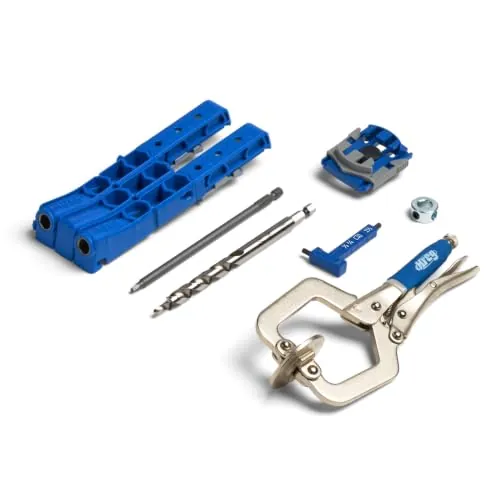
Kreg Pocket-Hole Jig 320 with Classic 2 Inch Face Clamp
KPHJ320-22 is the portable 320 kit listed with Kreg’s Classic 2-inch Face Clamp. Confirm the exact bundle contents on the seller’s page.
Model KPHJ320-22
Amazon ASIN B0B15KFCDW
Kreg
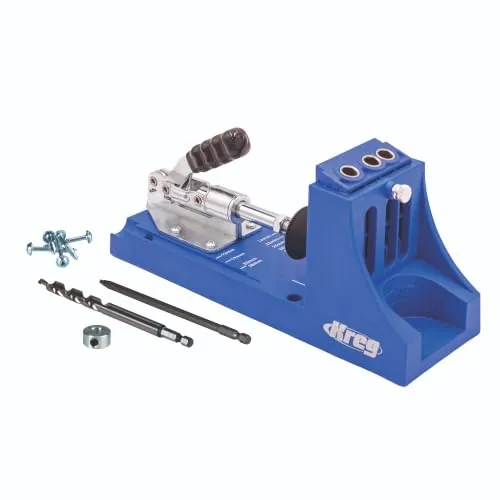
Kreg Pocket-Hole Jig K4
Standard K4 jig listing; distinguish it from K4 Plus, K4 System, and bundled drill kits.
Model K4
Amazon ASIN B001DYFISG
Differences that matter
What matters most to you?
Choose a priority to see what it changes.
Sources for Hole spacing across board widths
Sources for Repairs and package verification
Choose the way you want to secure the jig and board
The 320 is a portable jig positioned at the workpiece. The assigned KPHJ320-22 listing names a Classic 2-inch Face Clamp, and Kreg says that clamp is compatible with 300-Series pocket-hole jigs. This is the variant-specific point: the normal KPHJ320 product page documents the base jig package, not the -22 box, so verify the exact listing before expecting that clamp or any other component.
The K4 builds a rear toggle clamp and clamp pad into its base. Kreg says you can screw the base to a bench or clamp it down, so you can set a station without treating permanent mounting as mandatory.
Match the guide layout to the boards you actually use
Kreg's 320 has two guides that twist apart and a removable spacer, allowing different hole spacing. That modular layout is useful if you expect to change where the guides sit rather than repeatedly choose among one fixed set of holes.
The K4's three guide holes have a simple width map: B/C for 1–2-inch stock, A/B for 2–3 inches, and A/C for 3–4 inches. The manual says to reposition for wider panels. The choice is about how you want to select and repeat the layout, not evidence that one jig drills more accurately.
Measure actual thickness before setting either jig
Both product pages cover material between 1/2 and 1 1/2 inches thick. The K4 marks settings in 1/8-inch steps; the 320 page highlights three common stop positions while its manual describes adjusting the stop collar to the measured material thickness. Neither page justifies setting a jig from a nominal board label alone.
Before drilling, measure the workpiece and use the chosen model's screw chart and setup instructions. Kreg's manuals also tell users to secure the jig/workpiece and follow the drill's own instructions. This guide does not compare drilling speed, accuracy, or joint strength.
Don't rule out a repair project or confuse the kits
Both manuals include a repair setup. The 320 manual removes the material-thickness stop and clamps the jig to the workpiece; the K4 manual removes its guide from the base and clamps the guide directly. Check the access and securing instructions for your repair instead of assuming the K4 can only stay on a bench.
Keep the exact versions separate while checking offers: the A product is KPHJ320-22, named with the Classic clamp; the B product is standard K4, not a Plus, System, or drill bundle. Recheck the seller and exact ASIN because availability can vary.
Product details
Kreg Pocket-Hole Jig 320 with Classic 2 Inch Face Clamp
- Guide layout
- Two twist-apart drill guides with a removable spacer; Kreg describes variable hole spacing. Source
- Stock range
- Kreg lists material from 1/2 inch to 1 1/2 inches thick; the setup gauge has common stops at 1/2, 3/4, and 1 1/2 inches. Source
- Clamp compatibility
- Kreg says the Classic 2-inch Face Clamp is compatible with 300-Series pocket-hole jigs; that accessory page does not establish which package includes it. Source
Kreg Pocket-Hole Jig K4
- Workholding
- Rear-mounted toggle clamp; Kreg says the base can be screwed to a bench or clamped down. Source
- Guide-hole layout
- Three-hole guide uses B/C for 1–2-inch-wide material, A/B for 2–3 inches, and A/C for 3–4 inches. Source
- Stock range
- Materials from 1/2 inch to 1 1/2 inches thick, with settings marked in 1/8-inch increments. Source
Before you buy
Community discussions
Checking how the jig indicates material thickness
Kreg Pocket-Hole Jig 320 with Classic 2 Inch Face Clamp
A Kreg 320 buyer setting up for a small box project asked how to interpret the thickness on the jig’s gauge.
What to check
Check how you would identify the material thickness, which gauge is included in the exact kit and where you would set up for the work.
Planning storage for a jig and its accessories
Kreg Pocket-Hole Jig K4
A Kreg K4 owner asked how to store the jig and its accessories together.
What to check
Measure the shelf or case where the jig will live. Include room for bits, clamps and other pieces you want to keep with it.
Common questions
Does the K4 require permanent bench installation?
No. Kreg says the K4 base can be screwed to a bench or clamped down. Its guide can also be removed for the manual's repair setup.Kreg Pocket-Hole Jig K4: product details and specificationsKreg K4 North American Owner's Manual
How does the K4 choose guide holes for different board widths?
Its North American manual maps B/C to 1–2-inch-wide boards, A/B to 2–3 inches, and A/C to 3–4 inches. It also gives separate placement advice for wider panels.Kreg K4 North American Owner's Manual
Is the KPHJ320-22 package identical to the standard KPHJ320 box?
Do not assume so. This comparison is assigned to the -22 listing named with a Classic 2-inch Face Clamp, while Kreg's current standard KPHJ320 page lists its base jig kit and does not document the -22 package. Verify the exact Amazon ASIN and included items before buying.Kreg Pocket-Hole Jig 320: product details and specificationsKreg Classic 2-inch Face Clamp
Sources and scope
Kreg documents the 320 jig and the compatible Classic 2-inch Face Clamp separately. Confirm the parts in the exact KPHJ320-22 offer before ordering. The hole layouts and stock settings come from the manufacturer manuals; drilling performance was not tested.