
Products compared
Nikon
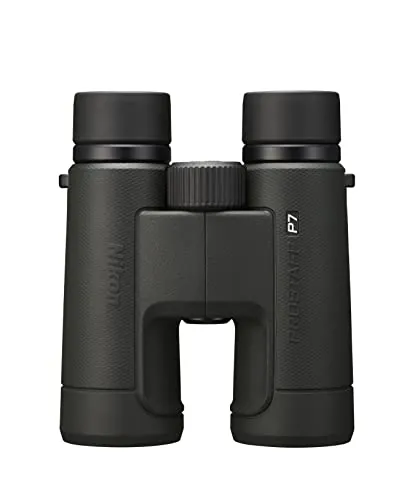
Nikon PROSTAFF P7 8x42 Binoculars
U.S. PROSTAFF P7 8x42 configuration, with 8x magnification and a 42 mm objective. Nikon lists 20.2 mm eye relief, a 377 ft field at 1,000 yards and 590 g weight.
Model 16772
Amazon ASIN B0B3JNDRDK
Nikon
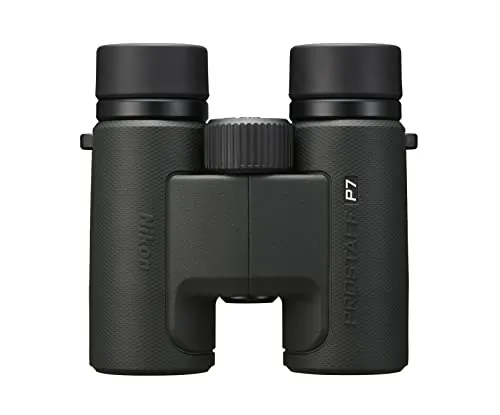
Nikon PROSTAFF P7 8x30 Binoculars
U.S. PROSTAFF P7 8x30 configuration, with the same 8x magnification and a 30 mm objective. Nikon lists 15.4 mm eye relief, a 456 ft field at 1,000 yards and 485 g weight.
Model 16770
Amazon ASIN B0B3JNYBHN
Differences that matter
What matters most to you?
Choose a priority to see what it changes.
Sources for Field of view at the same 8x magnification
Sources for Carry size and listed weight
Sources for Low-light-related optical specifications
Start with the viewing position, then choose field width
Both exact U.S. models use 8x magnification. Nikon lists a 377 ft field at 1,000 yards for the 8x42 and 456 ft for the 8x30. If you prefer more scene width after confirming the fit, the 8x30 is the clearer specification match. The larger 42 mm objective does not mean that the 8x42 has the wider field.
Eye relief points the other way: Nikon lists 20.2 mm for the 8x42 and 15.4 mm for the 8x30. Nikon's general guide recommends longer eye relief for eyeglass wearers, but no published distance can tell whether your glasses and face position will show the full view. Test with the glasses you will actually wear and set the turn-and-slide eyecups before deciding.
Use weight and size for a real carry check
Nikon lists the 8x42 at 590 g and 6.0 inches long, versus 485 g and 4.9 inches for the 8x30. That is 105 g and 1.1 inches less to plan around with the 8x30. Put the listed dimensions next to the pocket, pack space or carry setup you actually intend to use; the measurements do not predict which body feels more secure in your hands.
The manufacturer pages also label both as waterproof and fogproof, but that shared listing does not change the size decision. Follow the exact model's instructions and limits for care rather than treating the feature labels as permission for underwater use.
Treat low-light figures as a shortlist, not an outcome
The 8x42's Nikon page lists a 5.3 mm exit pupil and relative-brightness figure of 28.1; the 8x30 page lists 3.8 mm and 14.4. Nikon's series table confirms these figures for the two 8x models. If lower-light use is a priority, the 8x42 is the specification profile to compare first, while allowing for its additional listed weight and narrower field.
Neither set of figures is a matched test of what a particular observer will see at dawn, dusk or in shade. If that outcome decides the purchase, compare the exact models in the lighting and eyeglass setup you expect to use, or seek an independent test with those conditions stated.
Product details
Nikon PROSTAFF P7 8x42 Binoculars
- Magnification and objective
- 8x magnification; 42 mm objective Source
- Listed field and eye relief
- 377 ft at 1,000 yd; 20.2 mm eye relief Source
- Listed size and weight
- 6.0 in long; 20.8 oz (590 g) Source
- Listed exit pupil and relative brightness
- 5.3 mm exit pupil; relative brightness 28.1. These are Nikon specifications, not measured or guaranteed viewing results. Source
Nikon PROSTAFF P7 8x30 Binoculars
- Magnification and objective
- 8x magnification; 30 mm objective Source
- Listed field and eye relief
- 456 ft at 1,000 yd; 15.4 mm eye relief Source
- Listed size and weight
- 4.9 in long; 17.1 oz (485 g) Source
- Listed exit pupil and relative brightness
- 3.8 mm exit pupil; relative brightness 14.4. These are Nikon specifications, not measured or guaranteed viewing results. Source
Before you buy
Community discussions
Choosing a first pair for daytime birding
Nikon PROSTAFF P7 8x42 Binoculars
A first-time buyer choosing between the PROSTAFF P7 8×30 and 8×42 asks how to weigh a wider field against the other eyepiece specifications.
What to check
If you mostly watch birds near home in daylight, compare how easily you can find a subject and see the whole field while wearing any glasses you normally use.
Common questions
Which PROSTAFF P7 has the wider field of view?
Nikon lists 456 ft at 1,000 yards for the 8x30 and 377 ft for the 8x42. Both are 8x models, so the 8x30 is the wider-field option by the published figures.Nikon PROSTAFF P7 8x42 Binoculars: Overview and specificationsNikon PROSTAFF P7 8x30 Binoculars: Overview and specifications
Is the 8x42 automatically better for eyeglasses?
No. Nikon lists longer eye relief for the 8x42 and recommends longer eye relief for eyeglass wearers, but fit depends on your glasses and eyecup position. Try to see the complete field with your own setup before choosing.Nikon PROSTAFF P7 8x42 Binoculars: Overview and specificationsNikon PROSTAFF P7 8x30 Binoculars: Overview and specificationsNikon: Eye relief, basic information about binoculars
Does the 8x42 guarantee a brighter view at dusk?
No such result is established here. Nikon lists a larger exit pupil and relative-brightness value for the 8x42, which makes it the specification profile to compare first if lower-light use matters. Those values do not guarantee what you will see in a particular scene.Nikon PROSTAFF P7 8x42 Binoculars: Overview and specificationsNikon PROSTAFF P7 8x30 Binoculars: Overview and specificationsNikon introduces the PROSTAFF P7 Binoculars
How much less does the 8x30 weigh?
Nikon lists 485 g for the 8x30 and 590 g for the 8x42, a 105 g difference. Weight is a carry-planning specification, not a judgment about hand comfort.Nikon PROSTAFF P7 8x42 Binoculars: Overview and specificationsNikon PROSTAFF P7 8x30 Binoculars: Overview and specifications
Sources and scope
This guide compares Nikon-published specifications for the exact U.S. PROSTAFF P7 8x42 (model 16772) and 8x30 (model 16770). This guide did not test these binoculars. Listed exit pupil and relative brightness are specification values, not a guarantee of perceived brightness or dusk performance; lighting, the observer and viewing setup matter. Listed eye relief does not guarantee that a particular pair of glasses will show the full field comfortably. Try the exact model with your glasses and eyecup position when possible.
Related comparisons
Nikon MONARCH M7 8x42 vs PROSTAFF P7 8x42: Wider Field or Lighter Carry?
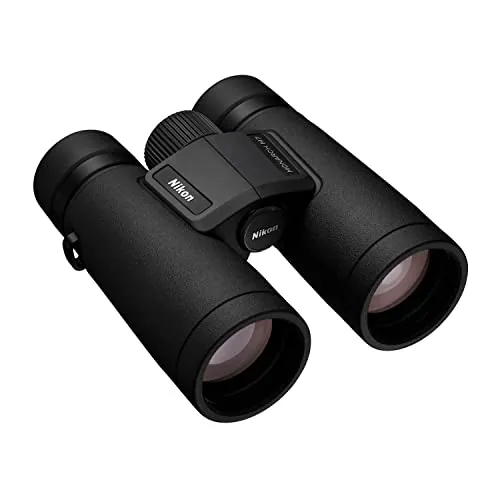
This U.S. comparison covers Nikon MONARCH M7 8x42 model 16765 (B09GTMZH2X) and PROSTAFF P7 8x42 model 16772 (B0B3JNDRDK). Nikon lists a 435-ft field at 1,000 yd and 8.2-ft close focus for the M7, versus 377 ft and 9.8 ft for the P7. The P7 has a higher listed eye-relief value (20.2 mm vs 17.1 mm) and lower listed body weight (20.8 oz vs 23.6 oz), while Nikon lists the M7 field and shorter length in Tech Specs. Choose based on the viewing distance and fit priorities you can verify; the figures do not establish image quality, comfort or fit for a particular person.
Read comparison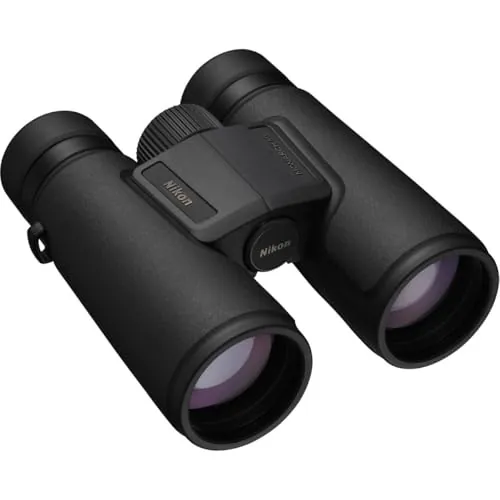
Nikon MONARCH M5 8x42 vs PROSTAFF P7 8x42: Close Focus or Wider Field?
Both are Nikon 8x42 central-focus binoculars. The MONARCH M5 focuses to a closer stated distance of 8.2 ft; the PROSTAFF P7 lists a 377 ft field at 1,000 yd, a locking diopter and a 20.8 oz weight. Compare those figures with where you view, whether you share the binoculars and how you will carry them.
Read comparison