
Products compared
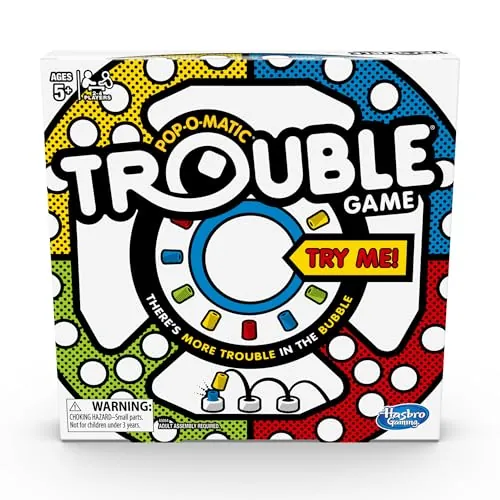
Hasbro
Hasbro Trouble Game
Exact Hasbro Trouble model identified as A5064 on the US product page and linked basic-play playbook.
Model A5064
Amazon ASIN B00D7OAOYI
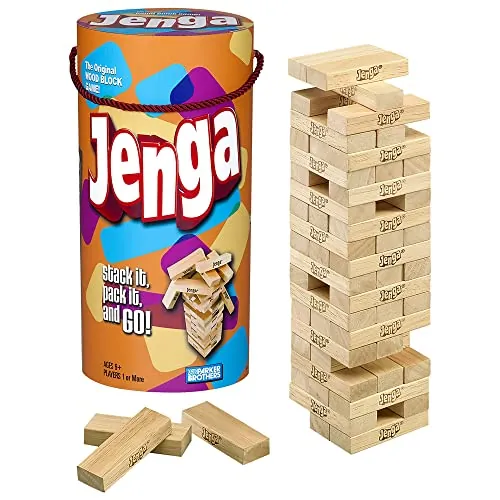
Hasbro
Hasbro Jenga Game
Exact Jenga model identified as 53557 on the Hasbro US support page and original rules.
Model 53557
Amazon ASIN B000GBA60W
Differences that matter
What matters most to you?
Choose a priority to see what it changes.
Sources for Included pieces and first setup
Choose by the activity, not the shared Hasbro brand
Trouble A5064 is a Pop-O-Matic board race: press the bubble to roll the die, then try to get all four game pieces to the finish zone. Jenga 53557 is a block tower: in group turns, remove a block below the highest completed story and stack it on top. Those are different activities, so begin with the one your table actually wants.
Both use physical tabletop pieces, but the instructions do not establish which game is easier, faster or more enjoyable. This guide compares the documented activity and setup only.
If someone may play alone, check Jenga's solo rules
Hasbro lists Jenga 53557 for one or more players, and its instructions include a solo variation: remove and restack blocks to see whether you can beat your record height before the tower falls. This makes Jenga the supported pick if solo play is a requirement.
Hasbro’s Canadian support page lists two to four players for Trouble A5064. Jenga’s exact US rules describe a solo variation. Check the seller’s box if the printed rules or edition matter.
Check the first setup and components
Hasbro lists Trouble with a gameboard, a plastic unit with the Pop-O-Matic die roller and 16 pegs. Jenga includes 54 wooden blocks and a stacking sleeve; its rules use the sleeve to assemble an 18-story tower on a flat surface.
Pre-buy check: can your table host the board race, or can it hold a free-standing tower and leave room for turns? No measured overall footprint comparison was found, so the component lists should not be read as proof that one occupies less space.
Match the exact codes on the offer
Hasbro's US support page calls the first game Trouble (A5064), and its linked basic-play PDF is also marked A5064. Hasbro calls the second Jenga (53557), with the rules marked 53557. These identifiers distinguish the two different games; they are not alternate SKUs for one box.
The Trouble PDF is an adapted playbook rather than a complete standard rulebook, so it is not used here to claim every standard-rule detail. The model identity comes from Hasbro's support page and the linked product identifier.
Product details
Hasbro Trouble Game
Before you buy
Common questions
Are Trouble A5064 and Jenga 53557 alternate codes for the same box?
No. Hasbro’s US support pages identify Trouble (A5064) and Jenga (53557) as different games. The first is a Pop-O-Matic peg race; the second is a wooden block tower. Check the game name, model code and exact listing ASIN together.Trouble Game Instructions, Rules & Strategies – HasbroJenga Game Rules and Instructions – Hasbro
Which game can I play alone?
Jenga 53557 has a solo variation in its instructions: practice building the tower taller until it falls. Its product page also lists one or more players. The Trouble A5064 materials reviewed here do not establish a solo mode, so choose Jenga if a documented solo option is required.Jenga Game Rules and Instructions – HasbroJenga 53557 original US rules – Hasbro
What should I check before setting up Jenga?
The 53557 rules start with 54 blocks arranged into an 18-story tower using the stacking sleeve on a flat surface. Leave a stable, clear surface for the initial tower and the turns that follow.Jenga Game Rules and Instructions – HasbroJenga 53557 original US rules – Hasbro
Sources and scope
This guide uses manufacturer instructions and listed components. Hasbro’s Canadian support page lists two to four players for the same A5064 model. Check the US seller’s box if the edition or printed rules matter to your group.
Related comparisons
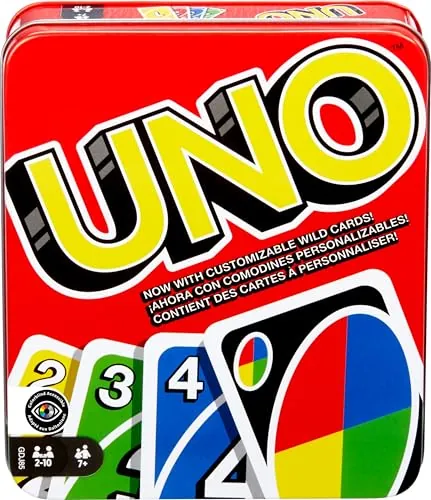
Mattel UNO GDJ85 vs Hasbro Jenga 53557
The exact UNO GDJ85 rules list 2–10 players and a 112-card deck. Hasbro’s Jenga 53557 lists 1 or more players and includes 54 wood blocks plus a stacking sleeve. Pick by the group you need to include and whether you want card turns or a tower-building setup.
Read comparison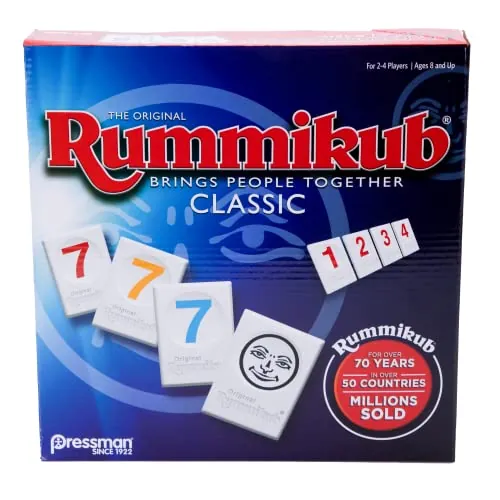
Pressman Rummikub 0400 vs UNO GDJ85: Play Style and Group Size
For 2–4 players, both games have a clearly published range, so choose the activity your group wants to repeat: Rummikub's shared runs and groups, or UNO GDJ85's hand matching and action cards. For 5–10, UNO is the only game here with an explicit manufacturer-published range covering the full group. The formats and kit contents differ; verify the exact Pressman 0400 box and UNO card list before buying.
Read comparison