
Products compared
SanDisk
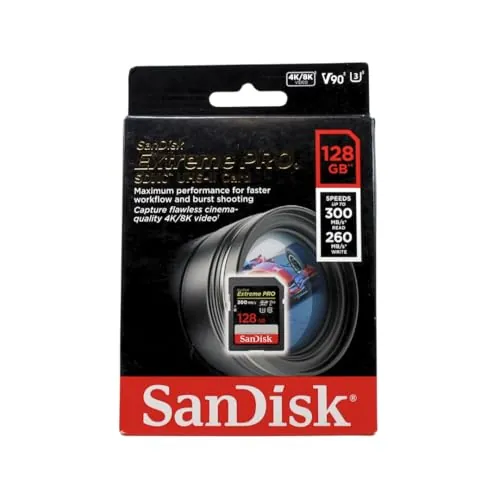
SanDisk 128GB Extreme PRO SDXC UHS-II Memory Card
128GB SDXC, UHS-II family; U.S. selected listing and manufacturer part number checked
Model SDSDXDK-128G-GN4IN
Amazon ASIN B08YF7PB14
SanDisk
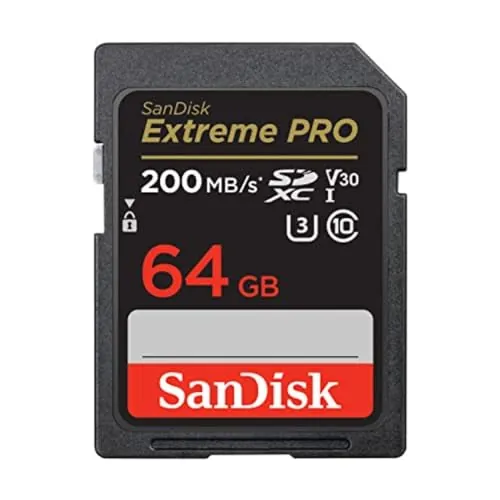
SanDisk 64GB Extreme PRO SDXC UHS-I Memory Card
64GB SDXC, UHS-I family; exact 64GB model number verified on SanDisk’s U.S. family page
Model SDSDXXU-064G-GN4IN
Amazon ASIN B09X7C7NCZ
Differences that matter
What matters most to you?
Choose a priority to see what it changes.
Check the camera slot before buying for speed
The 128GB card uses UHS-II; the 64GB card uses UHS-I. These are bus-interface families, separate from video speed classes. SanDisk says the UHS-II family needs a UHS-II host or reader to use UHS-II performance. The SD Association explains that cards can be used in UHS host devices and recommends matching the card interface to the host's highest supported interface. A UHS-II card will not raise a UHS-I camera's interface ceiling.
Start with the exact camera manual, then check its card slot and supported card table. Confirm it accepts SDXC and the capacity you want, and check its supported bus mode. If you mainly offload to a computer, check the card reader and its computer connection too: an UHS-II card in an older UHS-I reader does not make that reader's transfer path UHS-II. These checks establish feature fit; they do not predict measured transfer time.
Match the video class to the recording mode you use
SanDisk's UHS-II family page lists V90/U3; its UHS-I family page lists V30/U3 for the selected 64GB model family. The SD Association describes Video Speed Class marks as minimum sustained-write assurances: V90 is 90MB/s and V30 is 30MB/s. That is different from a manufacturer's maximum read, transfer, or burst-write number.
SanDisk identifies V90/U3 for its UHS-II family and V30/U3 for the selected 64GB UHS-I model family. The SD Association defines V90 and V30 by minimum sustained-write levels, not a card’s headline transfer maximum. Check the camera manual for the class required by your recording mode. Current U.S. materials do not confirm the V-class for SDSDXDK-128G-GN4IN specifically, so inspect the exact card marking before treating it as a V90 match.
Choose the capacity around your real shoot and offload routine
The labels are 128GB and 64GB nominal capacity. The larger card gives more labeled space between offloads, but not a guaranteed two-times session length: usable formatted capacity and time vary with file sizes, bitrate, camera settings, and other files on the card. If you often change cards during an event or want more time between offloads, estimate from the camera's own recording-size table and your typical session rather than a generic video-hour claim.
Before checkout, make a three-part check: exact camera SDXC capacity support; its minimum speed class for the mode you use; and whether your card reader supports the interface you want for transfers. The 128GB UHS-II option answers a different need from the 64GB UHS-I option only when the host and class requirements align. If your manual does not make the necessary support clear, confirm with the camera maker instead of assuming compatibility from the card name.
Product details
SanDisk 128GB Extreme PRO SDXC UHS-II Memory Card
This is the larger-capacity UHS-II card. Its interface matters only when the camera or reader supports UHS-II; its V90/U3 class labels describe a video recording class, not a promise that an unnamed camera supports every mode or that the card will achieve its advertised maximum in your setup.
- Capacity and part number
- 128GB; SDSDXDK-128G-GN4IN Source
- Card interface
- UHS-II; SanDisk says a UHS-II-supported host or UHS-II reader is required to use UHS-II performance Source
- Published speed classes
- SanDisk UHS-II family documentation identifies V90 and U3; check the exact card marking and camera requirement Source
SanDisk 64GB Extreme PRO SDXC UHS-I Memory Card
The 64GB card uses the UHS-I interface and carries a V30/U3 family rating. It is the feature-fit candidate when the camera supports SDXC/UHS-I and its manual’s speed-class requirement is met by V30; it is not a substitute for a host that explicitly requires V90.
Before you buy
Community discussions
Match the card class to your recording preset
SanDisk 128GB Extreme PRO SDXC UHS-II Memory Card
A first-time Sony a6700 buyer asked whether the SanDisk Extreme PRO 128GB UHS-II card justified its higher price over the 128GB UHS-I version.
What to check
Before paying for an interface tier, check the exact card code and printed speed class against the camera manual for the recording preset you plan to use. This discussion compares two 128GB cards; verify the separate 64GB UHS-I option in this guide by its own code and marking.
Common questions
Will a UHS-II card work in a UHS-I camera?
SanDisk says this UHS-II family is backward-compatible with supported SDHC/SDXC hosts, and the SD Association says high-speed cards can be used in UHS host devices. A UHS-I-only host cannot use UHS-II interface performance, and its own manual still controls capacity and recording-mode support.SanDisk Extreme PRO SDHC/SDXC UHS-II card family (U.S. product page)SD Association: Bus Interface Speed Standards for Large Size Data Transfer
Does the 128GB UHS-II card guarantee V90 recording in every camera?
No. SanDisk publishes V90/U3 for the UHS-II family, but the camera must support the exact card class, capacity, and recording mode. Confirm both the exact card marking and the camera’s mode-specific requirements; no camera was specified for this comparison.SanDisk Extreme PRO UHS-II SD card, 128GB model SDSDXDK-128G-GN4IN (India product page)SD Association: Anatomy of an SD Memory Card—Photography and Videography
Is V90 the same thing as a 300MB/s maximum read speed?
No. V90 is a video speed class that specifies a minimum sustained-write class; the 300MB/s figure is a published maximum transfer/read figure for a supported card/interface setup. They describe different things and neither predicts measured results in a particular camera.SD Association: Anatomy of an SD Memory Card—Photography and VideographySanDisk Extreme PRO SDHC/SDXC UHS-II card family (U.S. product page)
Does 128GB mean twice the recording time of 64GB?
It means twice the nominal labeled capacity, not a fixed duration ratio. Formatted available space, camera file format, bitrate, and settings determine recording time; use your camera's own file sizes to estimate a session.SanDisk Extreme PRO UHS-II SD card, 128GB model SDSDXDK-128G-GN4IN (India product page)SanDisk Extreme PRO SD UHS-I card family and 64GB model SDSDXXU-064G-GN4IN (U.S. product page)SD Association: Anatomy of an SD Memory Card—Photography and Videography
Sources and scope
No camera or reader model is specified, so confirm the exact device’s supported cards and recording modes. SanDisk’s current U.S. selector no longer lists the 128GB SDSDXDK-128G-GN4IN, and available U.S. materials do not confirm its specific V-class; verify the part number and card marking before relying on a V90 requirement. Published transfer ceilings are not camera results. This comparison includes no recording test, measured throughput, or recording-time estimate.
- SanDisk Extreme PRO UHS-II SD card, 128GB model SDSDXDK-128G-GN4IN (India product page)
- SanDisk Extreme PRO SDHC/SDXC UHS-II card family (U.S. product page)
- SanDisk Extreme PRO SD UHS-I card family and 64GB model SDSDXXU-064G-GN4IN (U.S. product page)
- SD Association: Bus Interface Speed Standards for Large Size Data Transfer
- SD Association: Anatomy of an SD Memory Card—Photography and Videography
- SanDisk Extreme PRO SD UHS-II Card Data Sheet
Related comparisons
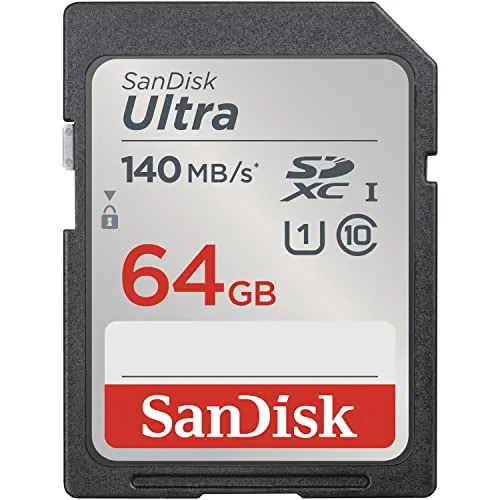
SanDisk Extreme PRO 64GB vs SanDisk Ultra 64GB: Camera Class and Reader Fit
For a camera mode that calls for U3/V30, choose the 64GB SanDisk Extreme PRO if the camera supports SDXC. For Full HD modes that accept U1/Class 10, the 64GB Ultra can meet that requirement. Check your camera’s manual first. The Extreme PRO’s listed 200 MB/s read ceiling applies to file transfer with the required reader, and SanDisk gives conflicting figures for the Ultra.
Read comparison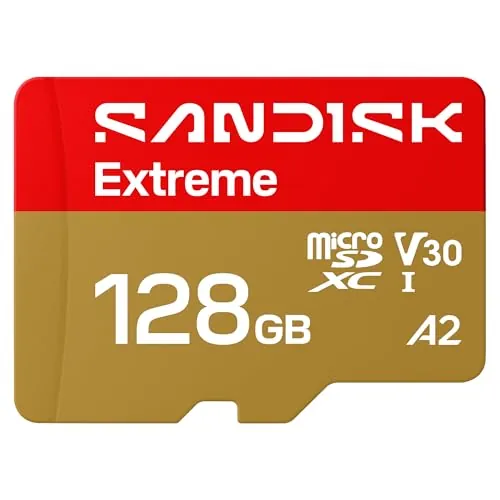
SanDisk 128GB Extreme microSD vs Extreme PRO UHS-II SD: Which Slot and Recording Mode Fits?
Both are 128GB SanDisk cards, but one is full-size SDXC UHS-II with V90/U3, while the other is microSDXC UHS-I with V30/U3. The device’s card slot and the minimum class listed for your chosen recording mode decide the fit. Published maximum transfer rates are conditional specifications, not a test of either card in your camera. The exact retail package and your device’s adapter support still need checking; an adapter does not establish that a particular camera accepts the card.
Read comparison