
Products compared
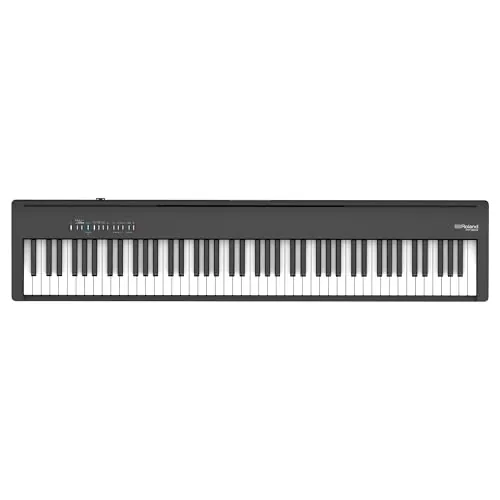
Roland
Roland FP-30X-BK Digital Piano (Black)
Black FP-30X portable digital piano. Roland documents USB-B computer audio/MIDI and a separate USB-A memory port; its published power specification lists the AC adaptor.
Model FP-30X-BK
Amazon ASIN B08SW1RCR2
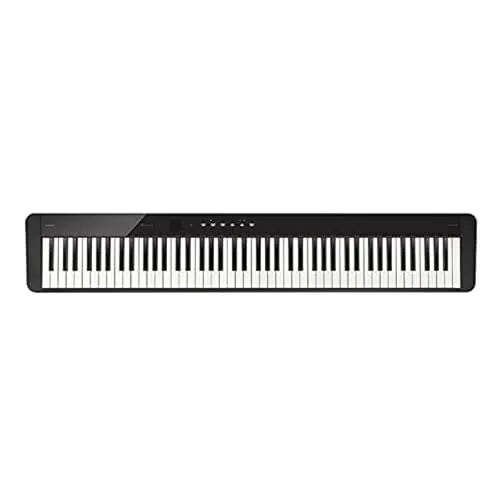
Casio
Casio Privia PX-S1100BK Digital Piano (Black)
Black PX-S1100BK portable digital piano. Casio lists an included WU-BT10 wireless MIDI/audio adapter, SP-3 pedal and AC adaptor, with optional six-AA power.
Model PX-S1100BK
Amazon ASIN B09GG8SCBF
Differences that matter
What matters most to you?
Choose a priority to see what it changes.
Sources for Published body width
Sources for Published body depth and height
Sources for USB recording/computer workflow
Sources for Pedal and furniture contents
Start with where the piano will be powered
Casio lists optional six-AA alkaline battery operation as well as its AC adaptor. Its battery-time figure is an estimate, not a side-by-side result. Roland lists an AC adaptor as the FP-30X power supply; if you need another power arrangement, confirm that separately before choosing.
If the piano will stay at a fixed practice station, outlet access may matter less than the recording connection and furniture fit. If you plan to move it between places, decide whether carrying batteries is acceptable and verify the exact power accessories in the box.
Measure the body and the complete stand arrangement separately
Roland lists the FP-30X at 1,300 × 284 × 151 mm with the music rest detached. Casio lists the PX-S1100BK at 1,322 × 232 × 102 mm without its music stand. On those stated body figures, Casio is 22 mm wider but 52 mm shallower. That can help you identify whether width or depth is the tighter constraint.
These are not identical measurement conditions and neither number is a complete installed setup. Measure your support surface, room clearance and any chosen stand/rest yourself. Roland lists KSC-70 as an optional dedicated stand; Casio lists CS-68P as optional.
Match the recording route to your devices
For a computer-centered setup, Roland explicitly labels its USB-B computer port as supporting USB MIDI/audio and separately lists a USB-A memory port. Its page also lists internal one-song/one-part SMF recording and USB-drive playback formats. Roland describes Bluetooth audio and MIDI as well.
Casio’s product page lists USB-A and USB-B, includes the WU-BT10 Bluetooth MIDI/audio adapter, and describes using a USB-A drive to record or play MIDI songs and WAV audio when that adapter is not occupying the port. Both instruments have documented wireless paths; Casio’s included adapter and port-sharing detail should be part of your device plan. Check manuals and app/software requirements for the exact workflow instead of treating a page’s silence as proof a route is impossible.
Check pedals, stands and the carton before ordering
The standard Roland accessory list names an AC adaptor, power cord, music rest and DP-2 pedal switch. Its page lists the KSC-70 dedicated stand, KPD-70 dedicated pedal board and DP-10 damper pedal as options. Casio lists the WU-BT10, SP-3 pedal, music stand and AC adaptor as included accessories; CS-68P stand and SP-34 three-pedal unit are optional.
For a furniture-style setup, list the stand and pedal parts you plan to use and confirm they are available for your model. The standard accessory lists do not name a bench. Seller bundles can differ, so check the exact carton contents.
Product details
Roland FP-30X-BK Digital Piano (Black)
Casio Privia PX-S1100BK Digital Piano (Black)
- Keys
- 88 keys; Smart Scaled Hammer Action Source
- Power listed
- AC adaptor or six AA alkaline batteries (optional battery operation; runtime is a maker estimate) Source
- Wireless adapter
- WU-BT10 Bluetooth audio/MIDI adapter included Source
- Standard accessories listed
- WU-BT10 adapter, SP-3 pedal, music stand and AC adaptor Source
Before you buy
Community discussions
Planning a stand-and-pedal setup
Roland FP-30X-BK Digital Piano (Black)
A beginner comparing the Roland FP-30X and Casio PX-S1100 expected to add a frame and pedals to either piano. The post does not identify the contents of the U.S. listings.
What to check
Compare the two listings’ exact carton contents and the stand and pedal parts you would need for your intended setup before comparing the full cost.
Common questions
Can the PX-S1100BK run without an AC outlet?
Casio lists optional operation using six AA alkaline batteries, alongside its AC adaptor. Its battery-life number is a manufacturer estimate, not a matched runtime test.PX-S1100BK Black Stage Piano — U.S. product specifications
Which one has a documented USB computer-audio connection?
Roland labels the FP-30X USB-B computer port as supporting USB MIDI/audio. Casio also lists USB-A and USB-B and USB MIDI; its page specifically describes USB-A drive recording/playback when the WU-BT10 is not occupying that port. Confirm the exact computer and software workflow you need.FP-30X Digital Piano — U.S. product specifications and accessoriesPX-S1100BK Black Stage Piano — U.S. product specifications
Are a stand and bench included?
Roland lists a music rest and DP-2 pedal switch; Casio lists a music stand and SP-3 pedal. Their dedicated stands and three-pedal units are optional, and neither standard list names a bench. Check the seller’s exact carton if those items matter.FP-30X Digital Piano — U.S. product specifications and accessoriesPX-S1100BK Black Stage Piano — U.S. product specifications
Will either piano fit my table?
Use the published body figures only as an initial check: Roland says 1,300 × 284 × 151 mm with the rest detached; Casio says 1,322 × 232 × 102 mm without its stand. Measure the supporting furniture and any chosen stand separately.FP-30X Digital Piano — U.S. product specifications and accessoriesPX-S1100BK Black Stage Piano — U.S. product specifications
Sources and scope
Related comparisons
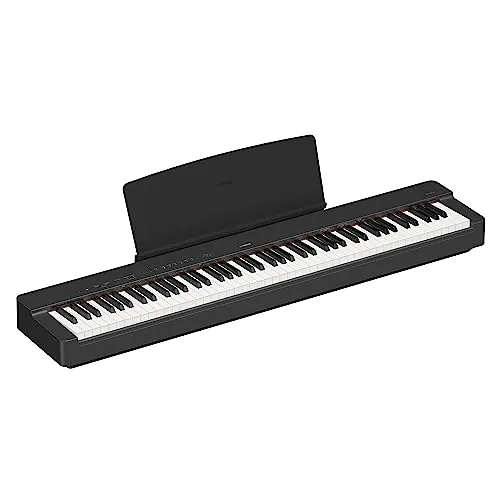
Yamaha P-225B vs Roland FP-30X-BK: App Connections, Pedals and Desk Fit
For these black U.S. 88-key models, choose by how you connect apps and by the opening where the keyboard body will sit. Roland documents Bluetooth audio and MIDI plus USB audio/MIDI. Yamaha supports Smart Pianist through USB or, on iOS, an optional UD-BT01; its U.S. page also describes Bluetooth audio, while its specifications and manual retain an area/country qualifier. Both list a basic sustain footswitch, but their dedicated stand-and-three-pedal options differ. Roland is 26 mm narrower; Yamaha is 12 mm shallower and 22 mm lower with the music rest off.
Read comparison
Roland FP-30X vs Kawai ES120: USB Recording and Stand Setup
Both are black, portable 88-key digital pianos with Bluetooth audio and MIDI. Roland documents USB-B audio and MIDI to a computer for music-production software. Kawai documents USB-to-HOST for MIDI and LINE OUT for audio recording to an external device. Choose the route that fits your setup, then check desk or stand space and confirm what the ES120 seller includes for pedals.
Read comparison