
Products compared
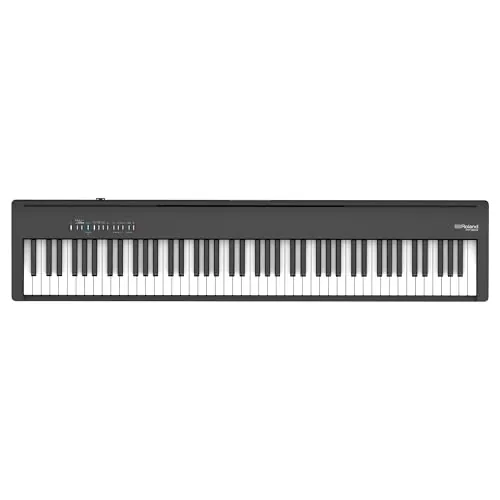
Roland
Roland FP-30X Digital Piano
Black U.S. Roland FP-30X-BK model with PHA-4 Standard action, USB computer audio/MIDI and Bluetooth audio/MIDI. The included accessories list names a DP-2 pedal switch and music rest; KSC-70 stand and KPD-70 pedal board are optional.
Model FP-30X-BK
Amazon ASIN B08SW1RCR2
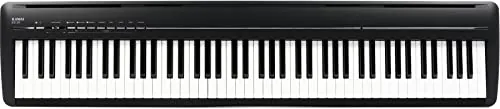
Kawai
Kawai ES120 Digital Piano
Black U.S. Kawai ES120B variant. Kawai’s ES120 manual names an F-1SP switch pedal. Confirm the seller’s exact bundle for the stand and pedal parts you need.
Model ES120B
Amazon ASIN B0BMZ4PZHP
Differences that matter
Direct USB audio to computer music-production software
Roland FP-30X Digital Piano · Roland explicitly documents USB AUDIO and USB MIDI over the FP-30X USB-B Computer port and describes recording tracks in music-production software. Kawai documents USB-to-HOST for MIDI and LINE OUT for piano audio recording to another device.
View FP-30X-BK on Amazon (paid link)Sources for Computer audio recording path
Sources for Bluetooth modes
Sources for Named keyboard action
Sources for Headphone and line-output planning
Sources for Piano footprint and stand/pedal plan
Start with the recording connection you need
For direct computer recording, Roland documents USB audio and MIDI on the FP-30X's USB-B Computer port, including recording tracks in music-production software. That makes it the clearer documented match when you want the piano's audio to enter a DAW over USB.
Kawai's ES120 manual draws a narrower line between data and audio: USB-to-HOST sends and receives MIDI, while LINE OUT connects the piano's sound to an external audio device for recording. A practical ES120 setup can use USB MIDI for notes/control and a separate interface or recorder for audio. Do not assume the USB port carries the piano audio.
Separate Bluetooth playback from piano recording
Both makers list Bluetooth Audio and Bluetooth MIDI, but those are distinct jobs: Bluetooth Audio plays audio from another device through the piano, while Bluetooth MIDI connects with supported apps or transfers MIDI data. If your goal is a recording of the piano's own sound, use the model's documented wired audio path rather than treating Bluetooth playback as a DAW recording connection.
The action names are also different—Roland PHA-4 Standard and Kawai Responsive Hammer Compact. Both sources specify 88 keys. Those labels help you arrange an in-person trial if key response matters to you; published descriptions do not establish a feel winner.
Plan the stand, pedal and actual footprint
Roland lists the DP-2 pedal switch among FP-30X accessories and identifies the KSC-70 stand and KPD-70 dedicated pedal board as separately sold options. Kawai's ES120 manual names the F-1SP switch pedal and the compatible HML-2 stand and F-351/GFP-3 triple-pedal options. Because Kawai's product page also carries general 'Stand and Pedal sold separately' wording, verify the exact ES120 offer before treating a pedal as included.
For a desk setup, the makers list widths of 1,300 mm for Roland and 1,305 mm for Kawai. Roland explicitly measures with the music rest detached; Kawai's dimensions line does not say whether its rest is attached. Compare those figures as a planning prompt, not as a guaranteed installed footprint. Measure the chosen stand, music rest, bench/knee space and cable access at home.
Product details
Roland FP-30X Digital Piano
Roland's U.S. FP-30X page documents USB audio and MIDI between the piano and a computer, and describes recording tracks in music-production software. It lists the DP-2 pedal switch among included accessories and lists the KSC-70 stand and KPD-70 three-pedal unit as separate options.
Kawai ES120 Digital Piano
The ES120 manual defines USB-to-HOST as a USB B-to-A computer connection for sending and receiving MIDI data. It identifies LINE OUT as the connection for external audio devices and recording. The manual lists an F-1SP switch pedal as included, while Kawai's U.S. product page also shows general 'Stand and Pedal sold separately' wording; verify the specific offer contents.
Before you buy
Community discussions
Choosing a computer-recording route
Roland FP-30X Digital Piano
An FP-30X owner who wanted to record pieces asked whether to connect by USB to a laptop or use the line outputs with an external audio interface. The post asks about the workflow and does not report a tested result.
What to check
If computer recording matters, compare the documented USB audio and LINE OUT routes with the inputs and software you plan to use; the owner’s question does not establish a successful setup.
Checking a furniture-style bundle
Kawai ES120 Digital Piano
A home-use shopper compared Kawai ES120 and Roland FP-30X offers that included dedicated stands and pedals in their European market. Those offer contents do not establish what U.S. listings include.
What to check
For a fixed setup, check the exact U.S. seller package and stand and pedal part numbers. Use the guide’s listed accessory details for the two U.S. variants rather than assuming another market’s bundle applies.
Common questions
Can the ES120 record its piano sound over USB-to-HOST?
Kawai describes USB-to-HOST as sending and receiving MIDI data, and identifies LINE OUT for sending the piano’s audio to another device. If computer recording is your goal, match the LINE OUT route to the input and cable you plan to use; the ES120 documentation does not list USB audio recording.Kawai ES120 Owner's Manual (English)
Do both pianos support Bluetooth audio and MIDI?
Their makers document both modes. Audio streams from a smart device to the piano for playback; MIDI connects with compatible music apps or sends/receives performance data. For recording the piano's own audio into computer software, use the separately documented wired routes above.Roland FP-30X Digital Piano — U.S. product specificationsKawai ES120 Owner's Manual (English)
Should I count on an F-1SP sustain pedal in every ES120 offer?
No. The ES120 manual and technical specifications identify an F-1SP switch pedal, but Kawai's product page also displays general wording that stand and pedal are sold separately. Check the exact seller package before relying on that inclusion.Kawai ES120 Owner's Manual (English)Kawai ES120 Digital Piano — U.S. product page
Sources and scope
This is a manufacturer-documentation comparison, not a hands-on test of key feel, sound, recording quality, or latency. Kawai lists an F-1SP switch pedal in its ES120 manual and technical specifications, but its US product page also displays general wording that stand and pedal are sold separately; confirm the exact seller package. Manufacturer dimension definitions are not fully parallel, so measure the actual setup, including music rest, stand, cables, and playing position.
Related comparisons
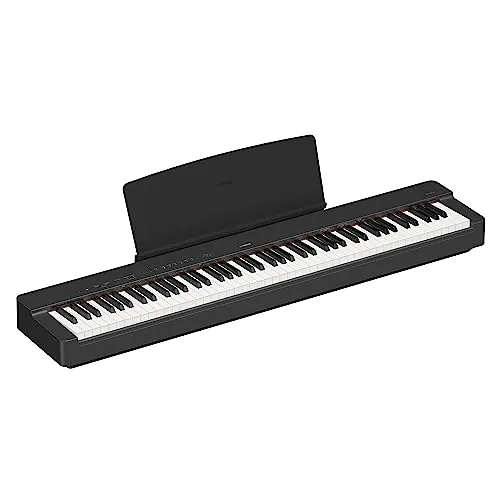
Yamaha P-225B vs Roland FP-30X-BK: App Connections, Pedals and Desk Fit
For these black U.S. 88-key models, choose by how you connect apps and by the opening where the keyboard body will sit. Roland documents Bluetooth audio and MIDI plus USB audio/MIDI. Yamaha supports Smart Pianist through USB or, on iOS, an optional UD-BT01; its U.S. page also describes Bluetooth audio, while its specifications and manual retain an area/country qualifier. Both list a basic sustain footswitch, but their dedicated stand-and-three-pedal options differ. Roland is 26 mm narrower; Yamaha is 12 mm shallower and 22 mm lower with the music rest off.
Read comparison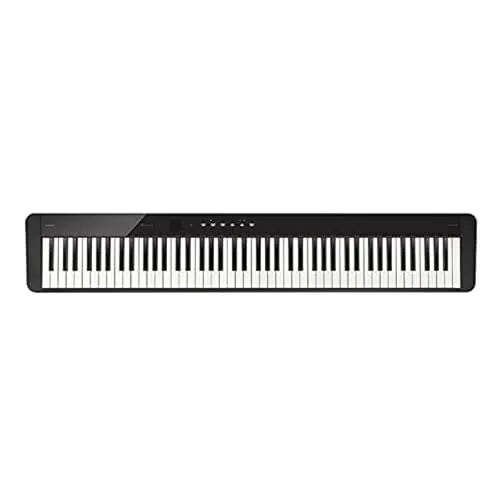
Roland FP-30X-BK vs Casio PX-S1100BK: Power, Space and Recording Setup
Both are black 88-key portable digital pianos, but the U.S. manufacturer pages describe different setup advantages. Casio lists optional six-AA battery operation, an included WU-BT10 wireless MIDI/audio adapter and USB-A drive recording/playback with that adapter unplugged. Roland lists USB-B computer audio/MIDI plus a separate USB-A memory port. On paper, Casio is wider but shallower; the published measurement bases are not identical, so use them as a first-pass fit check rather than a complete stand footprint.
Read comparison