
Products compared
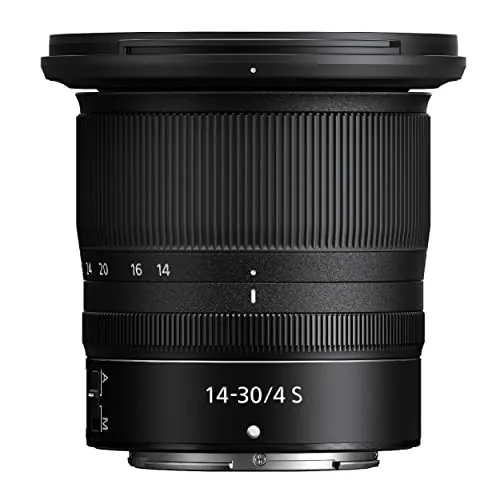
Nikon
NIKKOR Z 14-30mm f/4 S
Nikon USA FX-format, constant f/4 ultra-wide zoom; Nikon Z mount.
Model 20070
Amazon ASIN B07MS6299X
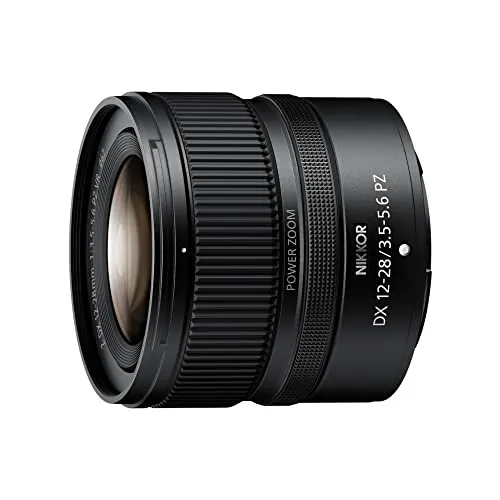
Nikon
NIKKOR Z DX 12-28mm f/3.5-5.6 PZ VR
Nikon USA DX-format, power-zoom lens with in-lens VR; Nikon Z mount.
Model 20118
Amazon ASIN B0C2RHKLDK
Differences that matter
What matters most to you?
Choose a priority to see what it changes.
Sources for Image format on an FX body
Sources for Same-format framing on a DX body
Start with the camera's image format
The first question is whether your camera needs the full FX image area. Nikon labels the 14-30mm f/4 S as an FX lens and lists FX and DX compatibility. The 12-28mm is a DX-format lens; its manual says an FX-format camera uses the DX image area, recording fewer pixels and focus points. So an FX body can use the 12-28mm, but it does not provide full FX coverage in this documented setup.
For a DX camera, compare like with like: Nikon specifies 90°–50° for the 14-30mm on DX and 99°–53° for the 12-28mm. That makes the 12-28mm's listed wide end broader on the same format, while the 14-30mm reaches a slightly tighter listed view at the long end. These angles help plan framing; they are not a comparative image-quality result.
Choose the zoom workflow you will actually use
The 14-30mm changes focal length with its zoom ring. Its reference guide says to extend the retractable lens before use, so include that step when you take it out stored in its retracted position.
The 12-28mm uses a powered zoom ring and an internal mechanism that keeps the barrel length fixed during zooming. Nikon documents additional camera, grip, remote, software, or app controls only for compatible setups; firmware and camera menu availability matter. Before choosing it for remote or button-operated video framing, check the manual and firmware notes for your exact body rather than assuming every control works with every Z camera.
Check filters and listed accessories before checkout
The 14-30mm takes 82mm screw-on filters and weighs about 485g; its manual lists an HB-86 hood and CL-C1 case among supplied accessories. The 12-28mm takes 67mm filters and weighs about 205g; its manual lists front and rear caps as supplied and identifies the HB-112 hood and CL-C4 case as compatible accessories. Compare those thread sizes against filters you already own.
Manufacturer documentation is a useful checklist, but a retailer can sell bundles or listings with different contents. Confirm the exact offer and included items for the ASIN you intend to buy; do not assume a hood, case, or other accessory is included because it appears in a compatible-accessories list.
Product details
NIKKOR Z 14-30mm f/4 S
NIKKOR Z DX 12-28mm f/3.5-5.6 PZ VR
- Format and focal length
- DX format; 12–28mm Source
- Maximum aperture range
- f/3.5–5.6 across the zoom range Source
- DX-format angle of view
- 99°–53° Source
- Filter thread and approximate weight
- 67mm screw-on filter; 205g Source
- Zoom mechanism
- Power zoom; Nikon describes an internal zoom mechanism with a fixed barrel length Source
Before you buy
Community discussions
A real-estate video buyer considers the DX power-zoom workflow
NIKKOR Z DX 12-28mm f/3.5-5.6 PZ VR
In a real-estate video discussion, a commenter suggested trying the DX 12–28mm power zoom for gimbal work.
What to check
Check how the DX lens frames the room on your camera. If you use a gimbal, test its balance and the zoom controls on the exact setup you will carry.
Common questions
Can the Nikon Z DX 12-28mm PZ VR be used on an FX Z camera?
Nikon's manual documents restrictions: the FX camera uses the DX image area, which reduces the recorded pixel count and number of focus points. If you need full FX image area, the 14-30mm f/4 S is the FX-format option in this pair.NIKKOR Z DX 12-28mm f/3.5-5.6 PZ VR Reference GuideNIKKOR Z 14-30mm f/4 S — Nikon USA model 20070
Which lens shows a wider listed view on a DX camera?
Nikon lists 99°–53° for the 12-28mm and 90°–50° for the 14-30mm on DX. Compare those same-format figures; they do not establish sharpness or distortion performance.NIKKOR Z 14-30mm f/4 S Reference GuideNIKKOR Z DX 12-28mm f/3.5-5.6 PZ VR Reference Guide
Does power zoom work from every Nikon Z camera or a phone?
Do not assume it does. Nikon conditions controls on a compatible camera and current documentation. Its product page names Z 30 and Z fc for camera magnification-button and 11-speed support, and notes future software updates for some app/computer functions. Nikon's lens firmware page says additional zoom-control functions depend on camera menu availability.NIKKOR Z DX 12-28mm f/3.5-5.6 PZ VR — Nikon USA model 20118NIKKOR Z DX 12-28mm f/3.5-5.6 PZ VR Reference GuideNIKKOR Z DX 12-28mm PZ VR Firmware 1.10 — Nikon Download Center
Do both lenses take the same filters?
No. Nikon specifies an 82mm screw-on filter for the 14-30mm f/4 S and a 67mm screw-on filter for the DX 12-28mm PZ VR.NIKKOR Z 14-30mm f/4 S — Nikon USA model 20070NIKKOR Z DX 12-28mm f/3.5-5.6 PZ VR — Nikon USA model 20118
Sources and scope
This compares Nikon documentation; no hands-on lens test was conducted. Nikon identifies the 14-30mm as FX format and the 12-28mm as DX format; the 12-28mm manual says an FX-format camera uses the DX image area with fewer recorded pixels and focus points. Camera-specific power-zoom controls and available menus depend on the body, firmware, software, and apps. No comparative sharpness, autofocus, stabilization, handling, video, or image-quality result is claimed. Verify the exact camera, lens firmware, and retailer box contents before purchase.
Related comparisons
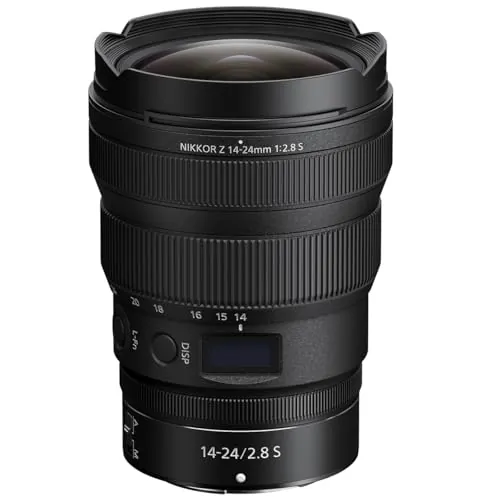
Nikon Z 14-24mm f/2.8 S vs 14-30mm f/4 S: Filters, Range and Packing
Both assigned U.S. listings are Nikon Z-mount FX ultra-wide zooms beginning at 14mm. Nikon lists the NIKKOR Z 14-24mm f/2.8 S (model 20097) at 14–24mm with a constant f/2.8 maximum aperture. The NIKKOR Z 14-30mm f/4 S (model 20070) reaches 30mm at f/4 and accepts 82mm screw-in filters. The 14-24 instead uses a 112mm front screw-in filter with the HB-97 hood, or a separate cut-to-fit sheet filter in its rear slot. The 14-30 retracts to about 85mm from the camera mount for storage, but Nikon says it must be extended before taking pictures. Choose by exposure aperture, the 24–30mm framing you use, your existing filters and how you pack the lens.
Read comparison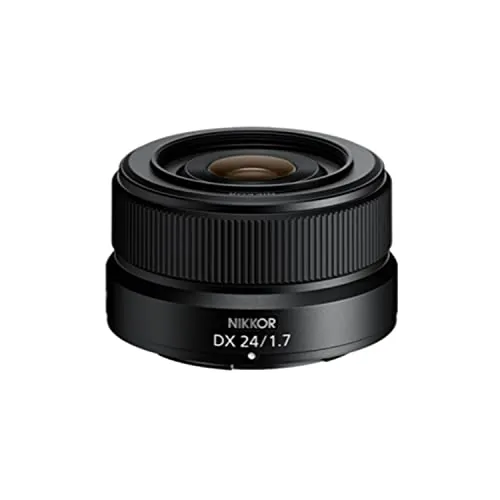
Nikon Z DX 24mm f/1.7 vs 12-28mm PZ VR: Fixed View or Video Zoom?
Both are Nikon Z-mount DX lenses, but they support different shooting routines. The 24mm f/1.7 stays at one view; the 12-28mm spans 99° to 53° on DX and offers an 11-speed power zoom. Check your camera’s supported controls and firmware before choosing the powered workflow.
Read comparison