
Products compared
Nikon
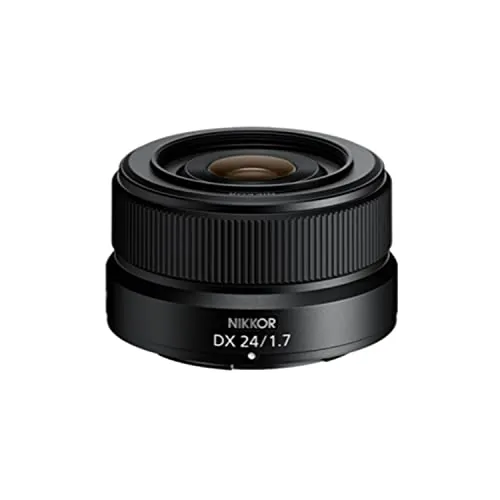
Nikon NIKKOR Z DX 24mm f/1.7
U.S. Nikon model 20119; Z-mount DX-format fixed-focal-length prime.
Model 20119
Amazon ASIN B0C6P4CTTT
Nikon
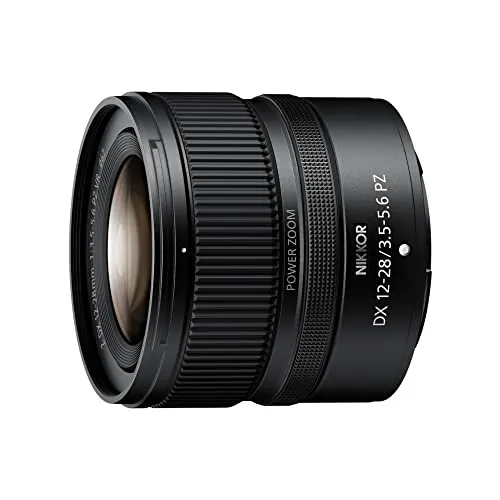
Nikon NIKKOR Z DX 12-28mm f/3.5-5.6 PZ VR
U.S. Nikon model 20118; Z-mount DX-format wide-angle power-zoom lens.
Model 20118
Amazon ASIN B0C2RHKLDK
Differences that matter
What matters most to you?
Choose a priority to see what it changes.
Sources for Focal length and DX framing
Sources for Maximum aperture specification
Sources for Mount, format and stabilization documentation
Decide whether you want to move the camera or zoom the lens
The 24mm is a prime: Nikon lists one focal length and a 61° maximum angle of view in DX format. If that view suits the scenes you make and you are happy to reframe by changing your position, the 24mm gives you a simple fixed-view workflow. Its f/1.7 maximum aperture is a published specification, not a guarantee of a particular exposure or image result.
The 12-28mm covers a 99° to 53° DX angle of view. Start at 12mm when the shot needs a wider view, then tighten toward 28mm without swapping lenses. This is useful when your position is constrained, but decide from the framing range you will actually use rather than assuming a zoom range is automatically better.
For video, verify the control chain before paying for power zoom
Nikon documents 11 selectable speeds for the 12-28mm power zoom and describes repeatable transitions at a selected speed. The zoom ring is listed as a control; Nikon names camera magnification buttons and full 11-speed support for the Z 30 and Z fc. Other bodies can require firmware, and Nikon’s lens firmware 1.10 adds zoom operation on compatible cameras plus additional menus whose availability depends on the camera Reference Guide.
Nikon also lists a separately sold MC-N10 grip and ML-L7 Bluetooth remote. Its product page labels SnapBridge and NX Tether zoom functions as requiring a subsequent software update. Check the current status for your camera and software before choosing the lens for a phone-, computer- or remote-controlled setup. The 24mm prime stays at one focal length during a take.
Read the VR statement within its stated limits
Nikon explicitly specifies built-in optical VR for the 12-28mm and rates it at 4.5 stops under a defined CIPA setup: an APS-C/DX-format camera with camera VR set to NORMAL and the zoom at maximum telephoto. That is the manufacturer’s stated condition, not a direct stabilization comparison with the prime.
The consulted Nikon U.S. page for the 24mm identifies its model and lens specifications but does not state lens-VR status. If stabilization matters to a handheld still or video setup, verify the exact camera and lens support in current Nikon documentation instead of treating an omitted specification as proof of no stabilization.
Product details
Nikon NIKKOR Z DX 24mm f/1.7
The 24mm f/1.7 is the fixed-view choice: you work at one focal length and reframe by moving or changing the camera position. Nikon lists an f/1.7 maximum aperture; that specification alone does not predict exposure results or guarantee a low-light image advantage.
Nikon NIKKOR Z DX 12-28mm f/3.5-5.6 PZ VR
The 12-28mm PZ VR is the framing-range choice: it covers a wider-to-less-wide view without swapping lenses and adds an 11-speed powered zoom. Confirm the controls on your camera before buying around a camera-button, app or remote workflow. Nikon explicitly lists built-in VR with a stated test condition; do not treat that rating as a comparison test against the 24mm.
- Focal-length range / maximum aperture
- 12-28mm; maximum aperture f/3.5 at the wide end (the lens is specified f/3.5-5.6). Source
- DX angle of view
- 99° to 53° across the stated zoom range. Source
- Power zoom
- 11 selectable speeds; camera magnification buttons and all 11 speeds are specified for the Z 30 and Z fc. Other controls depend on camera and software/firmware support. Source
- Built-in optical VR
- Nikon rates it at 4.5 stops under its stated CIPA conditions: DX camera, camera VR set to NORMAL, zoom at maximum telephoto. Source
- Mount / format
- Nikon Z mount; DX format. Source
Before you buy
Community discussions
Planning lens size and framing for a gimbal
Nikon NIKKOR Z DX 12-28mm f/3.5-5.6 PZ VR
In a real-estate video discussion, a commenter suggested trying the DX 12–28mm power zoom for gimbal work.
What to check
If you film on a gimbal, check the lens dimensions, weight, and controls for the exact body and rig. Think through how you would frame both ends of a take.
Finding a role for a 24mm prime
Nikon NIKKOR Z DX 24mm f/1.7
A Nikon Zfc owner already has a 28mm f/2.8 and 40mm f/2, and asks whether the NIKKOR Z DX 24mm f/1.7 would add value to that kit.
What to check
List the focal lengths you already carry, and decide what you would use a 24mm prime or a wider zoom for on your camera.
Common questions
Will the 12-28mm power zoom work from any Nikon Z camera button?
Nikon specifies camera magnification-button control and all 11 speeds for the Z 30 and Z fc. Nikon’s product page says some other cameras may need firmware, and lens firmware 1.10 adds zoom controls on compatible cameras; menu availability varies by body. Check your camera Reference Guide and current firmware.NIKKOR Z DX 12-28mm f/3.5-5.6 PZ VR, model 20118 — Nikon Imaging USANIKKOR Z DX 12-28mm PZ VR Firmware 1.10 — Nikon Download Center
Can I choose the 12-28mm for app-controlled zoom?
Nikon lists SnapBridge and NX Tether as control paths but its U.S. lens page says those functions require a subsequent software update. Confirm current app/software and camera support before buying around that control method.NIKKOR Z DX 12-28mm f/3.5-5.6 PZ VR, model 20118 — Nikon Imaging USA
Does the 24mm f/1.7 have no VR?
The Nikon U.S. product page consulted does not state the 24mm lens’s VR status. That omission is not proof of absence. If stabilization is essential, check Nikon’s current documentation for your exact lens and camera body.NIKKOR Z DX 24mm f/1.7, model 20119 — Nikon Imaging USANIKKOR Z DX 12-28mm f/3.5-5.6 PZ VR, model 20118 — Nikon Imaging USA
Is the 12-28mm’s 4.5-stop VR rating a direct comparison with the 24mm?
No. Nikon states the 12-28mm rating under a specific CIPA setup: an APS-C/DX camera, camera VR set to NORMAL and the lens at maximum telephoto. No comparative stabilization test is represented here.NIKKOR Z DX 12-28mm f/3.5-5.6 PZ VR, model 20118 — Nikon Imaging USA
Sources and scope
This guide compares Nikon-published model specifications and documented controls, not tested image quality, autofocus, low-light results, stabilization effectiveness or video smoothness. Nikon’s U.S. 24mm page does not state that lens’s VR status; this omission is not treated as proof that it lacks stabilization. Nikon’s 12-28mm camera-button and software controls have model, firmware and software conditions; confirm the current Reference Guide for your body.
Related comparisons
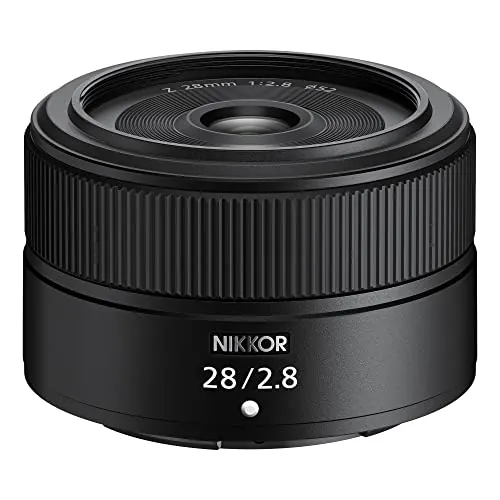
Nikon NIKKOR Z DX 24mm f/1.7 vs NIKKOR Z 28mm f/2.8: DX Crop or FX Coverage?
These lenses share Nikon’s Z mount but cover different sensor formats. The DX 24mm f/1.7 gives a wider 61° view on DX and, on an FX body, Nikon says the camera uses the DX image area with fewer recorded pixels and focus points. The regular, non-SE 28mm f/2.8 supports FX coverage and records a 53° view on DX. Decide by the camera format and framing you actually need, then check aperture, close-focus distance and filter size.
Read comparison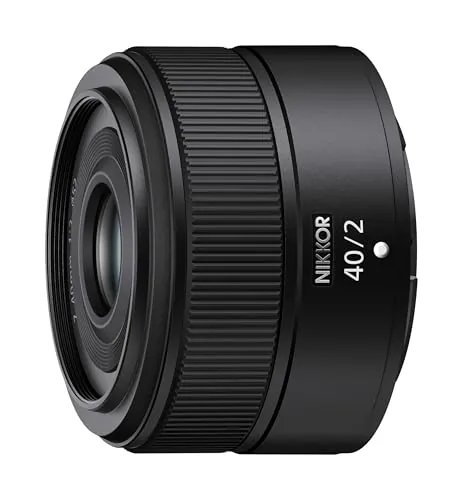
Nikon Z 40mm f/2 vs Z DX 24mm f/1.7: Choose Your Frame and Format
On the same Nikon DX body from the same position, the NIKKOR Z DX 24mm f/1.7 records a wider view (61°) than the regular, non-SE NIKKOR Z 40mm f/2 (38°50′). Choose 24mm when a small room or group scene leaves little room to step back. Choose 40mm for a tighter DX composition or when your lens plan needs full FX image-area coverage. The DX 24mm still mounts on an FX-format Z camera, but Nikon says it switches the camera to DX image area, reducing recorded pixels and focus points. Both are fixed primes; compare their exact f-number, filter size and supplied accessories before ordering.
Read comparison