
Products compared
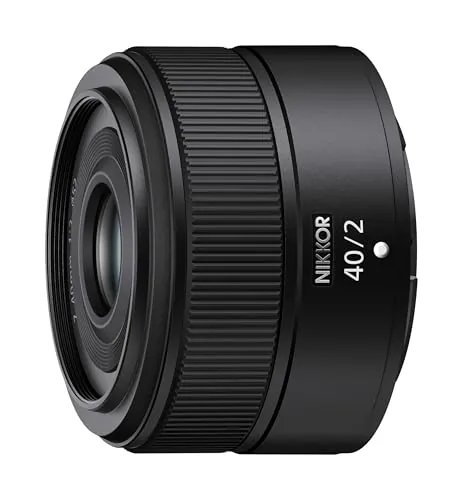
Nikon
Nikon NIKKOR Z 40mm f/2 Lens
Regular non-SE version; FX-format prime with Nikon Z mount. Do not substitute the special-edition 40mm f/2 (SE).
Model 20102
Amazon ASIN B09G57BXZ4
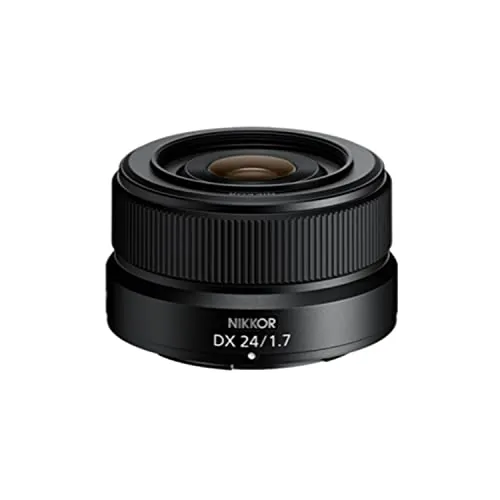
Nikon
Nikon NIKKOR Z DX 24mm f/1.7 Lens
DX-format prime with Nikon Z mount; Nikon describes the FX-body behavior as DX image-area use, not mount incompatibility.
Model 20119
Amazon ASIN B0C6P4CTTT
Differences that matter
What matters most to you?
Choose a priority to see what it changes.
Sources for How much fits in the DX frame
Sources for Lens format and use on an FX body
Sources for Maximum aperture printed in the model specifications
Sources for Supplied caps, hood and compatible filter diameter
Start with the frame you want on DX
On a Nikon DX body, the main everyday difference is how much of the scene fits from your shooting position. Nikon lists a 61° DX angle for the 24mm and 38°50′ for the 40mm. If you take group photos in a small room, photograph a tabletop scene without moving the furniture, or film yourself with the camera nearby, the 24mm is the wider option by specification. If you want a tighter crop from the same spot, the 40mm is the narrower option.
A simple pre-buy exercise is to use an existing zoom at 24mm and 40mm from the distance you usually shoot. If you have no zoom, look through the camera retailer's return policy and Nikon's angle specs; do not assume you can always step backward enough to fit a wider scene. This describes expected framing, not test performance.
Decide whether future FX coverage is an actual requirement
The regular 40mm f/2 is an FX-format lens and Nikon lists it as compatible with FX and DX. The DX 24mm can be used on an FX-format Nikon Z camera, but its guide says the camera uses DX image area, with fewer recorded pixels and focus points. A lens that mounts on a body and a lens that covers its full FX image area are not the same promise.
If your main camera is DX and no FX body is part of the real plan, choose for the DX composition you need now. If retaining full FX image-area coverage is non-negotiable, the 40mm is the choice between these two; note that its DX angle is narrower. Nikon recommends current camera firmware for the DX 24mm because earlier versions may not detect it correctly or provide all features.
Read the aperture numbers as specifications, not a verdict
Nikon lists a maximum aperture of f/2 for the 40mm and f/1.7 for the DX 24mm. If your compatibility or purchase brief explicitly requires f/1.7, only the 24mm carries that stated value here. It does not follow from this comparison that it will autofocus faster, look sharper, create a preferred background or deliver a specific low-light result.
Both are fixed focal-length prime lenses; the question is which combination of focal length, format and listed maximum aperture fits your camera and framing. Keep those separate when deciding instead of treating the aperture marking as an overall quality score.
Check the filter thread and what the lens guide lists as supplied
Nikon specifies a 52mm filter thread for the 40mm and 46mm for the DX 24mm. If you already own a UV, polarizing or neutral-density filter, read its diameter marking before ordering. The sizes are different, so a filter you already own will not screw directly onto the other diameter without an adapter ring.
The 40mm reference guide lists the front LC-52B and rear LF-N1 caps as supplied; its CL-C4 case is listed as compatible, not supplied. The DX 24mm guide lists front/rear caps and HN-42 hood as supplied, and also lists CL-C4 as a compatible case. Check the selected ASIN's current package contents and seller before treating the manual list as a guarantee for a marketplace bundle.
Product details
Nikon NIKKOR Z 40mm f/2 Lens
- Format and DX view
- FX-format lens; Nikon lists 38°50′ maximum angle of view on DX and 57° on FX. Source
- Maximum aperture
- f/2. Source
- Filter and supplied accessories
- 52mm screw-in filters; reference guide lists front and rear caps as supplied, with the CL-C4 case compatible and sold separately. Source
- Approximate weight
- 170 g (6 oz), per Nikon's reference guide. Source
Nikon NIKKOR Z DX 24mm f/1.7 Lens
- Format and DX view
- DX-format lens; Nikon lists a 61° maximum angle of view on DX. On an FX-format body the camera uses DX image area. Source
- Maximum aperture
- f/1.7. Source
- Filter and supplied accessories
- 46mm filters; reference guide lists front and rear caps plus HN-42 lens hood as supplied. CL-C4 lens case is compatible and separate. Source
- Approximate weight
- 135 g (4.8 oz), per Nikon's reference guide. Source
Before you buy
Community discussions
Z50II owner chooses between 40mm and DX 24mm portrait primes
Nikon NIKKOR Z 40mm f/2 Lens
A Z50 Mark II owner with the NIKKOR Z DX 18–140mm VR is considering another lens for portraits and background blur, listing the Z 40mm f/2 and Z DX 24mm f/1.7 as options.
What to check
On your Z50II, compare the framing you want for portraits at the two focal lengths, then check the exact DX/FX format and filter-size details before buying.
Common questions
Which is wider on a Nikon DX camera, the 40mm or 24mm?
The 24mm. Nikon lists a 61° maximum DX angle of view for the DX 24mm f/1.7 and 38°50′ for the 40mm f/2. From the same DX camera position, the 24mm includes more of the scene. This is a framing comparison, not an optical-quality result.NIKKOR Z 40mm f/2, Nikon USA model 20102NIKKOR Z DX 24mm f/1.7, Nikon USA model 20119
Can I mount the DX 24mm on a Nikon FX Z camera?
Nikon's reference guide says the lens uses the camera's DX image area on an FX-format body, which reduces recorded pixels and focus points. That is a crop behavior, not a statement that it cannot mount. Check your exact body manual and firmware before purchase.NIKKOR Z DX 24mm f/1.7 Reference Guide
Which lens has the wider maximum aperture?
The DX 24mm f/1.7 has the numerically wider maximum-aperture specification; the 40mm is f/2. That alone does not establish a sharper image, better focus or a preferred background rendering.NIKKOR Z 40mm f/2, Nikon USA model 20102NIKKOR Z DX 24mm f/1.7, Nikon USA model 20119
Do these lenses use the same filters and include the same hood?
No. Nikon lists a 52mm filter attachment for the 40mm and 46mm for the DX 24mm. The 40mm reference guide lists front and rear caps as supplied; the DX 24mm reference guide lists front/rear caps and the HN-42 hood. Check the exact selected retail package before checkout.NIKKOR Z 40mm f/2 Reference GuideNIKKOR Z DX 24mm f/1.7 Reference Guide
Is the Z 40mm f/2 SE the same lens as the one compared here?
No. This guide covers the regular, non-SE 40mm f/2, Nikon model 20102. Match the exact model number and ASIN on the offer; the SE edition is a separately named product and is outside this comparison.NIKKOR Z 40mm f/2, Nikon USA model 20102
Sources and scope
This comparison uses Nikon’s published specifications and reference guides. It does not assess sharpness, distortion, autofocus speed, bokeh, low-light results or preferred rendering. It covers Nikon model 20102 (regular, non-SE 40mm f/2) and model 20119 (DX 24mm f/1.7). Nikon lists accessories for those lens models, but seller packages can differ; confirm the exact lens and included items on the retailer’s listing before checkout.
Related comparisons
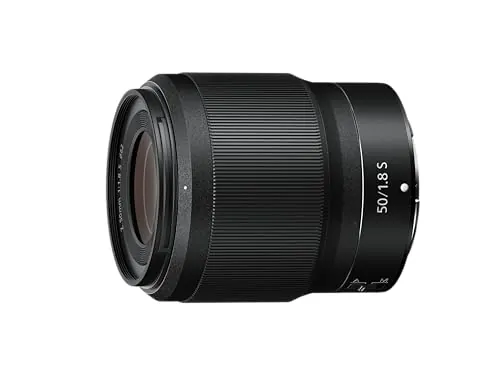
NIKKOR Z 50mm f/1.8 S vs Z 40mm f/2: Framing and Carry Fit
Both exact Nikon Z lenses work on FX and DX bodies, but their published angles of view differ on each format. The 40mm f/2 is shorter and lighter with a 52 mm filter thread; the 50mm f/1.8 S uses 62 mm filters and Nikon lists a hood and case among its supplied accessories. Check the angle for your sensor format and the exact retailer box before buying.
Read comparison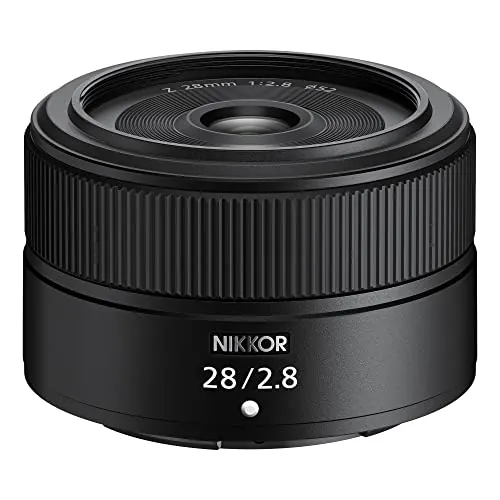
Nikon NIKKOR Z 40mm f/2 vs 28mm f/2.8: Framing, Close Focus and Filter Fit
This is the standard black NIKKOR Z 28mm f/2.8 (Nikon model 20101), not the separately listed 28mm f/2.8 SE. Both assigned products are FX-format Z-mount primes with a 52mm filter thread. On FX, Nikon lists a 75° angle of view for the 28mm and 57° for the 40mm; on DX the figures are 53° and 38°50′. The 40mm has the wider maximum aperture (f/2 versus f/2.8), while the 28mm focuses closer from the camera's focal plane (0.19m versus 0.29m). Pick based on framing and working setup, not an unverified image-quality ranking.
Read comparison