
Products compared
Nikon
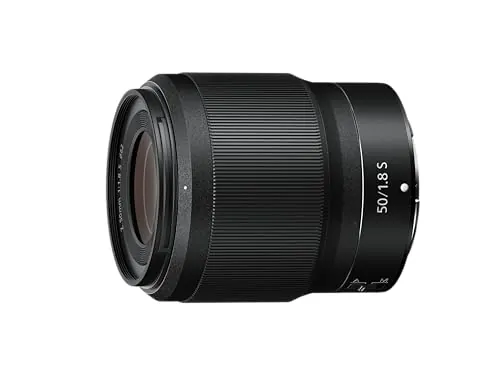
NIKKOR Z 50mm f/1.8 S
Nikon USA model 20083, standard black 50 mm f/1.8 S prime for Nikon Z mount; not a different 50 mm lens or camera kit.
Model 20083
Amazon ASIN B07GQ6FR5F
Nikon
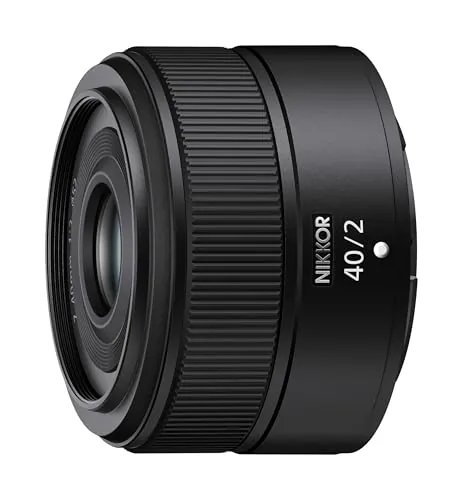
NIKKOR Z 40mm f/2
Nikon USA standard black model 20102; not the separately listed 40mm f/2 (SE) Special Edition.
Model 20102
Amazon ASIN B09G57BXZ4
Differences that matter
Sources for Framing on your camera format
Sources for Lens size and carry weight
Sources for Filter thread
Sources for Z-body format compatibility and supplied-item references
First choose the view for your sensor format
These are both fixed-focal-length Nikon Z primes. The published maximum angle is 47° FX / 31°30′ DX for the 50mm S and 57° FX / 38°50′ DX for the standard 40mm f/2. At the same camera position, that makes the 40mm view broader on either format; this conclusion follows from the maker’s angles and does not say anything about measured image quality.
If you use a DX Z body, compare the DX values rather than relying on the 50mm and 40mm names alone. Nikon USA calls the 40mm’s DX view 60 mm equivalent. Neither lens zooms, so changing framing requires repositioning or changing lenses.
Check the bag, filter drawer and camera combination
Nikon lists the 50mm S at about 76 × 86.5 mm and 415 g, compared with about 70 × 45.5 mm and 170 g for the 40mm. These published measurements make the 40mm the smaller, lighter option on paper, but they do not tell you how either mounted combination balances or feels. Compare the figures with your own camera and bag before deciding.
The native filter threads differ: 62 mm on the 50mm and 52 mm on the 40mm. Check the markings on filters you already own. A differently sized filter needs a separately verified adapter if you intend to reuse it; it does not screw directly onto the other lens.
Confirm exact Z model and box contents
Nikon lists both exact models for FX and DX formats and uses the Nikon Z mount. This comparison is for the black standard NIKKOR Z 40mm f/2, model 20102; Nikon also lists a 40mm f/2 (SE) Special Edition, which is a different edition. Verify that the model on the seller’s page matches before ordering.
Nikon’s Z-lens brochure lists the HB-90 hood and CL-C1 case among the supplied accessories for the 50mm f/1.8 S. Nikon’s exact 40mm f/2 specification lists LC-52B front and LF-N1 rear caps. Manufacturer references do not verify a specific retailer or used listing, so check its exact box contents if any item matters to your purchase.
Product details
NIKKOR Z 50mm f/1.8 S
The 50mm f/1.8 S has a narrower listed angle than the 40mm on both FX and DX bodies. It is also longer and heavier in Nikon’s specifications, with a larger filter thread; Nikon’s Z-lens brochure lists a hood and case for this exact lens.
NIKKOR Z 40mm f/2
The standard 40mm f/2 has the broader listed angle on either sensor format and a shorter, lighter body. Its filter thread is 52 mm; Nikon’s specifications list the two lens caps as supplied accessories.
- FX / DX maximum angle of view
- 57° FX; 38°50′ DX; Nikon USA describes its DX field of view as 60 mm equivalent Source
- Dimensions and weight
- Approx. 70 × 45.5 mm; 170 g Source
- Filter thread and listed supplied accessories
- 52 mm screw-in filter; Nikon’s 40mm specification lists LC-52B front cap and LF-N1 rear cap Source
Before you buy
Community discussions
A Z5 II buyer weighed the 50mm f/1.8 S against the 40mm f/2
NIKKOR Z 50mm f/1.8 S
A new Z5 II owner looking for one prime asked whether the 50mm f/1.8 S justified its higher price over the 40mm f/2, and whether either lens remained useful when stopped down. The post records purchase criteria, not a firsthand comparison or an answer about optical performance.
What to check
Compare the price difference against the focal length and aperture you expect to use, and seek a stopped-down comparison from a source that has tested both exact lenses. This question alone does not establish that the 50mm is worth more or performs better.
A new Z-system buyer asked about the 50mm S and 40mm f/2
NIKKOR Z 50mm f/1.8 S
The buyer preferred a 40mm field of view on another camera system and asked whether the Nikon Z 50mm f/1.8 S offered reasons to choose it over the 40mm f/2, including autofocus, size, weight, and build. This is a useful list of comparison criteria, not evidence of a Nikon Z performance difference.
What to check
If field of view is your main concern, try both on the body you plan to use. Verify autofocus, size, weight, and build from exact-model specifications or a firsthand comparison; the poster's experience on another system does not answer those questions.
Common questions
Which lens is wider on a DX Nikon Z camera?
Nikon lists a 38°50′ DX maximum angle for the NIKKOR Z 40mm f/2 and 31°30′ for the NIKKOR Z 50mm f/1.8 S. Nikon USA describes the 40mm as having a 60 mm-equivalent field of view on DX. This describes published framing, not image quality.Nikon USA NIKKOR Z 50mm f/1.8 S, model 20083Nikon USA NIKKOR Z 40mm f/2, model 20102
Can both lenses fit a Nikon Z DX or FX camera?
Nikon’s product specifications list FX and DX compatibility for both exact lenses, and both use the Nikon Z mount. Check your camera’s mount and exact lens model before ordering; this comparison does not cover F-mount lenses or adapters.Nikon USA NIKKOR Z 50mm f/1.8 S, model 20083Nikon USA NIKKOR Z 40mm f/2, model 20102
Can I use the same filter on both?
Not by directly screwing it onto either native thread: Nikon lists 62 mm for the 50mm f/1.8 S and 52 mm for the 40mm f/2. A suitable step ring would be a separate item; confirm its fit for the particular filter and lens.Nikon USA NIKKOR Z 50mm f/1.8 S, model 20083Nikon USA NIKKOR Z 40mm f/2, model 20102
Does the 50mm lens include a hood and case?
Nikon’s Z-lens brochure lists the HB-90 hood and CL-C1 case among supplied accessories for the NIKKOR Z 50mm f/1.8 S. The exact seller or used offer can vary, so confirm the package contents on that offer before relying on those items.Nikon NIKKOR Z lens brochure, 50mm f/1.8 S accessory listing
Sources and scope
This is a specifications and setup comparison, not an optical or handling test. Published angles and dimensions do not establish sharpness, autofocus, bokeh, balance on a particular body or preferred framing. Manufacturer accessory lists also do not verify a particular seller’s bundle.
Related comparisons
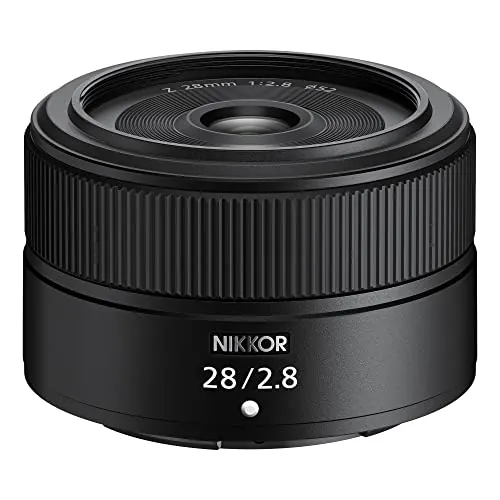
Nikon NIKKOR Z 40mm f/2 vs 28mm f/2.8: Framing, Close Focus and Filter Fit
This is the standard black NIKKOR Z 28mm f/2.8 (Nikon model 20101), not the separately listed 28mm f/2.8 SE. Both assigned products are FX-format Z-mount primes with a 52mm filter thread. On FX, Nikon lists a 75° angle of view for the 28mm and 57° for the 40mm; on DX the figures are 53° and 38°50′. The 40mm has the wider maximum aperture (f/2 versus f/2.8), while the 28mm focuses closer from the camera's focal plane (0.19m versus 0.29m). Pick based on framing and working setup, not an unverified image-quality ranking.
Read comparison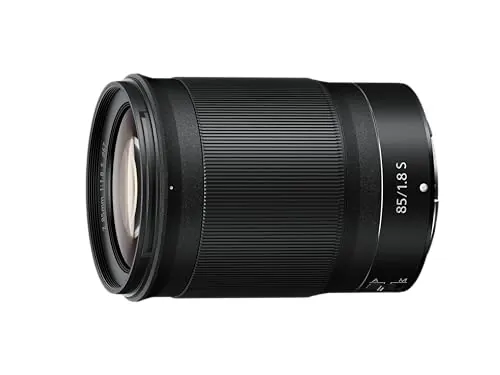
Nikon NIKKOR Z 50mm f/1.8 S vs 85mm f/1.8 S: Framing, Filters and Carry
Both are Nikon Z-mount f/1.8 prime lenses, but the 50mm records a wider listed angle of view and is shorter, lighter and built for a 62mm filter; the 85mm gives a tighter listed angle and uses a 67mm filter. Nikon markets the 85mm toward portraits and similar tighter subjects. Choose by your camera format, subject distance, existing filters and bag space. These published specifications do not establish a sharpness, autofocus or background-rendering winner.
Read comparison