
Products compared
Nikon
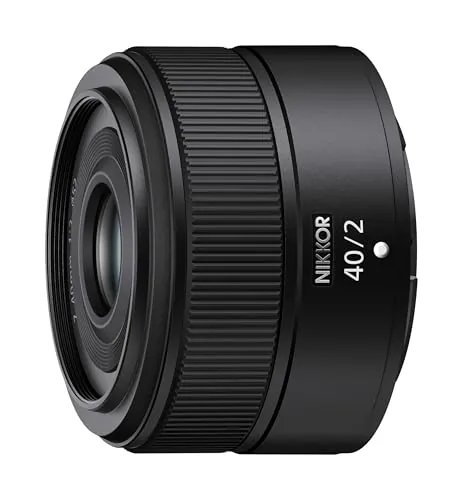
Nikon NIKKOR Z 40mm f/2
Assigned US black standard 40mm f/2 FX-format Z-mount prime, Nikon model 20102. Nikon lists a 57° FX and 38°50′ DX angle of view, 0.29m minimum focus distance from the focal plane, 0.17× maximum reproduction ratio and a 52mm screw-in filter attachment. It is fixed at 40mm; it does not zoom.
Model NIKKOR Z 40mm f/2 (20102)
Amazon ASIN B09G57BXZ4
Nikon
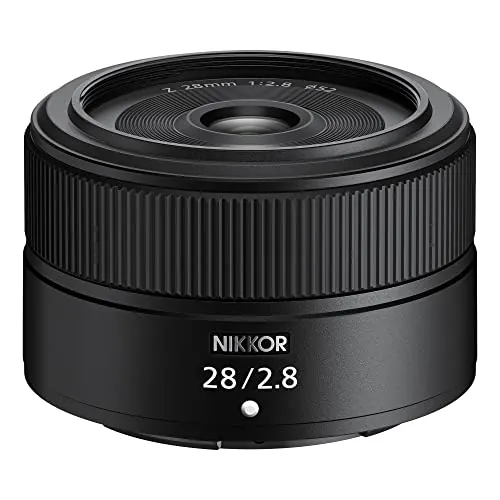
Nikon NIKKOR Z 28mm f/2.8
Assigned US black standard 28mm f/2.8 FX-format Z-mount prime, Nikon model 20101. This is not the separate 28mm f/2.8 SE, model 20110. Nikon lists a 75° FX and 53° DX angle of view, 0.19m minimum focus distance from the focal plane, 0.2× maximum reproduction ratio and a 52mm screw-in filter attachment. It is fixed at 28mm; it does not zoom.
Model NIKKOR Z 28mm f/2.8 (20101), standard non-SE
Amazon ASIN B09M62RJK2
Differences that matter
What matters most to you?
Choose a priority to see what it changes.
Sources for Listed framing on your camera format
Sources for Close-focus specification
Sources for Filter and carry dimensions
Match the lens to the angle you want
Start with the camera format rather than choosing by the word 'normal' or 'wide.' Nikon's listed angles are 57° FX / 38°50′ DX for the 40mm and 75° FX / 53° DX for the standard 28mm. That makes the 28mm's documented view wider on either format. Think about your usual room size, subject distance and ability to step back; these are fixed primes, so each asks you to compose around one focal length.
These published angles describe framing geometry, not a tested preference or a claim that one lens looks better. If you already have a lens, compare its focal length and the scenes where you run out of space or want a tighter crop before choosing.
Use the close-focus and aperture numbers in context
The 40mm is specified at f/2 maximum aperture and 0.29m minimum focus distance; the standard 28mm is f/2.8 and 0.19m. Nikon measures those minimum distances from the camera's focal plane, so they do not tell you the space between the front of the lens and the subject. The 28mm's listed reproduction ratio is 0.2× versus 0.17× for the 40mm. These are manufacturer specifications, not a macro designation or a comparative image test.
For a real subject, place the camera where you expect to use it and check both composition and clearance. Prefer the 40mm only if its tighter view and f/2 specification align with your use; prefer the 28mm when the wider listed framing and closer focal-plane minimum are more useful.
Check filter reuse and the exact 28mm edition
Nikon specifies a 52mm filter attachment for both assigned lenses, so an existing correctly sized screw-in filter may fit either thread. The listed barrel measurements are close but not identical: the 40mm is about 70 × 45.5mm and 170g; the standard 28mm is about 70 × 43mm and 155g.
The 28mm has a separate SE edition. Nikon identifies the standard lens as model 20101 and the SE as model 20110; the global SE specification lists 71.5mm diameter and 160g. Read the model code on the exact listing before relying on the standard lens dimensions or placing an order.
Product details
Nikon NIKKOR Z 40mm f/2
Nikon NIKKOR Z 28mm f/2.8
Before you buy
Community discussions
A travel buyer compared 28mm and 40mm framing with a zoom
Nikon NIKKOR Z 28mm f/2.8
A buyer choosing one compact prime for indoor, evening, and night travel photos used a 24–120mm zoom to simulate both focal lengths. They preferred the calmer composition at 40mm in some scenes, while liking how 28mm included more and 40mm felt more intimate. This is one photographer's framing preference, not a lens performance test; the body and 28mm edition are not specified.
What to check
Before choosing, try both focal lengths in the spaces and scenes you expect to photograph. This post supports checking your own framing preference; it does not establish that either focal length is universally better or identify a standard versus SE 28mm.
Common questions
Is the assigned Nikon 28mm f/2.8 the SE version?
No. The selected listing and its exact model are the standard NIKKOR Z 28mm f/2.8, Nikon model 20101. Nikon lists a separate NIKKOR Z 28mm f/2.8 SE, model 20110, with a different exterior specification. This comparison uses the standard version's measurements.NIKKOR Z 28mm f/2.8 — Nikon USA product specifications, standard model 20101NIKKOR Z 28mm f/2.8 (SE) — Nikon Imaging global lineup, separate model 20110NIKKOR Z 28mm f/2.8 SE — Nikon USA product listing, separate model 20110
Can either lens zoom between 28mm and 40mm?
No. These are fixed-focal-length lenses: one is 40mm and the other 28mm. Choose the framing you want for your camera format, or compare a separate zoom lens if changing focal length without changing lenses is important.NIKKOR Z 40mm f/2 — Nikon USA product specifications, model 20102NIKKOR Z 28mm f/2.8 — Nikon USA product specifications, standard model 20101
Do they use the same filter size?
Nikon lists a 52mm screw-in filter attachment for both the standard 40mm f/2 and standard 28mm f/2.8. Confirm the filter itself is 52mm before reusing it.NIKKOR Z 40mm f/2 — Nikon USA product specifications, model 20102NIKKOR Z 28mm f/2.8 — Nikon USA product specifications, standard model 20101
Sources and scope
Specifications are Nikon-published values for the US standard black 40mm model 20102 and standard black 28mm model 20101, cross-checked against Nikon's global model pages. Nikon lists focal-plane minimum focus distance, not subject-to-front-element working distance. The stated aperture is the lens's maximum aperture; it does not establish exposure, autofocus or image-quality results. No hands-on, optical-quality, autofocus, bokeh, low-light, distortion, stabilization, reliability or current-price comparison was performed. Nikon's separate 28mm f/2.8 SE (model 20110) has a different exterior specification and is not the assigned 28mm product.
- NIKKOR Z 40mm f/2 — Nikon USA product specifications, model 20102
- NIKKOR Z 28mm f/2.8 — Nikon USA product specifications, standard model 20101
- NIKKOR Z 40mm f/2 — Nikon Imaging global lineup
- NIKKOR Z 28mm f/2.8 — Nikon Imaging global lineup, standard model
- NIKKOR Z 28mm f/2.8 (SE) — Nikon Imaging global lineup, separate model 20110
- NIKKOR Z 28mm f/2.8 SE — Nikon USA product listing, separate model 20110
Related comparisons
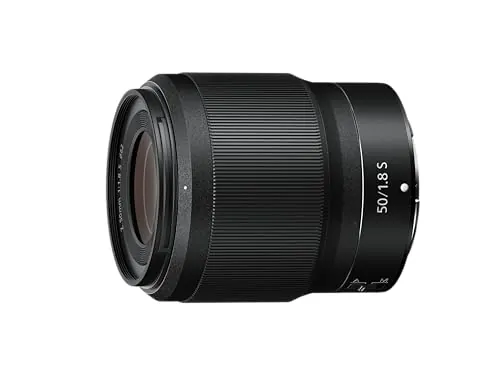
NIKKOR Z 50mm f/1.8 S vs Z 40mm f/2: Framing and Carry Fit
Both exact Nikon Z lenses work on FX and DX bodies, but their published angles of view differ on each format. The 40mm f/2 is shorter and lighter with a 52 mm filter thread; the 50mm f/1.8 S uses 62 mm filters and Nikon lists a hood and case among its supplied accessories. Check the angle for your sensor format and the exact retailer box before buying.
Read comparison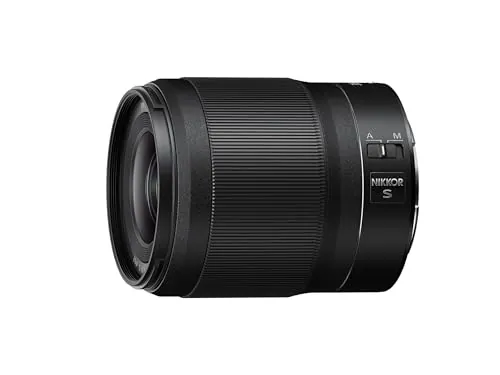
Nikon NIKKOR Z 40mm f/2 vs 35mm f/1.8 S: Framing, Close Focus and Carry
Both are Nikon Z-mount primes that Nikon lists as compatible with FX and DX bodies. Nikon's listed angle of view is wider on the 35mm f/1.8 S; the 40mm f/2 is 200 g lighter and 40.5 mm shorter by listed body dimensions. The 35mm focuses closer on the published minimum-focus specification, but that number is not the free space between the front of the lens and a subject. Check framing on your own FX/DX body and test tabletop clearance in the actual setup.
Read comparison