
Products compared
Nikon
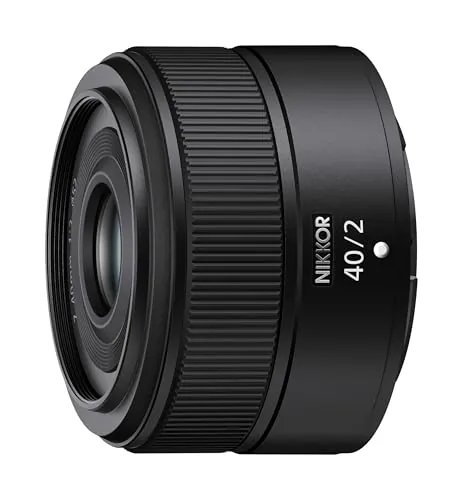
Nikon NIKKOR Z 40mm f/2
U.S. Nikon Z-mount 40mm FX-format prime; Nikon also lists DX compatibility. Exact product code 20102.
Model 20102
Amazon ASIN B09G57BXZ4
Nikon
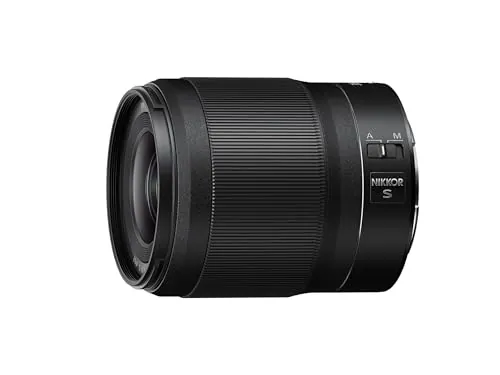
Nikon NIKKOR Z 35mm f/1.8 S
U.S. Nikon Z-mount 35mm FX-format S-Line prime; Nikon also lists DX compatibility. Exact product code 20081.
Model 20081
Amazon ASIN B07GPVJ6HG
Differences that matter
What matters most to you?
Choose a priority to see what it changes.
Sources for Listed field of view by camera format
Sources for Minimum focus specification and tabletop clearance
Sources for Carry dimensions and weight
Sources for Filter system and supplied accessories
Sources for Maximum aperture and scene priority
Choose framing for your body and usual camera position
Both Nikon U.S. product pages list Nikon Z mount and FX/DX compatibility. For an FX body, Nikon lists 57° for the 40mm and 63° for the 35mm. On DX, the listed figures are 38°50′ and 44°. The wider 35mm view can include more of a room or scene from the same position; if you cannot move the camera, use the angle figure for your sensor format to think through the framing. If you can move, try each focal length from the place you typically stand before choosing.
The maximum-aperture specifications are f/2 for the 40mm and f/1.8 for the 35mm. Treat that as a listed control range, not proof of low-light image quality or a promise about a particular shutter speed, autofocus behavior or background rendering.
Plan a real tabletop or close-up setup
Nikon lists 0.29 m minimum focus distance and 0.17× maximum reproduction ratio for the 40mm; for the 35mm it lists 0.25 m and 0.19×. A smaller focusing-distance figure means a shorter published minimum-focus specification, but it does not tell you how much room remains in front of the lens. Nikon explicitly describes the 40mm distance as measured from the focal plane; neither specification should be read as the gap from the front of the lens to a plate or product.
Before buying for close tabletop work, mount the lens on the body you use, choose the hood/filter configuration you plan to keep on it, and try your typical camera and subject positions. Confirm focus, framing, and that the front of the lens does not crowd the subject. For true macro magnification, compare a lens whose maker lists the reproduction ratio you actually need; these numbers alone do not make either prime a macro lens.
Balance the carry difference against your bag and body
Nikon lists the 40mm at about 70 mm maximum diameter, 45.5 mm from the mount flange, and 170 g. The 35mm f/1.8 S is about 73 mm in diameter, 86 mm from the flange, and 370 g. Subtracting the listed numbers, the 40mm is 200 g lighter and 40.5 mm shorter. If you carry a lens all day, put the camera and lens together in your bag or on your strap; lens-only dimensions cannot predict mounted balance or comfort.
The filter threads also differ: 52 mm for the 40mm and 62 mm for the 35mm. If you already own filters, check their size and whether you are willing to use adapters. Nikon's global model pages list caps for the 40mm and caps, HB-89 hood and CL-C1 case for the 35mm; still check the exact retailer bundle before treating those as guaranteed box contents.
Verify the exact U.S. lens at checkout
The selected listing items are Nikon NIKKOR Z 40mm f/2, product 15175 / ASIN B09G57BXZ4, and NIKKOR Z 35mm f/1.8 S, product 15183 / ASIN B07GPVJ6HG. The Nikon USA pages identify model codes 20102 and 20081 respectively, matching the listing data models. Confirm the product name on the live offer page; do not substitute the visually similar 40mm f/2 SE special edition, 35mm f/1.4, or 35mm f/1.2 S.
A fixed prime means you reframe by moving or changing lenses. If you frequently need to switch quickly between wider room context and a tighter portrait crop without moving, continue comparing zoom options rather than expecting a fixed 35mm or 40mm to cover both angles.
Product details
Nikon NIKKOR Z 40mm f/2
Nikon lists the 40mm f/2 for Nikon Z mount and FX/DX formats, with 57° FX and 38°50′ DX angles of view. Its compact listed build is the portability choice in this pair; specs alone do not establish image quality or handling.
Nikon NIKKOR Z 35mm f/1.8 S
Nikon lists the 35mm f/1.8 S for Nikon Z mount and FX/DX formats, with a wider listed angle of view, shorter minimum focus distance, and higher maximum reproduction ratio than the 40mm. Those are specification differences, not a controlled image-quality or close-up test.
Before you buy
Community discussions
Z6 traveler asks about a compact native prime
Nikon NIKKOR Z 40mm f/2
A Z6 owner preparing for an overseas trip says their usual 50mm f/1.8G is used with an FTZ adapter and feels too bulky for this trip. They ask how a native Z 40mm f/2 compares for travel carry; the post does not report a test.
What to check
Compare the whole setup you would take, including body and any adapter, then check the two lenses’ listed size, weight and angle of view against your bag and preferred framing.
Common questions
Which lens gives a wider view on an FX or DX Nikon Z body?
Nikon lists 63° FX and 44° DX for the 35mm f/1.8 S, compared with 57° FX and 38°50′ DX for the 40mm f/2. Those are manufacturer angle-of-view specifications; your framing also depends on camera position.NIKKOR Z 35mm f/1.8 S | Interchangeable Mirrorless Lens (U.S.)NIKKOR Z 40mm f/2 | Interchangeable lens for mirrorless (U.S.)
Can the 35mm f/1.8 S focus closer than the 40mm f/2?
Nikon lists 0.25 m minimum focus distance and a 0.19× maximum reproduction ratio for the 35mm, versus 0.29 m and 0.17× for the 40mm. Treat those as lens specifications, not as camera-to-subject working clearance or proof that either is a macro lens.NIKKOR Z 35mm f/1.8 S | Z mount LensesNIKKOR Z 40mm f/2 | Z mount Lenses
Will my 52 mm filter fit both lenses?
No, not as a direct screw-in fit: Nikon lists a 52 mm thread for the 40mm and a 62 mm thread for the 35mm f/1.8 S. Check each filter and adapter size before purchasing.NIKKOR Z 40mm f/2 | Interchangeable lens for mirrorless (U.S.)NIKKOR Z 35mm f/1.8 S | Interchangeable Mirrorless Lens (U.S.)
Does the f/1.8 lens guarantee better low-light photos?
Nikon lists a wider maximum aperture on the 35mm f/1.8 S than on the 40mm f/2. That specification alone does not establish a better finished image; results depend on the camera, settings, subject and conditions, and this guide does not test them.NIKKOR Z 35mm f/1.8 S | Interchangeable Mirrorless Lens (U.S.)NIKKOR Z 40mm f/2 | Interchangeable lens for mirrorless (U.S.)
Sources and scope
This guide uses Nikon's listed optical and physical specifications. It does not test image sharpness, bokeh, autofocus speed, low-light results, distortion, focus breathing, or handling. Minimum focus distance is not working clearance from the subject; check the actual camera, lens, hood/filter and subject arrangement. Retailer packages may differ from Nikon's supplied-accessory lists.
Related comparisons
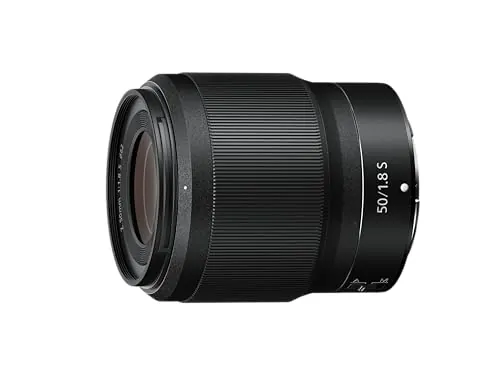
NIKKOR Z 50mm f/1.8 S vs Z 40mm f/2: Framing and Carry Fit
Both exact Nikon Z lenses work on FX and DX bodies, but their published angles of view differ on each format. The 40mm f/2 is shorter and lighter with a 52 mm filter thread; the 50mm f/1.8 S uses 62 mm filters and Nikon lists a hood and case among its supplied accessories. Check the angle for your sensor format and the exact retailer box before buying.
Read comparison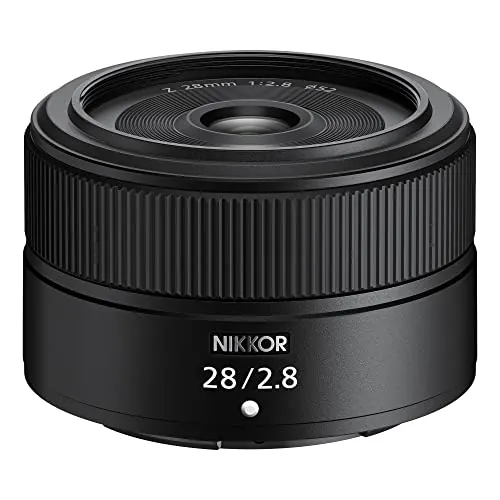
Nikon NIKKOR Z 40mm f/2 vs 28mm f/2.8: Framing, Close Focus and Filter Fit
This is the standard black NIKKOR Z 28mm f/2.8 (Nikon model 20101), not the separately listed 28mm f/2.8 SE. Both assigned products are FX-format Z-mount primes with a 52mm filter thread. On FX, Nikon lists a 75° angle of view for the 28mm and 57° for the 40mm; on DX the figures are 53° and 38°50′. The 40mm has the wider maximum aperture (f/2 versus f/2.8), while the 28mm focuses closer from the camera's focal plane (0.19m versus 0.29m). Pick based on framing and working setup, not an unverified image-quality ranking.
Read comparison