
Products compared
Nikon
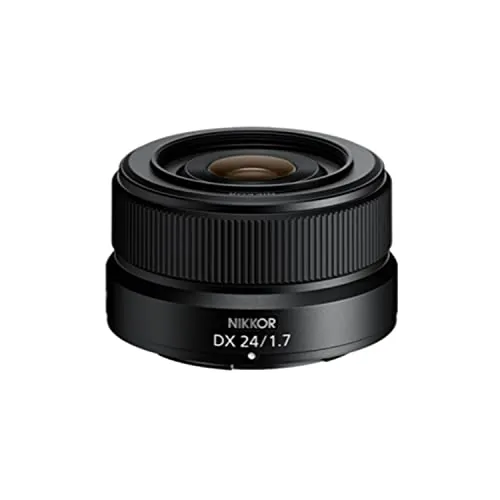
Nikon NIKKOR Z DX 24mm f/1.7
DX-format prime for Nikon Z mirrorless cameras, maximum aperture f/1.7.
Model 20119
Amazon ASIN B0C6P4CTTT
Nikon
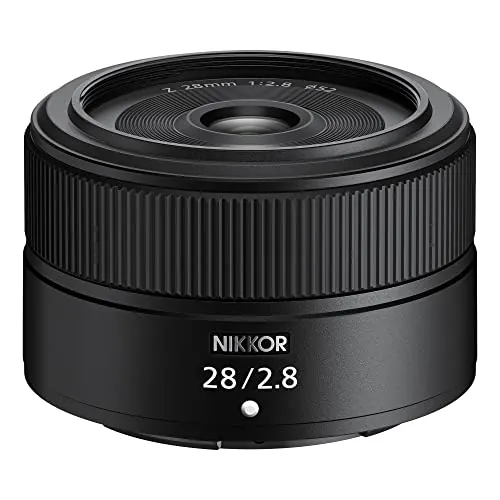
Nikon NIKKOR Z 28mm f/2.8
Standard, non-SE FX-format prime for Nikon Z mirrorless cameras; Nikon lists it as compatible with FX and DX formats.
Model 20101
Amazon ASIN B09M62RJK2
Differences that matter
What matters most to you?
Choose a priority to see what it changes.
Sources for Image area on an FX camera
Sources for Framing on the same DX-format body
Sources for Close focus, carry dimensions and filter thread
First check whether your Nikon Z body is DX or FX
Both lenses use Nikon Z mounts, but the 24mm is a DX-format lens and the standard 28mm is an FX-format lens. Nikon says the DX 24mm used on an FX camera uses the DX image area, which reduces recorded pixels and focus points. If full-frame image area is a must on your FX body, model 20101 is the relevant option in this pair.
A mount match tells you that the lens is intended for Z-mount mirrorless bodies; it does not mean the DX 24mm covers the full FX image area. Nikon also tells owners to consult the camera documentation and use current firmware because older versions may not detect a lens correctly or may lack some features.
On DX, compare the actual frame you want
Nikon lists the 24mm at 61° and the standard 28mm at 53° on DX. If your camera is a DX body, use those same-format numbers to think through how much of a room, street, or group you want in frame from your usual shooting position. The 24mm has the wider view; the 28mm is tighter.
The 28mm's FX coverage may be useful if you also use an FX body, but it does not change the fact that Nikon lists 53° for it on DX. Do not choose based on the full-frame label alone if your photographs will stay on DX.
Choose between the maximum-aperture settings
The DX 24mm's maximum aperture is f/1.7; the standard 28mm's is f/2.8. Treat this as a settings requirement: if you specifically need the 24mm's f/1.7 option, the 28mm does not provide it. If f/2.8 meets your plan and full FX image area matters, the 28mm fits that requirement.
Those specification values do not prove lower-light image quality, background rendering, transmission, sharpness, or autofocus superiority. No matched optical test is being claimed.
Check your close-focus and accessory routine
Both Nikon minimum-focus distances are measured from the camera's focal plane, not the front glass: 0.18 m for the 24mm and 0.19 m for the 28mm. The 1 cm listed difference is small and does not tell you the front-of-lens working clearance or guarantee a particular close-up result.
The 24mm uses 46 mm screw-in filters and the 28mm uses 52 mm. If you already own filters, check their marked diameter against the lens you are considering before ordering. Nikon lists the 24mm at about 135 g and 70 × 40 mm and the 28mm at about 155 g and 70 × 43 mm; use those maker-listed measurements for packing estimates, not as a prediction of handheld comfort.
Before you order
1. Identify the body format from the camera manual. 2. For an FX body, decide whether DX crop on the 24mm is acceptable or whether native FX image area matters. 3. For a DX body, choose between Nikon's listed 61° and 53° views. 4. Check whether f/1.7 is a requirement. 5. Confirm exact US model 20119 or standard non-SE model 20101 and the matching ASIN. 6. Check firmware guidance and filter diameter for the lens you select.
A Nikon Z mount by itself is not a promise that every camera feature works identically on every body. Confirm the exact camera and firmware in Nikon's documentation. This guide does not test optics, camera functions, or handling.
Product details
Nikon NIKKOR Z DX 24mm f/1.7
- Format and mount
- DX format, Nikon Z mount; when used on an FX-format camera, Nikon specifies the DX image area and fewer recorded pixels and focus points. Source
- Aperture and DX angle of view
- Maximum aperture f/1.7; aperture range f/1.7–11; Nikon lists a 61° angle of view on DX. Source
- Close focus and filter thread
- Minimum focus distance is 0.18 m from the camera focal plane; filter attachment is 46 mm. Source
Nikon NIKKOR Z 28mm f/2.8
Before you buy
Community discussions
Choose the DX framing you will use most
Nikon NIKKOR Z DX 24mm f/1.7
A Nikon Zfc owner already has a 28mm f/2.8 and 40mm f/2, and asks whether the NIKKOR Z DX 24mm f/1.7 would add value to that kit.
What to check
On a DX body, compare the guide’s listed 24mm and 28mm fields of view with the framing you want. The 24mm is a DX lens, while the standard 28mm covers FX; check your camera format before choosing.
Common questions
Can the NIKKOR Z DX 24mm f/1.7 mount on a full-frame FX Z camera?
It uses the Nikon Z mount, but Nikon's exact-lens guide says an FX-format camera will use the DX image area, reducing recorded pixels and focus points. Check your exact body manual for camera-specific functions; mounting compatibility is not the same as full-frame image coverage.NIKKOR Z DX 24mm f/1.7 Reference Guide
Which lens gives a wider view on a DX camera?
Nikon lists 61° for the 24mm and 53° for the 28mm on DX. That makes the 24mm the wider listed view on the same format; it does not make an image-quality claim.NIKKOR Z DX 24mm f/1.7 (20119), Nikon USANIKKOR Z 28mm f/2.8 (20101), Nikon USA
Does the 28mm f/2.8 compared here mean the Special Edition?
No. This selected listing is the standard non-SE lens, Nikon model 20101 / ASIN B09M62RJK2. Verify model 20101 in the selected offer rather than substituting a 28mm SE variant.NIKKOR Z 28mm f/2.8 (20101), Nikon USA
Are the minimum focus distances measured from the front element?
No. Nikon's reference guides define these measurements from the camera's focal plane: 0.18 m for the DX 24mm and 0.19 m for the standard 28mm. They are not subject-to-front-of-lens clearance measurements.NIKKOR Z DX 24mm f/1.7 Reference GuideNIKKOR Z 28mm f/2.8 Reference Guide
Sources and scope
This guide covers Nikon NIKKOR Z DX 24mm f/1.7, model 20119 / ASIN B0C6P4CTTT, and the standard non-SE NIKKOR Z 28mm f/2.8, model 20101 / ASIN B09M62RJK2. Nikon's exact-model pages and reference guides support the format, angle-of-view and specification statements. Nikon's 24mm guide says an FX camera uses the DX image area with fewer recorded pixels and focus points; camera-specific functions and firmware should still be checked in the manual for your exact body. The aperture, focus-distance, size and weight figures are specifications, not comparative exposure, image-quality, autofocus or handheld tests. No optical or fit guarantee is made.
Related comparisons
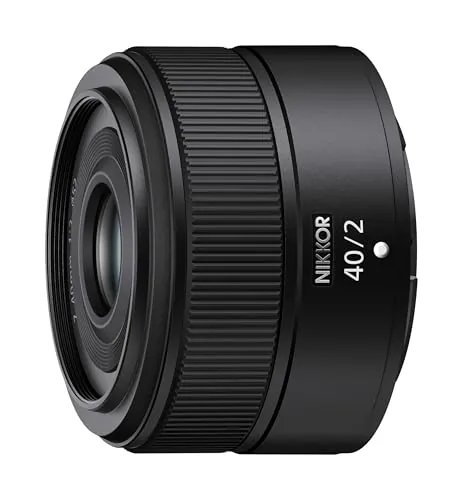
Nikon NIKKOR Z 40mm f/2 vs 28mm f/2.8: Framing, Close Focus and Filter Fit
This is the standard black NIKKOR Z 28mm f/2.8 (Nikon model 20101), not the separately listed 28mm f/2.8 SE. Both assigned products are FX-format Z-mount primes with a 52mm filter thread. On FX, Nikon lists a 75° angle of view for the 28mm and 57° for the 40mm; on DX the figures are 53° and 38°50′. The 40mm has the wider maximum aperture (f/2 versus f/2.8), while the 28mm focuses closer from the camera's focal plane (0.19m versus 0.29m). Pick based on framing and working setup, not an unverified image-quality ranking.
Read comparison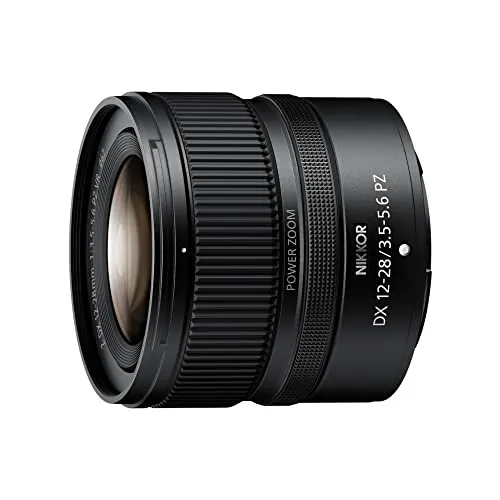
Nikon Z DX 24mm f/1.7 vs 12-28mm PZ VR: Fixed View or Video Zoom?
Both are Nikon Z-mount DX lenses, but they support different shooting routines. The 24mm f/1.7 stays at one view; the 12-28mm spans 99° to 53° on DX and offers an 11-speed power zoom. Check your camera’s supported controls and firmware before choosing the powered workflow.
Read comparison