
Products compared
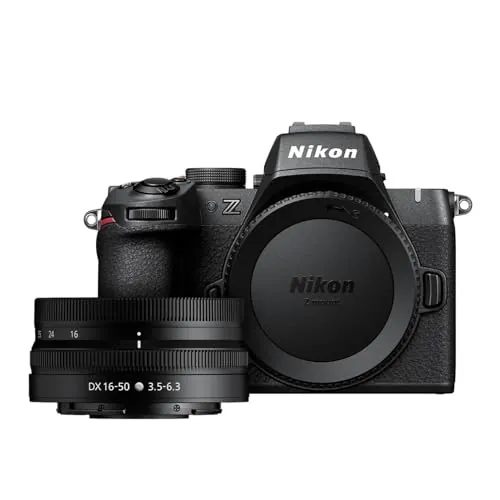
Nikon
Nikon Z50 II with NIKKOR Z DX 16-50mm f/3.5-6.3 VR kit lens
Nikon Z50 II, listed model 1786, one-lens kit with the NIKKOR Z DX 16-50mm f/3.5-6.3 VR. Confirm that the selected retailer package includes this lens; Nikon also lists body-only and other kit configurations.
Model 1786
Amazon ASIN B0DMJJY4L3
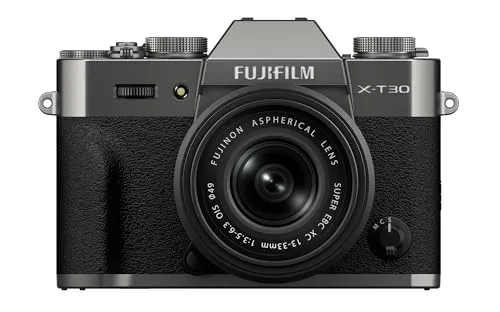
Fujifilm
FUJIFILM X-T30 III with FUJINON XC13-33mmF3.5-6.3 OIS kit lens
FUJIFILM X-T30 III, listed model 16966957, Charcoal Silver kit with the XC13-33mmF3.5-6.3 OIS per the selected listing. Fujifilm's US shop confirms this kit-lens pairing; confirm the retailer's selected color and lens bundle before ordering.
Model 16966957
Amazon ASIN B0FWVBHRLV
Differences that matter
What matters most to you?
Choose a priority to see what it changes.
Sources for Framing from the included kit zoom
Sources for How you change the camera's color look and hand it control
Sources for A later native telephoto option
Start with the framing you need from the lens in the box
The Nikon kit's 16-50mm DX zoom is 24-75mm equivalent on a Z50II. Fujifilm's XC13-33mm kit zoom is 20-50mm equivalent. The Fuji wide end gives a wider angle when you cannot step back in a room or want more of a group in frame; the Nikon long end gives a tighter view before a lens change.
If most of your first pictures are interiors, architecture or group scenes, give the Fuji kit's 20mm-equivalent wide end extra weight. If you often want a tighter portrait or distant framing while keeping the included lens mounted, the Nikon kit reaches farther. Those are framing choices, not image-quality or autofocus judgments.
Compare the controls you will reach for
On the X-T30 III, Fujifilm puts its Film Simulation control on a top-plate dial, with three positions available for custom recipes; a separate AUTO switch is available when you want the camera to handle more of the settings. The official X-T30 III specification page lists 20 Film Simulation modes.
Nikon gives the Z50II a Picture Control button for its listed 31 built-in presets, plus intelligent automatic modes and editable/custom options. The preset names and systems differ, so the counts are not a quality score. Think about whether you prefer turning a dedicated dial to a saved look or pressing a button to access Nikon's Picture Controls.
If you plan to add a telephoto, compare the separate lens paths
Nikon's Z DX 50-250mm is an optional Z-mount DX lens. Using Nikon's stated 1.5× DX equivalence gives a calculated 75-375mm-equivalent range. Fujifilm lists its optional XC50-230mm lens at 76-350mm equivalent, and the X-T30 III uses X mount.
These are close alternatives by published framing range. The Nikon route reaches 25mm equivalent farther at the nominal long end; treat that as a narrow feature-fit reason only if the exact range matters to your subjects. Neither lens is included in the kit, and this comparison does not resolve image quality, tracking, stabilization, price or availability.
Before checkout, match the body and kit lens on the selected listing
Nikon's US product page lists body-only, one-lens, two-lens and other Z50II kit options. Fujifilm's US shop presents X-T30 III color and style selections and identifies the XC13-33mm as a kit lens. Check the selected seller page for the exact named lens and color; a family page or a similar camera title alone does not confirm a particular retailer bundle.
If your first-use framing is still uncertain, write down two real scenes you expect to photograph and decide whether you need more width at the 20mm end or more reach at the 75mm end. That simple check can be more useful than choosing by camera body alone.
Product details
Nikon Z50 II with NIKKOR Z DX 16-50mm f/3.5-6.3 VR kit lens
Consider this kit if 24-75mm-equivalent framing suits your first subjects and you prefer Nikon's button-accessible Picture Controls. Its included zoom reaches farther at the long end than the Fuji kit lens, but it does not start as wide.
FUJIFILM X-T30 III with FUJINON XC13-33mmF3.5-6.3 OIS kit lens
Consider this kit if you want a wider first view from the included lens and prefer Fuji's direct Film Simulation dial and AUTO switch. The supplied 13-33mm zoom ends sooner than Nikon's included 16-50mm lens.
Before you buy
Community discussions
A kit lens that led to a faster prime
Nikon Z50 II with NIKKOR Z DX 16-50mm f/3.5-6.3 VR kit lens
A first-time camera owner bought a used Z50 II with the 16–50mm kit lens and later added the DX 24mm f/1.7 after deciding they wanted a faster aperture. They are happy with the camera and added lens but still question whether a full-frame alternative would have suited their low-light use better. This is one owner’s path, not a comparison test.
What to check
When comparing these kits, frame a few of your usual subjects at the supplied lens’s long end and decide whether a faster prime belongs in your planned budget. The post does not establish that either camera will deliver a particular low-light result.
Choose the lens bundle around your carry and reach needs
Nikon Z50 II with NIKKOR Z DX 16-50mm f/3.5-6.3 VR kit lens
A first-time Z50 II shopper asks whether the compact 16–50mm kit is enough for more distant subjects, or whether to choose an 18–140mm lens or the 16–50mm plus 50–250mm twin kit. The post is a buyer question, not an owner result.
What to check
Compare sample framing at the distances you expect to shoot, then consider whether you prefer one lens or carrying and changing a second lens. Confirm the exact lens bundle on the listing.
Common questions
Which kit starts wider?
The Fujifilm XC13-33mm kit lens is listed at 20mm equivalent on its wide end; Nikon's DX 16-50mm kit lens is 24mm equivalent. Fuji therefore offers a wider stated framing range at that end, but this does not compare lens quality.FUJINON XC13-33mmF3.5-6.3 OIS SpecificationsWhat Can You Do With a Nikon Kit Lens?
Which included zoom reaches farther?
Nikon's included 16-50mm lens reaches 75mm equivalent; Fujifilm's included XC13-33mm reaches 50mm equivalent. This is a tighter-framing distinction, not a claim about autofocus or image quality.What Can You Do With a Nikon Kit Lens?FUJINON XC13-33mmF3.5-6.3 OIS Specifications
Do either of the camera kits include the longer telephoto lens?
No. Nikon's Z DX 50-250mm and Fujifilm's XC50-230mm are separate lens options. Nikon's 75-375mm-equivalent figure is calculated from the DX focal range and Nikon's stated 1.5× equivalence; Fujifilm lists 76-350mm equivalent for its lens.NIKKOR Z DX 50-250mm f/4.5-6.3 VRWhat Can You Do With a Nikon Kit Lens?FUJINON XC50-230mmF4.5-6.7 OIS II Specifications
Does the Fuji look dial mean better colors than Nikon Picture Controls?
The official sources describe different camera controls, not a matched color-quality result. Fuji provides a Film Simulation dial and saved recipes; Nikon provides its Picture Control button and editable/downloadable presets. Choose the workflow that suits you, and use sample files or a controlled test if color output is the deciding factor.FUJIFILM X-T30 III (US Official Shop)Nikon Z50II Mirrorless Camera (Product 1786)
Sources and scope
This guide compares manufacturer-listed focal ranges, control layouts and lens-system options. It is not a controlled side-by-side test of image quality, autofocus, stabilization, video, handling or battery life. The Nikon 75-375mm-equivalent later-telephoto range is calculated from its 50-250mm DX range and Nikon's stated 1.5× DX equivalence; Fujifilm lists 76-350mm equivalent. These future lenses are separate purchases, not included in either assigned camera kit. The listing information identifies the assigned Amazon item to the named camera/lens kit, but the manufacturer pages do not expose the exact Amazon ASIN or all retail color/package codes; verify the selected retailer variant and included lens at checkout.
- FUJIFILM X-T30 III (US Official Shop)
- Introducing FUJIFILM X-T30 III
- Introducing FUJINON XC13-33mmF3.5-6.3 OIS
- FUJIFILM X-T30 III Specifications
- FUJINON XC13-33mmF3.5-6.3 OIS Specifications
- FUJINON XC50-230mmF4.5-6.7 OIS II Specifications
- What Can You Do With a Nikon Kit Lens?
- NIKKOR Z DX 16-50mm f/3.5-6.3 VR
- NIKKOR Z DX 50-250mm f/4.5-6.3 VR
- Nikon Z50II Mirrorless Camera (Product 1786)
Related comparisons
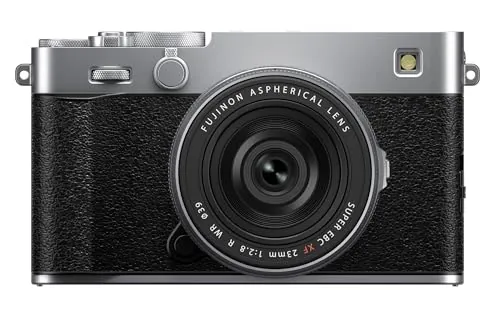
Fujifilm X-E5 XF23mmF2.8 Kit vs X-T30 III XC13-33mm Kit: Prime or Zoom?
The Silver X-E5 kit pairs its camera body with a fixed XF23mmF2.8 R WR lens (35mm-equivalent framing) and in-body stabilization. The Charcoal Silver X-T30 III kit includes an XC13-33mmF3.5-6.3 OIS zoom (20–50mm equivalent), with stabilization in that lens and an AUTO mode selector on the camera. Choose by the framing you want without changing lenses, your preferred control workflow, and whether the microphone plug and movie modes suit your setup. Fujifilm’s specifications do not establish which kit makes better-looking or steadier real-world footage.
Read comparison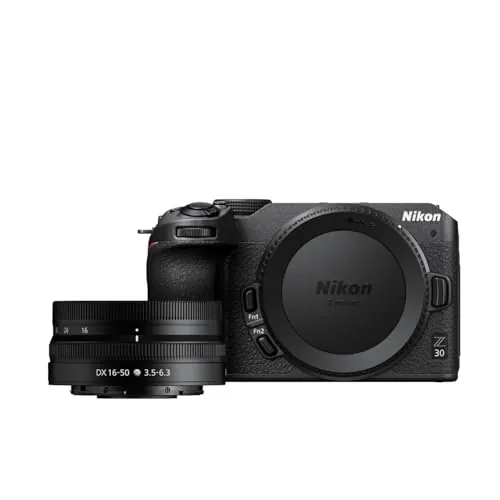
Nikon Z50 II vs Z30 16–50mm Kits: Viewfinder, Controls and Video Modes
These U.S. kits pair different Nikon bodies with the NIKKOR Z DX 16–50mm VR zoom. Both have vari-angle screens and 4K/30p. The Z50 II adds an electronic viewfinder, dedicated Picture Control button, and 4K/60p with a narrower angle of view and electronic VR disabled in that mode. It also documents a Product Review mode for bringing an object close to the camera during video. Decide from your framing and delivery needs, then verify the exact lens kit on the seller page.
Read comparison