
Products compared
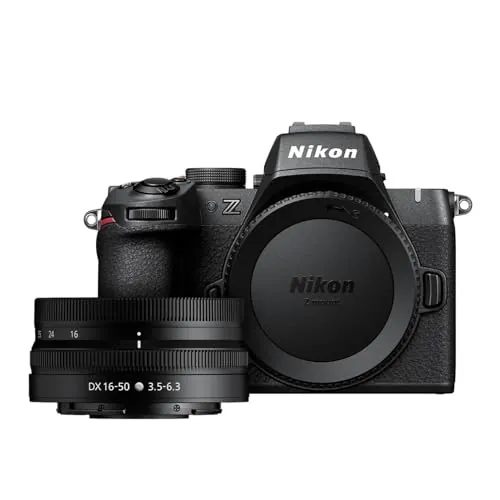
Nikon
Nikon Z50 II with NIKKOR Z DX 16–50mm f/3.5–6.3 VR Lens Kit
Assigned U.S. one-lens kit configuration; confirm the selected seller listing still includes the 16–50mm VR lens.
Model Z50 II (1786)
Amazon ASIN B0DMJJY4L3
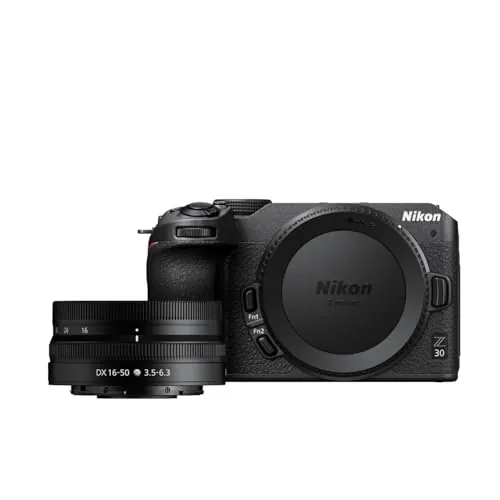
Nikon
Nikon Z30 with NIKKOR Z DX 16–50mm f/3.5–6.3 VR Lens Kit
Assigned U.S. one-lens kit configuration; confirm the selected seller listing still includes the 16–50mm VR lens.
Model Z30 (1749)
Amazon ASIN B0B527QM4X
Differences that matter
What matters most to you?
Choose a priority to see what it changes.
Sources for 4K delivery and framing
Sources for Video stabilization setting
The fast decision: viewfinder or screen-first framing
The Z50 II's built-in electronic viewfinder changes how you frame still photos: you can bring the camera to eye level instead of composing only on the rear display. Nikon's exact-model comparison FAQ lists no electronic viewfinder on the Z30. Both cameras do have vari-angle monitors, so a forward-facing screen is available on either body.
Use the Z50 II's finder as a real requirement if you often prefer eye-level composition. If your normal setup is tripod or desk video with the rear screen facing you, the Z30 still offers that basic framing path. Nikon's manuals describe self-portrait mode on both; check the specific controls and overlays each manual says are available.
Match the camera to your final video format
Both cameras document 4K UHD at 30p. The Z50 II adds 4K/60p, which is relevant if your delivery or editing workflow specifically needs 60-frame 4K footage. Nikon's Z50 II guide warns that this mode uses an angle of view equivalent to about 1.5 times normal video framing and fixes electronic VR to off.
That means the deciding question is not simply whether 60p exists: can you move farther back or use another framing plan if needed, and does your camera support plan still work with electronic VR unavailable? If not, use a different documented mode or choose a camera based on another need. This guide makes no comparison of resulting image quality or stabilization effectiveness.
Controls for a screen-facing recording setup
Both bodies provide a dedicated video-record button, a photo/video selector and a mode dial. The Z50 II body manual also identifies dedicated ISO, exposure-compensation and Picture Control buttons plus viewfinder diopter adjustment. The Z30's labelled body controls include S and E buttons, command dials and the mode dial. These are different direct-control layouts; try the buttons you expect to reach while composing before making them a deciding factor.
If you demonstrate small objects to camera, the Z50 II manual documents Product Review mode: it adjusts focus toward an object brought close to the camera and can be configured with a custom focus-area size. Nikon says the mode changes focus settings while active, so it is a workflow aid rather than a claim of superior focus performance.
Check the exact 16–50mm kit before paying
This comparison covers the U.S. Nikon Z50 II (1786) and Z30 (1749) 16–50mm kit configurations, not body-only listings or different-lens bundles. Nikon lists multiple camera and lens options, and a seller page may include variations. Confirm each listing’s exact camera model and included NIKKOR Z DX 16–50mm f/3.5–6.3 VR lens before checkout.
This guide displays no stored price and makes no price-timing recommendation. Confirm exact kit identity before comparing live offers.
Product details
Nikon Z50 II with NIKKOR Z DX 16–50mm f/3.5–6.3 VR Lens Kit
The Z50 II is the more flexible framing and video-format choice on paper: it adds eye-level viewing and a 4K/60p option. Plan around that mode's crop and electronic-VR restriction, and use a different mode if those limits do not fit the shot.
- Viewfinder
- Built-in electronic viewfinder; Nikon lists a 0.39-inch, approximately 2.36-million-dot OLED finder. Source
- Video modes
- 4K UHD up to 60p; the 60p mode uses an approximately 1.5×-equivalent angle-of-view crop and electronic VR is fixed off. Source
- Self-recording aid
- The manual documents a video Product Review mode that adjusts focus toward objects close to the camera; settings are constrained while it is enabled. Source
Nikon Z30 with NIKKOR Z DX 16–50mm f/3.5–6.3 VR Lens Kit
The Z30 covers a screen-first workflow and 4K up to 30p. Its manual documents a front-facing self-portrait mode, while its physical controls and monitor remain usable within that mode's stated limits.
- Framing
- Vari-angle touchscreen monitor; Nikon's exact-model comparison table lists no electronic viewfinder. Source
- Video modes
- 4K UHD up to 30p and Full HD up to 120p are listed; an electronic VR menu option is documented for video. Source
- Front-screen workflow
- Turning the vari-angle monitor forward enables Self-portrait mode; the manual specifies which controls remain enabled in this mode. Source
Before you buy
Community discussions
Trying how you frame outdoors without a viewfinder
Nikon Z30 with NIKKOR Z DX 16–50mm f/3.5–6.3 VR Lens Kit
A still-photo shopper considering a Z30 asked whether the rear screen would suit outdoor framing. Their shortlist also included the earlier Z50.
What to check
Try framing the same outdoor scene on the rear screen and through the viewfinder. Decide which you would use on your usual outings.
Checking what you can do with the included lens
Nikon Z30 with NIKKOR Z DX 16–50mm f/3.5–6.3 VR Lens Kit
A prospective Z30 buyer considering the 16–50 mm kit wanted to capture street photos and everyday moments without buying another lens.
What to check
List what you usually shoot and try framing it with the supplied lens. Then compare the body features you would actually use.
Common questions
Does the Nikon Z30 have an electronic viewfinder?
Nikon's cross-model support table says the Z30 has no electronic viewfinder. It is composed using the vari-angle monitor; the Z50 II includes an electronic viewfinder.Nikon Imaging Japan support FAQ: Z50II, Z50 and Z30 differences (Japanese)Nikon Imaging Z50II product specifications
Can both cameras frame video from in front of the lens?
Both manuals describe a self-portrait mode when the vari-angle monitor faces forward. The Z30 manual lists its available controls in that mode; the Z50 II manual also documents an on-screen Product Review mode for showing nearby objects.Z30 Reference Guide: Camera controls and Self-portrait modeZ50II Reference Guide: The monitor and Self-portrait modeZ50II Reference Guide: Product Review mode
What should I account for if I record 4K/60p on the Z50 II?
Nikon's reference guide says that 4K/60p has an angle of view equivalent to about 1.5 times normal video framing and electronic VR is fixed off. Choose a supported mode that matches your framing and support plan.Z50II Reference Guide: Video frame size and rate options
Is the Z50 II automatically better for image quality or autofocus?
This comparison does not establish that. It is based on Nikon's documented controls and formats, not a controlled comparison of the exact kits or measurements of image quality, focus accuracy, or stabilization effectiveness.Z50II Reference Guide: Video frame size and rate optionsZ30 Reference Guide: Specifications
Sources and scope
This guide compares documented features for the U.S. Nikon Z50 II (1786) and Z30 (1749) camera-and-lens kits. It does not report hands-on results or establish image quality, autofocus accuracy, stabilization effectiveness, battery life, durability or a universal winner. Seller bundles can change; confirm the camera body and included 16–50mm lens on the exact listing before checkout.
- Nikon Z50 II U.S. model 1786 product page
- Nikon Z30 U.S. model 1749 product page
- Z50II Reference Guide: Camera body
- Z30 Reference Guide: Parts of the camera
- Z30 Reference Guide: Camera controls and Self-portrait mode
- Z50II Reference Guide: Video frame size and rate options
- Z30 Reference Guide: Specifications
- Z30 Reference Guide: Videos
- Z50II Reference Guide: Product Review mode
- Z50II Reference Guide: The monitor and Self-portrait mode
- Z50II Reference Guide: Electronic VR
- Nikon Imaging Japan support FAQ: Z50II, Z50 and Z30 differences (Japanese)
- Nikon Imaging Z50II product specifications
Related comparisons
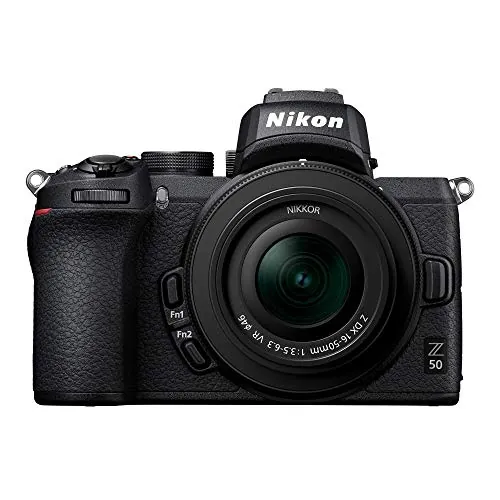
Nikon Z50 II vs Z50 16–50mm Kits: Video Files, Cards and Controls
These assigned U.S. listings pair Nikon's Z50 II and Z 50 with a 16–50mm VR kit lens. The practical differences are the recording and editing path, supported SD-card interface, body controls and monitor movement. The Z50 II records H.265 10-bit MOV with HLG/N-Log options, adds 4K/50p–60p (with a tighter crop and electronic VR off), and supports UHS-I and UHS-II cards. The Z 50 records 4K up to 30p, offers H.264 MOV/MP4 and supports UHS-I. Confirm exact kit contents and your editing/card workflow before choosing.
Read comparisonNikon Z 50 vs Z 30 16–50mm Kits: Viewfinder, Screen and Recording
These exact black U.S. kits pair different camera bodies with Nikon’s NIKKOR Z DX 16–50mm f/3.5–6.3 VR lens. The lens does not decide between them: Z 50 adds an electronic viewfinder but its screen flips down into a self-portrait position, while Z 30 has no viewfinder and a side-hinged vari-angle screen. Nikon lists a 29:59 maximum movie recording time for Z 50 and up to 125 minutes for Z 30; USB power and battery conditions matter for longer Z 30 sessions.
Read comparison