
Products compared
TP-Link
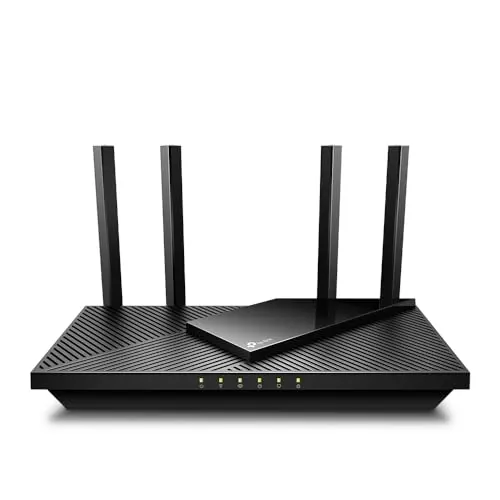
TP-Link Archer AX21 V5
U.S. Archer AX21 V5 family, black, single router. Verify the hardware version on the unit label before using revision-specific support or firmware information.
Model Archer AX21 V5
Amazon ASIN B08H8ZLKKK
TP-Link
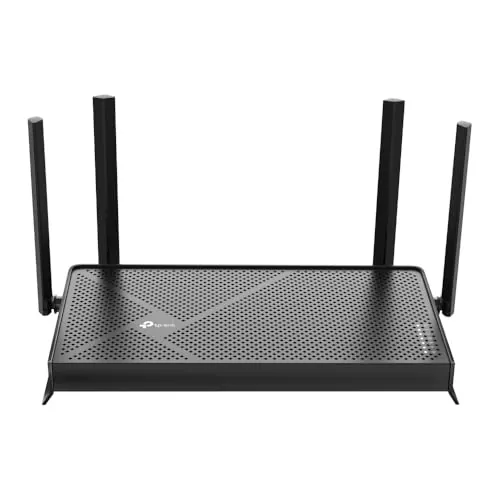
TP-Link Archer BE230
U.S. Archer BE230 / BE3600 dual-band Wi-Fi 7 router, black, single router. Check the bottom label for the exact hardware revision before relying on revision-specific features or firmware.
Model Archer BE230
Amazon ASIN B0DC99N2T8
Differences that matter
What matters most to you?
Choose a priority to see what it changes.
Sources for Wireless standard and client fit
Sources for WAN/LAN ports for your modem and wired devices
Sources for Router or access-point role
Start with the clients you already own
The AX21 V5 is a dual-band Wi-Fi 6 router. The BE230 is dual-band Wi-Fi 7, but it also uses 2.4GHz and 5GHz rather than adding a 6GHz band. TP-Link says clients need to support the corresponding Wi-Fi 7 features, including MLO, to use them. So list the devices you expect to keep and check the capability you actually want; the Wi-Fi generation printed on the router is not a measured promise for older clients.
If most of your devices are Wi-Fi 6 or older and you are not planning around a particular Wi-Fi 7 function, the AX21 V5's wireless standard may already match your client mix. If you have a compatible Wi-Fi 7 laptop or phone and can name the supported feature you want to use, the BE230 is the option in this pair with that documented feature set.
Map the WAN and LAN links before paying for 2.5GbE
The AX21 V5 provides one Gigabit WAN and four Gigabit LAN ports. The BE230 changes that map to one 2.5GbE WAN, one 2.5GbE LAN and three Gigabit LAN ports. That is a concrete hardware difference, but it only changes your setup if the connected equipment can use the higher link rate.
Trace the path in order: internet plan → modem or gateway → router WAN → router LAN → wired device. A multi-gig service needs compatible service and equipment, while a multi-gig file or media link also needs a 2.5GbE endpoint and suitable cable. If the incoming modem link and every wired endpoint are gigabit, the AX21's four gigabit LAN ports may be the more directly useful layout.
Treat mesh and AP mode as revision-specific setup checks
Both product pages list Access Point Mode as an operating mode. If you are keeping an ISP gateway as the router, check the manual for the exact version and confirm which controls you rely on before switching roles; the mode label does not settle every feature detail.
For EasyMesh, TP-Link's U.S. list names Archer BE230 and Archer AX21 V3, and says listed models include subsequent versions. That wording covers the AX21 V5 family, but your purchased unit still needs to match the correct regional hardware and firmware. TP-Link's setup guide says both the main and satellite devices must support EasyMesh and run current firmware; it also notes the app may temporarily label an EasyMesh device as OneMesh before firmware sync.
A three-minute pre-buy network check
1. Write down the Wi-Fi generation of your key clients and the Wi-Fi 7 feature, if any, they explicitly support. 2. Check the WAN port on your modem or ISP gateway and the speed tier of your service. 3. List wired devices and mark which have 2.5GbE. 4. Decide whether the new TP-Link unit will be the router or an access point. 5. If mesh matters, photograph both unit labels and compare the hardware revisions with TP-Link's current EasyMesh and firmware pages.
If those checks show only Wi-Fi 6-or-older clients and gigabit links, the AX21 V5's listed ports and wireless standard line up with the setup. If they reveal a Wi-Fi 7 feature your client can use or a complete 2.5GbE path, the BE230's additional capability has a specific job.
Product details
TP-Link Archer AX21 V5
A fit to check when your planned wireless clients are Wi-Fi 6 or older and your internet and wired endpoints use gigabit Ethernet. The U.S. TP-Link page selects AX21 V5 but its specifications include a CPU row explicitly marked V4; that V4-only row is not used here.
TP-Link Archer BE230
The BE230's differentiators matter when your client supports a Wi-Fi 7 feature you plan to use, or your internet path and at least one wired endpoint can use its 2.5GbE ports. Its advertised wireless rates are not a prediction of the speed in your home.
- Wireless generation and bands
- Wi-Fi 7 (802.11be), dual-band 2.4GHz and 5GHz; no 6GHz band is listed Source
- Ethernet layout
- 1× 2.5Gbps WAN, 1× 2.5Gbps LAN and 3× Gigabit LAN Source
- Listed operating modes
- Router Mode and Access Point Mode Source
- EasyMesh listing
- Archer BE230 appears on TP-Link's U.S. EasyMesh compatibility list; compatibility depends on exact hardware and current firmware Source
Before you buy
Community discussions
Checking download and upload separately on Windows
TP-Link Archer AX21 V5
One user reported very slow Windows downloads with an Archer AX21 US V5.46 on firmware 1.1.2 while uploads remained much faster. They saw it on Wi-Fi and wired Ethernet. The report covers that setup and hardware subrevision.
What to check
Check the AX21 hardware label and firmware. Before deciding that a faster port is necessary, measure download and upload on the Windows PC and compare the result with another wired client.
Checking which Archer BE230 hardware revision ships
TP-Link Archer BE230
A shopper found several Archer BE230 hardware revision labels and asked whether revisions affect features, internal hardware, or stability. The post does not verify any differences.
What to check
Confirm the BE230 hardware revision named by the seller and match it to the applicable manual and firmware page.
Common questions
Will the BE230 make my current Wi-Fi 6 devices faster?
That is not established by these product specifications. TP-Link says Wi-Fi 7 features such as MLO require clients that support the corresponding feature. If your devices do not support the feature you want, treat Wi-Fi 7 as a future-client capability rather than a promised speed increase.Archer BE230 | BE3600 Dual-Band Wi-Fi 7 Router
When do the BE230's two 2.5GbE ports matter?
When a compatible multi-gig internet path can use the 2.5GbE WAN and you also have a wired device that can use the 2.5GbE LAN. TP-Link notes that service plan, equipment, cable and network conditions limit actual network speed. If those links are all gigabit, the ports do not create a multi-gig link by themselves.Archer BE230 | BE3600 Dual-Band Wi-Fi 7 Router
Can I use these routers with EasyMesh or as an access point?
TP-Link lists Router Mode and Access Point Mode for both model families. Its EasyMesh list names the BE230 and the AX21 V3, with subsequent versions included; TP-Link also says both main and satellite units must support EasyMesh and run current firmware. Check the unit labels and the matching support pages before relying on a specific revision or mode combination.Archer AX21 V5 | AX1800 Dual-Band Wi-Fi 6 RouterArcher BE230 | BE3600 Dual-Band Wi-Fi 7 RouterTP-Link EasyMesh Compatibility ListHow to Add a Satellite Router or Extender to Your EasyMesh NetworkTP-Link Archer AX21 U.S. Support and DownloadsTP-Link Archer BE230 U.S. Support and Downloads
Sources and scope
This is a specification and setup-fit comparison, not a measured speed, range, latency or reliability test. The listing data identifies the AX21 V5 family and BE230 model, but not the exact hardware subrevision of either unit. Both are dual-band 2.4GHz/5GHz routers; this comparison does not cover a 6GHz band.
Related comparisons
TP-Link Archer BE400 vs BE230: Match Wi-Fi Tier to Your Wired Setup
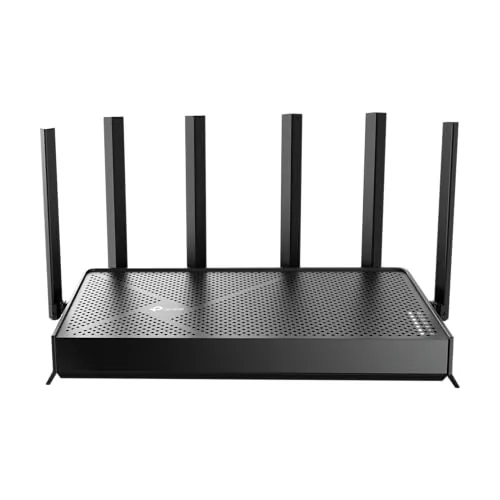
The assigned US listings are Archer BE400 ASIN B0DVBP5L6Y (one unit) and Archer BE230 ASIN B0DC99N2T8 (one unit). TP-Link's US pages show the same port count on both: one 2.5Gbps WAN, one 2.5Gbps LAN, and three 1Gbps LAN ports, plus USB 3.0. The main published distinction is wireless class: BE400 is BE6500 dual-band Wi-Fi 7 with six external antennas; BE230 is BE3600 dual-band Wi-Fi 7 with four. Before choosing, draw the modem-to-router connection and list each wired endpoint by link rate. The BE400 Amazon page's captured model fields identify BE400, but a separate box field names BE230; confirm the shipped item with the seller. Neither Amazon listing establishes the unit's hardware revision.
Read comparison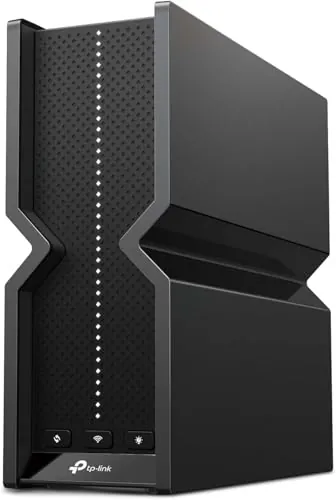
TP-Link Archer BE230 vs BE550: Plan Your 6 GHz and Wired Devices
The Archer BE230 is a dual-band Wi-Fi 7 router with one 2.5 Gbps WAN, one 2.5 Gbps LAN and three 1 Gbps LAN ports. The Archer BE550 adds a 6 GHz band and four 2.5 Gbps LAN ports behind a separate 2.5 Gbps WAN. Choose with a port-by-port device list, then check which household devices can use 6 GHz.
Read comparison