
Products compared
TP-Link
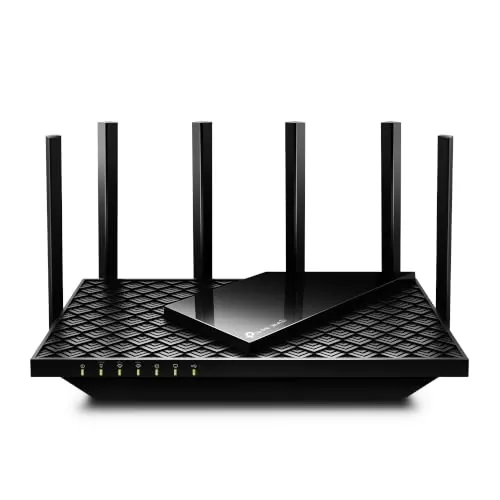
TP-Link Archer AXE75 AXE5400 Tri-Band Wi-Fi 6E Router
Assigned U.S. listing; the listing record does not state whether the offered hardware is V1 or V2.
Model Archer AXE75
Amazon ASIN B0B3SQK74L
TP-Link
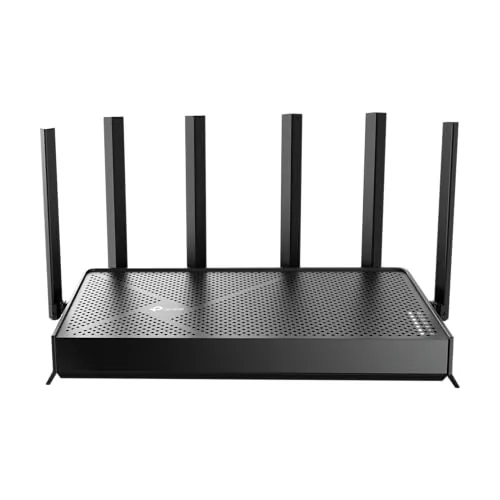
TP-Link Archer BE400 BE6500 Dual-Band Wi-Fi 7 Router
Assigned U.S. listing; product record names the BE400 but does not state a hardware revision.
Model Archer BE400
Amazon ASIN B0DVBP5L6Y
Differences that matter
What matters most to you?
Choose a priority to see what it changes.
Sources for Wireless bands and client feature fit
Sources for Older client compatibility
Start with your actual Wi-Fi clients
AXE75's distinction is the 6 GHz Wi-Fi 6E band. Its U.S. V1 and V2 documentation lists 2.4, 5 and 6 GHz; TP-Link describes 6 GHz as Wi-Fi 6E hardware-dependent and says local regulations may affect whether a capable client can use it. Check the wireless adapter or phone specification for Wi-Fi 6E and 6 GHz before paying for that radio.
BE400 is different: TP-Link lists it as a dual-band Wi-Fi 7 router on 2.4 and 5 GHz. It supports MLO across multiple bands with compatible Wi-Fi 7 clients. Older Wi-Fi devices can still connect using supported standards, but their presence does not turn them into Wi-Fi 6E or MLO clients. Neither advertised aggregate rate nor standards label predicts your home's measured throughput.
For 2.5GbE, map WAN and LAN separately
BE400's U.S. model page specifies one 2.5Gbps WAN, one 2.5Gbps LAN and three gigabit LAN ports. That gives a straightforward published path for a compatible multi-gig service handoff and one faster wired device. TP-Link notes that a 2.5Gbps Internet rate also needs a compatible plan and equipment; cable and endpoint capability matter too.
AXE75 requires a version check. The V1 page shows one 1Gbps WAN and four 1Gbps LAN ports. The current V2 page shows one 2.5Gbps WAN/LAN, one 1Gbps WAN/LAN and three 1Gbps LAN ports. The selected listing names Archer AXE75 but does not give the physical revision, so treat the faster port as unknown for this ASIN until the seller confirms it. TP-Link's hardware-version guide says the version appears on the router's label, usually on its bottom or back.
Compatibility does not mean every client uses every feature
TP-Link markets BE400 as compatible with all Wi-Fi generations and its listed ports are standard Ethernet interfaces. That makes it reasonable to consider for a mixed household of older and newer wireless clients, but only a Wi-Fi 7 client supporting the relevant MLO feature can use MLO. Likewise, AXE75's listed 6 GHz radio does not make a 2.4/5 GHz-only device a 6 GHz client.
Check your ISP handoff and devices as a small wiring diagram before comparing the products: service modem to WAN, wired devices to LAN, and any needed switch after the router. The model specifications show the port labels; they do not establish that your modem, service tier, cable, switch and endpoint negotiate a particular real-world speed.
Before you buy: a three-check shortlist
1. List the clients that would actually use 6 GHz or MLO and verify those exact capabilities in their manufacturer specifications. 2. Write down the service/modem port speed and count the wired devices that need 2.5GbE. 3. If AXE75 remains your choice for a faster wired port, confirm V1 versus V2 with the seller; the selected ASIN is not revision-specific in the listing data.
If the clients do not use the new wireless feature, or the AXE75 revision cannot be confirmed for a required port, choose based on the feature you can verify or keep looking. No supplied evidence establishes which router will cover a particular floor plan or deliver higher throughput in your home.
Product details
TP-Link Archer AXE75 AXE5400 Tri-Band Wi-Fi 6E Router
TP-Link Archer BE400 BE6500 Dual-Band Wi-Fi 7 Router
- Wi-Fi bands and standard
- Dual-band Wi-Fi 7: 5 GHz and 2.4 GHz; no 6 GHz radio is listed. MLO requires a client that supports the corresponding Wi-Fi 7 feature. Source
- Ethernet ports
- 1× 2.5Gbps WAN, 1× 2.5Gbps LAN, and 3× 1Gbps LAN. Source
- Older Wi-Fi clients
- TP-Link says the BE400 supports all Wi-Fi generations and devices; newer Wi-Fi 7 features require client-side support. Source
Before you buy
Community discussions
Planning where the new router connects
TP-Link Archer BE400 BE6500 Dual-Band Wi-Fi 7 Router
An Archer BE400 owner connected it behind an existing cable router and reported intermittent dropouts on both Ethernet and Wi-Fi in that setup.
What to check
Draw the path from your internet equipment to the new router and the first wired device. Check which ports and operating modes the chosen layout requires.
Common questions
Does the Archer BE400 have a 6 GHz Wi-Fi band?
TP-Link's U.S. BE400 page lists dual-band Wi-Fi 7 on 2.4 and 5 GHz and does not list 6 GHz. The AXE75 is the 6 GHz option in this pair.Archer AXE75 V1 | AXE5400 Tri-Band Wi-Fi 6E RouterArcher BE400 | BE6500 Dual-Band Wi-Fi 7 Router
Will older Wi-Fi devices work with the BE400?
TP-Link says the BE400 supports all Wi-Fi generations and devices. Features such as Wi-Fi 7 MLO still require a client with the corresponding support; older clients connect using their own supported Wi-Fi capabilities.Archer BE400 | BE6500 Dual-Band Wi-Fi 7 Router
Does every Archer AXE75 have a 2.5GbE port?
No. TP-Link's U.S. V1 page lists one gigabit WAN and four gigabit LAN ports. Its current U.S. V2 page lists a 2.5Gbps WAN/LAN port plus other gigabit ports. The selected ASIN record does not specify which revision it is, so confirm the offer's hardware version before relying on a 2.5GbE port.Archer AXE75 V1 | AXE5400 Tri-Band Wi-Fi 6E RouterArcher AXE75 V2 | AXE5400 Tri-Band Wi-Fi 6E RouterDownload for Archer AXE75 V1Download for Archer AXE75 V2
What should I check before choosing between the two?
Check the radios your clients can use, whether any client supports Wi-Fi 6E at 6 GHz or Wi-Fi 7 MLO, and the modem/service and wired-device port speeds. If 2.5GbE matters and the AXE75 revision is not stated, ask the seller or select a model with a port layout you can verify.Archer AXE75 V1 | AXE5400 Tri-Band Wi-Fi 6E RouterArcher AXE75 V2 | AXE5400 Tri-Band Wi-Fi 6E RouterArcher BE400 | BE6500 Dual-Band Wi-Fi 7 RouterCan't Find or Connect to 6GHz Wi-Fi?TP-Link Hardware Version | How to Find It
Sources and scope
This is a source-based comparison of the assigned U.S. TP-Link Archer AXE75 (product 10377 / ASIN B0B3SQK74L) and Archer BE400 (product 580 / ASIN B0DVBP5L6Y). TP-Link's U.S. AXE75 V1 and V2 pages list different Ethernet layouts, but the selected listing does not identify the AXE75 hardware revision; the exact ASIN-to-revision mapping remains unresolved. The BE400 official U.S. model page specifies the port layout, while the selected ASIN record does not give a hardware version. No throughput, range, latency, coverage or reliability test is claimed. Actual client support, channel availability, service equipment and environment can affect the connection.
- Archer AXE75 V1 | AXE5400 Tri-Band Wi-Fi 6E Router
- Archer AXE75 V2 | AXE5400 Tri-Band Wi-Fi 6E Router
- Download for Archer AXE75 V1
- Download for Archer AXE75 V2
- Archer BE400 | BE6500 Dual-Band Wi-Fi 7 Router
- Download for Archer BE400 V1.60
- Can't Find or Connect to 6GHz Wi-Fi?
- TP-Link Hardware Version | How to Find It
Related comparisons
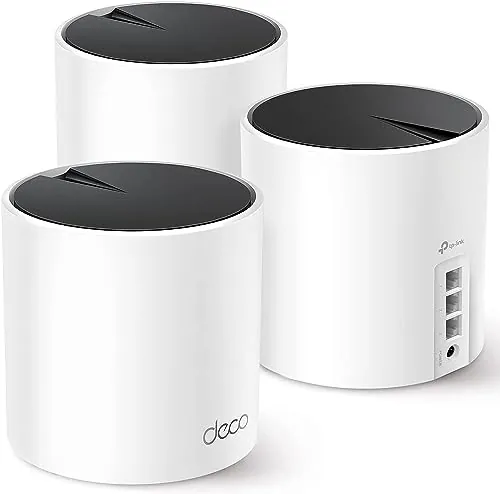
Deco X55 3-Pack vs Archer BE400: Three-Node Mesh or Wi-Fi 7 Router?
The selected US offers are TP-Link Deco X55 3-pack ASIN B09PRB1MZM and one Archer BE400 ASIN B0DVBP5L6Y. X55 is a three-unit Wi-Fi 6 Deco mesh kit with three Gigabit ports on each node. BE400 is a single Wi-Fi 7 router; TP-Link’s US specifications list one 2.5Gbps WAN, one 2.5Gbps LAN and three 1Gbps LAN ports, with EasyMesh support. TP-Link says Deco Mesh and Archer EasyMesh cannot form one unified mesh. Before choosing, map the rooms, modem, Ethernet jacks and wired clients; for BE400, also confirm the exact hardware version and clarify an Amazon box-contents field that says Archer BE230 even though the listing model is BE400.
Read comparison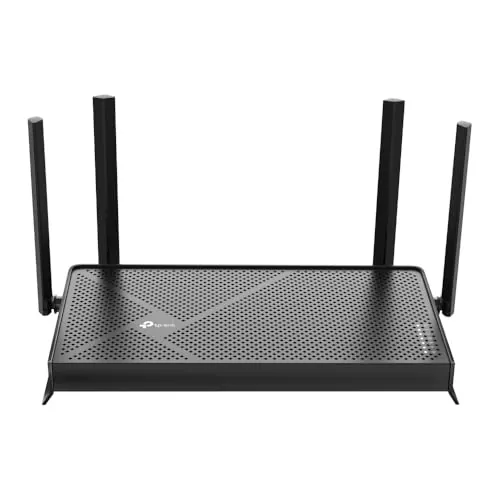
TP-Link Archer BE400 vs BE230: Match Wi-Fi Tier to Your Wired Setup
The assigned US listings are Archer BE400 ASIN B0DVBP5L6Y (one unit) and Archer BE230 ASIN B0DC99N2T8 (one unit). TP-Link's US pages show the same port count on both: one 2.5Gbps WAN, one 2.5Gbps LAN, and three 1Gbps LAN ports, plus USB 3.0. The main published distinction is wireless class: BE400 is BE6500 dual-band Wi-Fi 7 with six external antennas; BE230 is BE3600 dual-band Wi-Fi 7 with four. Before choosing, draw the modem-to-router connection and list each wired endpoint by link rate. The BE400 Amazon page's captured model fields identify BE400, but a separate box field names BE230; confirm the shipped item with the seller. Neither Amazon listing establishes the unit's hardware revision.
Read comparison