
Products compared
Nikon
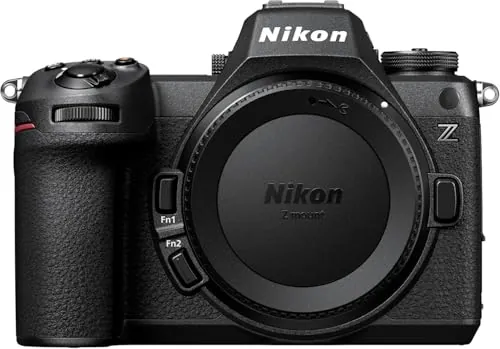
Nikon Z6 III Mirrorless Camera, Black, U.S. Model
U.S. Z6 III body identified in Nikon’s 1890 product page and the selected listing row. It uses Nikon Z mount and accepts F-mount NIKKOR lenses only through an FTZ-series adapter, with lens-dependent restrictions.
Model 1890
Amazon ASIN B0D77SL8CY
Nikon
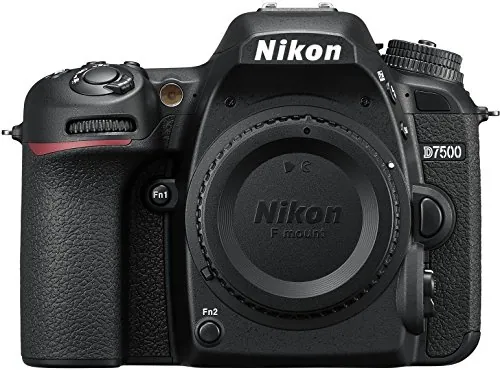
Nikon D7500 DX-Format DSLR Camera Body, U.S. Model
Assigned U.S. body-only listing and listing data part 1581. Nikon’s matching /1581 product route describes the D7500’s F mount, DX format, optical finder, single SD slot and EN-EL15a battery. Do not confuse body-only part 1581 with a separately listed lens kit.
Model 1581
Amazon ASIN B06Y5ZCFHX
Differences that matter
What matters most to you?
Choose a priority to see what it changes.
Sources for Finder and rear-screen movement
Sources for Card slots and media to budget for
Sources for Battery type and existing EN-EL15a batteries
Start with the lenses you already own
The D7500 body in this comparison is Nikon part 1581 with an F mount. The Z6 III is part 1890 with a Z mount. The D7500’s F-mount lenses attach directly; moving those lenses to the Z6 III requires an FTZ-series adapter. Nikon’s compatibility table divides lenses into groups and lists different available features. Check each exact lens name and model, especially if autofocus or vibration reduction matters to your routine.
A DX F-mount lens used through FTZ triggers DX image-area selection on the Z6 III, according to Nikon’s adapter guide. That changes the capture area and framing choice. It is not a judgment about the quality of either camera, and it makes an exact lens inventory more useful than a broad statement that “F lenses work.”
The viewfinder and screen change your framing routine
Z6 III uses an OLED electronic finder, an eye sensor that switches between finder and monitor, and a 3.2-inch vari-angle touch monitor. D7500 uses an eye-level pentaprism optical finder and a 3.2-inch tilting touch LCD. The practical distinction is how you preview and compose: electronic finder versus optical finder, and multi-angle screen movement versus tilt. Nikon’s specs do not decide which experience suits you better.
Try the finder and screen positions with your usual camera posture before switching if possible. This is a preference check, not a performance test.
Plan for sensor area, cards and batteries
Z6 III is FX format and offers an FX image area plus a DX image-area option. D7500 is DX format; Nikon states its picture angle is approximately 1.5× the angle of view of an FX-format lens at the same focal length. This provides a useful framing distinction, but it does not establish an image-quality winner.
The storage workflow also changes: D7500 records to one SD slot, while Z6 III has an SD slot plus a CFexpress Type B/XQD slot. Nikon lists the Z6 III as supplied with EN-EL15c and says EN-EL15a/b can be used in its place with fewer pictures per charge than EN-EL15c. If you are moving an EN-EL15a from a D7500 kit, treat it as a compatible spare, not as equal-duration power.
A practical pre-buy compatibility check
Write a short inventory of every F lens you intend to keep using: exact model, whether it is DX or FX, focus designation and whether you depend on autofocus or VR. Use Nikon’s FTZ feature table to check the exact lens group for Z6 III; do not generalize one lens result to the whole bag.
Then make a transition list: FTZ-series adapter if keeping F lenses, any CFexpress Type B or XQD media needed for the Z6 III’s second slot, SD cards for the SD slot, and battery/charger options for the EN-EL15 version you own. If the direct F-mount fit and your current single-SD/EN-EL15a routine are the priority, the D7500 avoids those mirrorless transition checks.
Product details
Nikon Z6 III Mirrorless Camera, Black, U.S. Model
- Lens mount and sensor format
- Nikon Z mount; FX-format sensor listed as 35.9 × 23.9 mm. F-mount NIKKOR lenses require an FTZ-series adapter; restrictions apply. Source
- Finder and monitor
- 0.5-in OLED electronic viewfinder, approx. 5.76 million dots, with eye-sensor switching; 3.2-in vari-angle touch-sensitive monitor. Source
- Cards and battery
- Two slots: one CFexpress Type B/XQD and one SD; the listed battery is EN-EL15c. Nikon says EN-EL15a and EN-EL15b can also be used, with fewer pictures per charge than EN-EL15c. Source
Nikon D7500 DX-Format DSLR Camera Body, U.S. Model
- Lens mount and sensor format
- Nikon F mount with AF coupling and AF contacts; DX-format sensor listed as 23.5 × 15.6 mm. Nikon describes the DX picture angle as approximately 1.5× the angle of view of an FX-format lens at the same focal length. Source
- Finder and monitor
- Eye-level pentaprism optical DSLR viewfinder; 3.2-in tilting touch-sensitive LCD monitor. Source
- Cards and battery
- One SD card slot; Nikon lists an EN-EL15a rechargeable Li-ion battery. Source
Before you buy
Community discussions
A Z6 III buyer planned to carry over F-mount lenses with FTZ II
Nikon Z6 III Mirrorless Camera, Black, U.S. Model
One returning Nikon user bought the Z6 III with an FTZ II to keep using a 24–70mm f/2.8 and Sigma 105mm macro, and asked about adding a wide lens. This describes one buyer's plan, not a verified compatibility or performance result for those unspecified lens versions.
What to check
Before budgeting around an FTZ II, identify the exact model of each F-mount lens and check Nikon's compatibility table for the functions you rely on. Do not extend one owner's plan to other lenses in the same focal-length families.
One Z6 III owner reported a setting change after battery loss
Nikon Z6 III Mirrorless Camera, Black, U.S. Model
A Z6 III owner said a Manual-mode setting changed after the battery died or was removed and asked whether others could reproduce it. The report is an individual observation, not confirmation of a general camera behavior.
What to check
For event work, rehearse your normal battery-change routine and check that the settings you depend on remain as expected before relying on the camera for a paid shoot. Keep the exact battery version and compatibility guidance in mind when planning spares.
Common questions
Can I use my D7500 F-mount lenses on the Z6 III?
Nikon says F-mount NIKKOR lenses require an FTZ-series adapter on the Z6 III and that restrictions apply. The official compatibility table lists functions by lens group; autofocus is supported for some groups and not others. Look up the exact lens model and feature before buying an adapter or body.Nikon Z6III Mirrorless Camera | Specs & Features (U.S. model 1890)The FTZ II/FTZ Mount Adapter: Compatible F Mount Lenses
What happens if I adapt a DX F-mount lens to the Z6 III?
Nikon’s FTZ compatibility guide says that attaching a DX lens automatically selects the DX image area. Plan for DX-area framing rather than assuming the lens will cover the full FX image area.Nikon Z6III Mirrorless Camera | Specs & Features (U.S. model 1890)The FTZ II/FTZ Mount Adapter: Compatible F Mount Lenses
Are the Z6 III and D7500 finders the same type?
No. Z6 III has an OLED electronic viewfinder and an eye sensor that switches between finder and monitor; D7500 has an optical pentaprism DSLR finder. Their screens also move differently: Z6 III is vari-angle and D7500 tilts.Nikon Z6III Mirrorless Camera | Specs & Features (U.S. model 1890)APS-C Format DSLR Camera | Nikon D7500 Digital SLR (U.S. body model 1581)
Can I keep using my D7500 EN-EL15a battery on the Z6 III?
Nikon lists EN-EL15a as usable in place of the Z6 III’s EN-EL15c, but notes that fewer pictures can be taken per charge with EN-EL15a. The page also limits EH-8P battery charging to EN-EL15c and EN-EL15b; verify charging equipment for your exact battery.Nikon Z6III Mirrorless Camera | Specs & Features (U.S. model 1890)APS-C Format DSLR Camera | Nikon D7500 Digital SLR (U.S. body model 1581)
Does the Z6 III take the same cards as the D7500?
Both list SD-card support, but the slot layouts differ. D7500 has one SD slot. Z6 III has one SD slot plus one CFexpress Type B/XQD slot, so using its second slot requires compatible media.Nikon Z6III Mirrorless Camera | Specs & Features (U.S. model 1890)APS-C Format DSLR Camera | Nikon D7500 Digital SLR (U.S. body model 1581)
Sources and scope
This is a specification-based purchase guide, not a camera test. F-mount function through FTZ depends on the exact lens type and feature; this article does not certify an individual lens. A DX F lens on Z6 III selects DX image area per Nikon. Nikon’s compatibility PDF is an adapter-family reference, not a test of this camera/lens combination. No image-quality, autofocus speed, battery-life equivalence or price conclusion is made.
Related comparisons
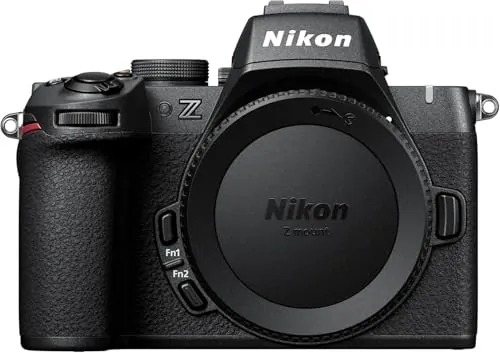
Nikon Z6III vs Z50II: FX, DX, and Internal Video Formats
Both are Nikon Z-mount bodies, but the Z6III uses a 24.5 MP FX sensor and adds internal N-RAW and ProRes options with two different card slots. The 20.9 MP DX Z50II records internal H.265 10-bit, uses one SD slot, and weighs about 175 g less as a body alone. If you already own DX lenses, check the crop: the Z6III fixes still-photo image area to DX with a DX lens. These assigned US selections are body-only, so verify the exact seller package before ordering.
Read comparison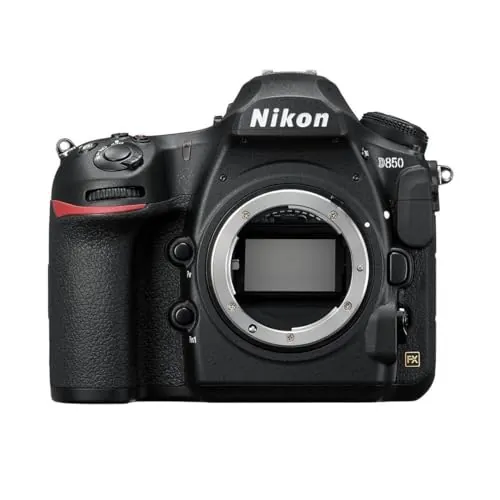
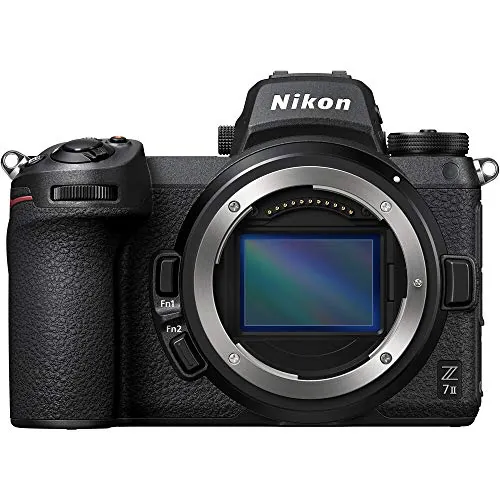
Nikon D850 vs Z 7II: Check Lenses, Finder and Cards First
For these Nikon US body listings, the buying decision starts with your exact lenses and viewing routine. The D850 mounts compatible F lenses directly and has an optical pentaprism finder. The Z 7II uses native Z lenses, or selected F lenses through a separately purchased FTZ adapter whose supported functions vary by lens. Its electronic finder can show configured exposure and color-setting effects. Both have two card slots, but D850 CFexpress Type B use depends on firmware and Nikon's specific card guidance.
Read comparison