
Products compared
Nikon
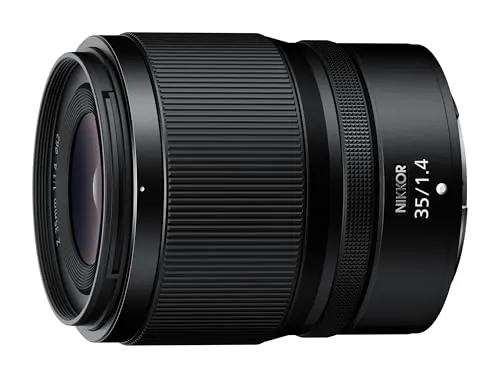
Nikon NIKKOR Z 35mm f/1.4
35mm fixed-focal-length Nikon Z lens; Nikon lists FX and DX compatibility.
Model 20126
Amazon ASIN B0D83PR5SQ
Nikon
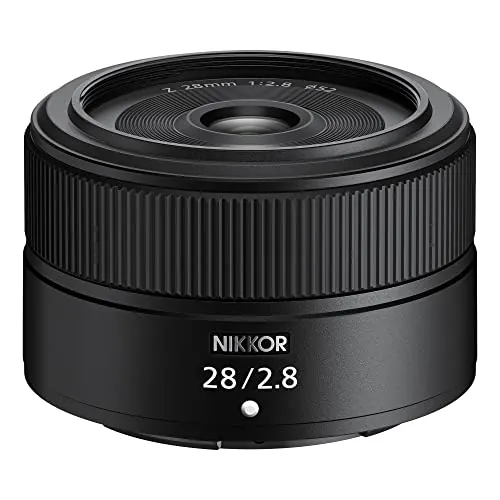
Nikon NIKKOR Z 28mm f/2.8
28mm fixed-focal-length Nikon Z lens; Nikon lists FX and DX compatibility.
Model 20101
Amazon ASIN B09M62RJK2
Differences that matter
What matters most to you?
Choose a priority to see what it changes.
Sources for Nikon-listed maximum angle of view
Sources for Maximum aperture specification
Sources for Lens body dimensions and listed weight
Sources for Close-focus distance and front filter thread
Check the angle for your camera format
Nikon lists both lenses as compatible with FX and DX formats and gives separate maximum angles of view. The 35mm is 63° on FX and 44° on DX; the 28mm is 75° on FX and 53° on DX. That makes the 28mm the wider listed view on both formats. Decide whether that view fits the scenes you usually photograph, and check your body format rather than relying on a generic full-frame or crop-factor label.
A field-of-view specification helps compare these focal lengths, but it does not substitute for trying the framing from your normal shooting position. Both choices remain fixed-focal-length primes.
Balance aperture preference against space in your bag
The 35mm's listed maximum aperture is f/1.4; the 28mm's is f/2.8. Treat that as an available aperture setting, not proof of better photographs or a specific low-light result. Nikon lists the 35mm at approximately 415 g and 88.5 mm long, while the 28mm is approximately 155 g and 43 mm long. The 28mm is the more compact specification on this comparison; the right trade-off depends on whether 35mm framing and the larger maximum aperture matter enough to carry the larger listed lens.
Use Nikon's lens-only dimensions as a first clearance check, then measure your actual camera-and-accessory kit in the bag compartment you plan to use. Nikon lists 62 mm filters for the 35mm and 52 mm filters for the 28mm, so verify filter diameters before expecting your current filter to transfer.
Use minimum focus distance as a boundary, not a working-space promise
Nikon lists minimum focus distances of 0.27 m for the 35mm and 0.19 m for the 28mm. If close framing matters, compare those limits with the distance your subject and camera can actually occupy. Minimum focus distance is not the same as free space between the front of the lens and subject, and the figures alone do not establish magnification or close-up image quality.
Product details
Nikon NIKKOR Z 35mm f/1.4
Before you buy
Community discussions
A wider prime for a compact trip
Nikon NIKKOR Z 28mm f/2.8
A Z6 II owner says a 24–120mm setup often keeps the camera at home, finds 40mm too tight for street and architecture, and is considering the 28mm f/2.8 SE for travel.
What to check
If carrying the camera more often is the priority, compare the guide’s 28mm and 35mm framing and the listed size of the standard 28mm against your bag. The traveler is considering the SE version, so confirm the exact edition and listing before checkout.
Common questions
Which lens is wider on a Nikon Z DX camera?
Nikon lists a 53° maximum angle of view for the 28mm f/2.8 on DX and 44° for the 35mm f/1.4. On FX, the listed figures are 75° and 63° respectively. Use the format that matches your body.NIKKOR Z 35mm f/1.4 Lens | Mirrorless Wide-Angle LensNIKKOR Z 28mm f/2.8 | interchangeable lens for mirrorless
Does f/1.4 mean the 35mm will make better low-light photos?
No conclusion about photo results follows from this comparison. Nikon lists f/1.4 as the 35mm's maximum aperture and f/2.8 for the 28mm, but there is no matched low-light or image-quality test here.NIKKOR Z 35mm f/1.4 Lens | Mirrorless Wide-Angle LensNIKKOR Z 28mm f/2.8 | interchangeable lens for mirrorless
Will my existing filter fit both lenses?
Check the printed diameter on each filter. Nikon lists a 62 mm screw-on thread for the 35mm and 52 mm for the 28mm, so a filter with one of those sizes does not directly match the other lens's thread.NIKKOR Z 35mm f/1.4 Lens | Mirrorless Wide-Angle LensNIKKOR Z 28mm f/2.8 | interchangeable lens for mirrorless
Sources and scope
This is a specification-based choice for Nikon Z FX or DX users. No matched photography, low-light, autofocus, handling, noise or image-quality test was performed. Listed dimensions and weight describe the lens, not the complete camera kit.
Related comparisons
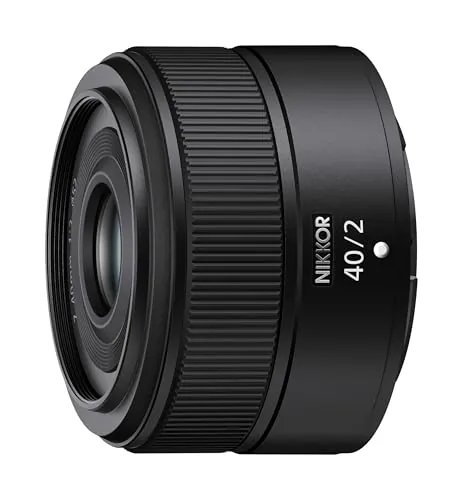
Nikon NIKKOR Z 40mm f/2 vs 28mm f/2.8: Framing, Close Focus and Filter Fit
This is the standard black NIKKOR Z 28mm f/2.8 (Nikon model 20101), not the separately listed 28mm f/2.8 SE. Both assigned products are FX-format Z-mount primes with a 52mm filter thread. On FX, Nikon lists a 75° angle of view for the 28mm and 57° for the 40mm; on DX the figures are 53° and 38°50′. The 40mm has the wider maximum aperture (f/2 versus f/2.8), while the 28mm focuses closer from the camera's focal plane (0.19m versus 0.29m). Pick based on framing and working setup, not an unverified image-quality ranking.
Read comparison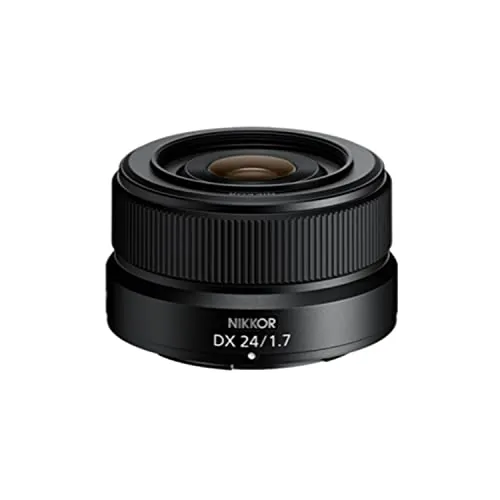
Nikon NIKKOR Z DX 24mm f/1.7 vs NIKKOR Z 28mm f/2.8: DX Crop or FX Coverage?
These lenses share Nikon’s Z mount but cover different sensor formats. The DX 24mm f/1.7 gives a wider 61° view on DX and, on an FX body, Nikon says the camera uses the DX image area with fewer recorded pixels and focus points. The regular, non-SE 28mm f/2.8 supports FX coverage and records a 53° view on DX. Decide by the camera format and framing you actually need, then check aperture, close-focus distance and filter size.
Read comparison