
Products compared
Nikon
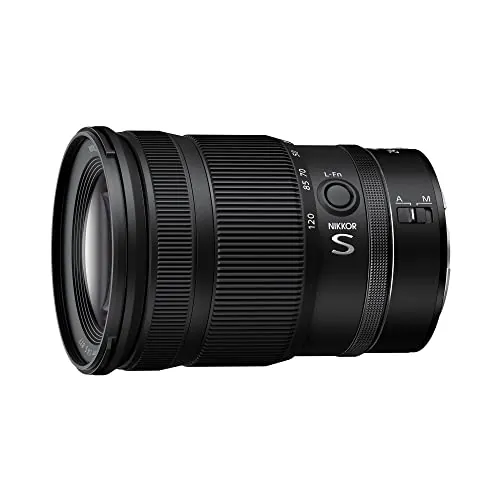
NIKKOR Z 24-120mm f/4 S
Nikon USA model 20105, a Z-mount 24–120mm f/4 S-Line lens compatible with FX and DX formats.
Model 20105 / NIKKOR Z 24-120mm f/4 S
Amazon ASIN B09KHB76TP
Nikon
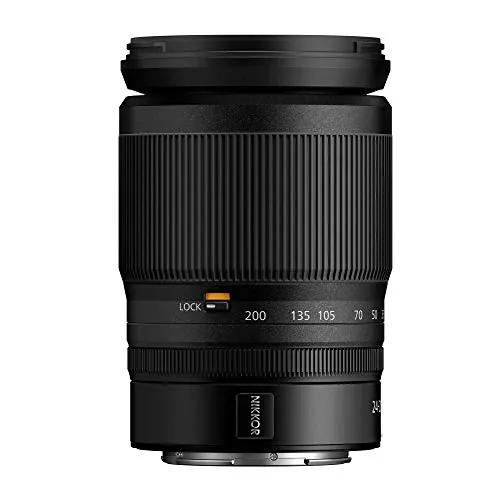
NIKKOR Z 24-200mm f/4-6.3 VR
Nikon USA model 20092, a Z-mount 24–200mm FX/DX zoom with lens-based Vibration Reduction (VR).
Model 20092 / NIKKOR Z 24-200mm f/4-6.3 VR
Amazon ASIN B084QP747Q
Differences that matter
Sources for Stabilization: lens rating and camera-body check
Sources for Carry dimensions and filter/accessory workflow
The real choice is your long end and aperture workflow
Both Nikon Z lenses start at 24mm, but the shared start does not make their reach or maximum-aperture behavior the same. The 24-120mm f/4 S stops at 120mm and Nikon calls f/4 constant across its zoom range. The 24-200mm reaches 200mm, while its maximum aperture varies from f/4 to f/6.3. Put a real use case next to that extra 80mm: a distant subject or a one-lens walk-around plan can make it useful; if you rarely leave the 24–120 range, you may prefer to evaluate the constant-aperture behavior and other kit details instead.
Both are FX-format lenses that Nikon also lists as compatible with DX-format Z cameras. Their DX angle-of-view ranges are narrower than the FX ranges; use the camera-format angle of view for framing, while remembering the marked focal lengths stay 24–120mm or 24–200mm.
Check stabilization on the lens and the camera you own
Nikon lists built-in VR for the 24-200mm and publishes a CIPA-equivalent 5.0-stop shutter-speed rating at maximum telephoto on an FX-format camera with camera VR set to NORMAL. The 24-120mm exact-lens pages do not list an in-lens VR rating. Check the particular Z camera's body stabilization and operating guidance for the combination you plan to use; the manufacturer's rating is not a prediction of every handheld exposure or moving subject.
This is a feature comparison only. There is no side-by-side field test here, and the source materials do not establish which lens produces sharper pictures, better tracking, or a higher keeper rate on your body.
Build the filter and carry kit around exact sizes
The 24-120mm is listed at about 630g and 84 × 118mm from the mount flange, with a 77mm filter thread. The 24-200mm is about 570g and 76.5 × 114mm, with a 67mm thread. On Nikon's lens-only figures, the 24-200 is 60g lighter, 4mm shorter, and 7.5mm narrower. That can simplify a packing decision, but it does not establish body-plus-lens fit or comfort.
Nikon lists a different hood and case for each: HB-102/CL-C2 for the 24-120 and HB-93/CL-C1 for the 24-200; both lists include the LF-N1 rear cap. Before travel, match your filter thread and hood, check case volume against the camera body, and confirm what the seller's exact package includes. Do not assume a 77mm filter directly threads onto the 67mm lens or that model-specific hood/case parts interchange.
A practical pre-buy lens-kit checklist
1. On a normal shoot, note the longest focal length you actually use and decide whether you need 121–200mm without changing lenses. 2. If slower-shutter handheld use matters, check the exact camera body's stabilization instructions and distinguish them from Nikon's lens-level CIPA figure. 3. List the filter thread sizes and any adapter rings you already own. 4. Confirm the exact retail box and whether the listed cap, hood, and case are included. This ties the purchase to your camera, subjects, and packed accessories rather than an unsupported optical ranking.
Product details
NIKKOR Z 24-120mm f/4 S
- Focal range and maximum aperture
- 24–120mm; Nikon describes the maximum f/4 aperture as constant across the zoom range. Source
- Lens VR listing
- The exact-lens spec does not list a lens VR feature or CIPA VR rating. Check the specific camera body's stabilization separately. Source
- Lens-only size, weight and filter
- Approximately 84mm maximum diameter × 118mm from the mount flange; approximately 630g; 77mm screw-in filter size. Source
- Nikon-listed supplied accessories
- LC-77B front cap, LF-N1 rear cap, HB-102 hood, and CL-C2 lens case; verify that the exact retailer package includes the listed items. Source
NIKKOR Z 24-200mm f/4-6.3 VR
- Focal range and maximum aperture
- 24–200mm; maximum aperture varies from f/4 to f/6.3 across the zoom range. Source
- Lens VR rating
- Nikon reports an effect equivalent to a 5.0-stop faster shutter speed under CIPA conditions: FX-format camera, camera VR set to NORMAL, zoom at maximum telephoto. This is a qualified manufacturer rating, not a result for every body or scene. Source
- Lens-only size, weight and filter
- Approximately 76.5mm maximum diameter × 114mm from the mount flange; approximately 570g; 67mm screw-in filter size. Source
- Nikon-listed supplied accessories
- LC-67B front cap, LF-N1 rear cap, HB-93 hood, and CL-C1 lens case; verify that the exact retailer package includes the listed items. Source
Before you buy
Community discussions
A travel buyer asks whether 120mm is enough
NIKKOR Z 24-120mm f/4 S
A traveler considering the 24-120mm or 24-200mm for a one-lens trip asks in what situations owners miss the 24-120mm's extra reach. The post is a buying question, not an owner report or lens test.
What to check
Think through the subjects and framing you expect on the trip, especially whether you need to go beyond 120mm without changing lenses. The thread does not establish how often any owner would need that range.
Common questions
Does the 24-200mm stay at f/4 when zoomed to 200mm?
No. Nikon specifies a maximum aperture that varies from f/4 to f/6.3 across the 24–200mm range. The 24-120mm f/4 S is listed with a constant f/4 maximum aperture through its range.NIKKOR Z 24-120mm f/4 S | Nikon Imaging USANIKKOR Z 24-200mm f/4-6.3 VR | Nikon Imaging USANIKKOR Z 24-120mm f/4 S | Nikon Global Z mount LensesNIKKOR Z 24-200mm f/4-6.3 VR | Nikon Global Z mount Lenses
How should I interpret the 24-200mm VR rating?
Nikon states a CIPA-equivalent 5.0-stop shutter-speed effect with the lens on an FX-format camera, camera VR set to NORMAL, and zoom at maximum telephoto. It is a condition-specific manufacturer rating, not a guarantee for every camera, subject, or shooting situation.NIKKOR Z 24-200mm f/4-6.3 VR | Nikon Imaging USANIKKOR Z 24-200mm f/4-6.3 VR | Nikon Global Z mount Lenses
Will my 77mm filter fit both lenses?
The 24-120mm uses a 77mm screw-in filter and the 24-200mm uses 67mm. They are not the same direct thread size. Check the filter or adapter-ring sizes, hood clearance, and your exact package before relying on one setup for both.NIKKOR Z 24-120mm f/4 S | Nikon Imaging USANIKKOR Z 24-200mm f/4-6.3 VR | Nikon Imaging USANIKKOR Z 24-120mm f/4 S | Nikon Global Z mount LensesNIKKOR Z 24-200mm f/4-6.3 VR | Nikon Global Z mount Lenses
Are the lens hoods and cases interchangeable?
Nikon lists HB-102 and CL-C2 for the 24-120mm f/4 S, and HB-93 and CL-C1 for the 24-200mm f/4-6.3 VR. Treat them as model-specific accessories and verify the exact retail box contents; the cited sources do not establish interchangeability.NIKKOR Z 24-120mm f/4 S | Nikon Global Z mount LensesNIKKOR Z 24-200mm f/4-6.3 VR | Nikon Global Z mount Lenses
Sources and scope
This guide compares Nikon's published lens specifications and listed accessories. It does not test sharpness, autofocus, stabilization in practice, image quality, or suitability for a specific scene. Nikon's accessory list is model-level information; verify the exact retailer package before relying on a lens case or hood being in the box.
Related comparisons
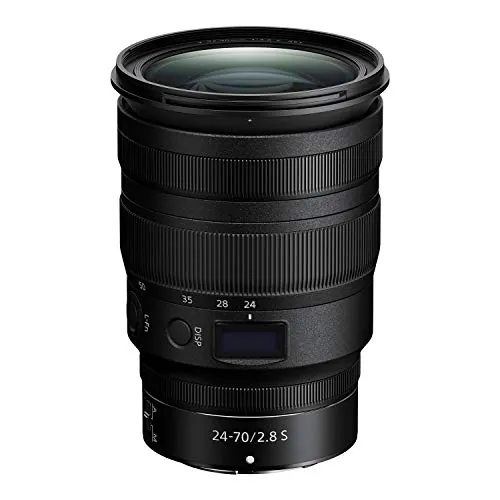
Nikon Z 24-120mm f/4 S vs Z 24-70mm f/2.8 S: Range, Aperture and Filter Fit
The NIKKOR Z 24-120mm f/4 S (Nikon USA model 20105) keeps a single zoom going to 120mm, with a 77mm filter thread and 630g listed lens-only weight. The original NIKKOR Z 24-70mm f/2.8 S (model 20089) stops at 70mm but lists f/2.8 across its range, an 82mm filter thread and 805g lens-only weight. Both are Z-mount lenses. Decide from your framing and exposure plan, then verify the thread on your existing filter and the space in your bag with the full kit.
Read comparison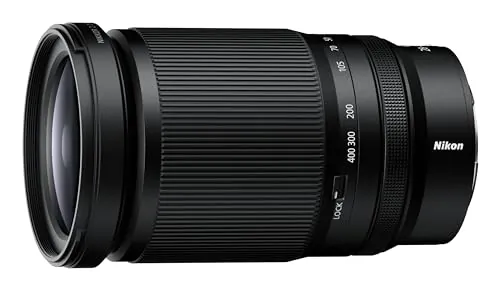
NIKKOR Z 28-400mm f/4-8 VR vs 24-200mm f/4-6.3 VR: Range and Close Focus
The 28-400mm reaches a listed 400 mm versus 200 mm but begins at 28mm; the 24-200mm starts wider at 24mm. Both have variable maximum apertures, and their published minimum focus distances change with zoom. Compare the focal position you actually use, then check lens-only mass and filter diameter: 725 g/77 mm versus 570 g/67 mm.
Read comparison