
Products compared
Nikon
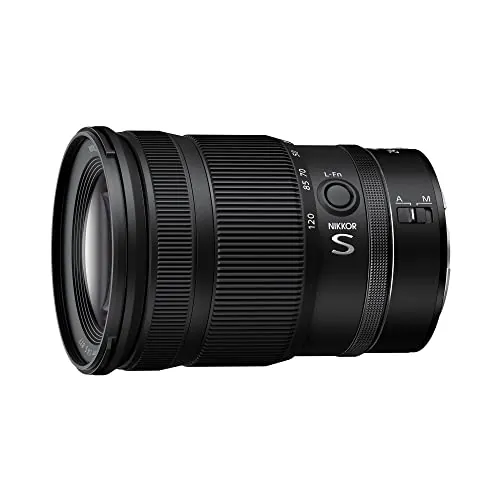
NIKKOR Z 24-120mm f/4 S
Nikon Z-mount, FX-format standard zoom; Nikon USA model 20105.
Model Nikon USA model 20105
Amazon ASIN B09KHB76TP
Nikon
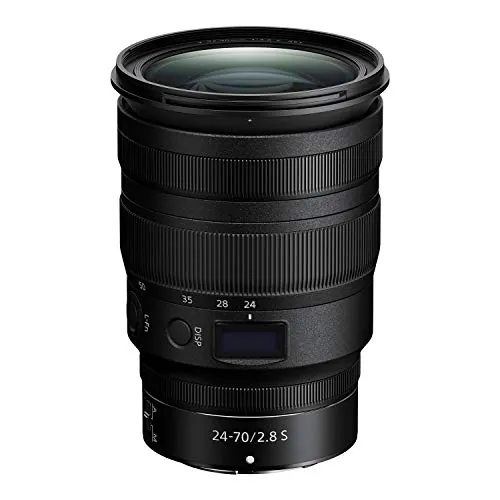
NIKKOR Z 24-70mm f/2.8 S
Nikon Z mount, FX-format standard zoom; the original model 20089, not the later 24-70mm f/2.8 S II.
Model Original Nikon USA model 20089, not S II
Amazon ASIN B07NLQ46M2
Differences that matter
What matters most to you?
Choose a priority to see what it changes.
Sources for Focal range and maximum aperture
Sources for Screw-in filter size
Sources for Lens-only dimensions
Sources for Lens-only listed mass
Sources for Mount and sensor format
Choose the framing range before comparing aperture
Both lenses start at 24mm, but model 20105 reaches 120mm while model 20089 ends at 70mm. If you regularly want to frame from the same standing position at 70–120mm and prefer one lens on the camera, the 24-120mm covers that portion. If your routine mostly stays within 24–70mm and you prioritize the listed maximum aperture of f/2.8, the original 24-70mm matches that requirement.
Nikon lists a constant maximum aperture of f/4 for the 24-120mm and f/2.8 for the 24-70mm. Treat that as a control for your exposure plan, not a promise about image quality, autofocus, background blur or the photo you will get. If a brief calls for both f/2.8 and framing beyond 70mm from one zoom, neither model listed here combines those two requirements.
Check filters by thread size, not lens name
Nikon lists a 77mm screw-in filter size for the 24-120mm and 82mm for the original 24-70mm. Before checkout, read the size printed on the filter you already own. A 77mm filter matches the 24-120mm's published thread size; the 24-70mm's direct size is 82mm. If considering an adapter, verify that it is meant for the lens, filter and hood arrangement you plan to use rather than assuming the two diameters are interchangeable.
This quick check can prevent a simple accessory mismatch after you choose for range or aperture. It does not establish optical compatibility or guarantee that every third-party filter/accessory combination works.
Plan carry with the lens and camera together
Nikon lists the 24-120mm at about 84 × 118mm and 630g, versus about 89 × 126mm and 805g for the 24-70mm. The difference is about 175g for the lenses alone. Use those numbers to shortlist a bag compartment, then test the complete setup with your body, caps, hood and filter in place; neither set of lens-only figures says whether a particular bag will close or feel comfortable.
Confirm camera compatibility separately: Nikon specifies Z mount for both and identifies them as FX lenses compatible with FX and DX formats. The focal lengths in this comparison are the lens's stated range; the field of view you see depends on the body format.
Verify the original 24-70mm model before ordering
The listing in this comparison is the original NIKKOR Z 24-70mm f/2.8 S, Nikon USA model 20089. Nikon's page route and Global product page identify that lens. A listing for the later 24-70mm f/2.8 S II is a different product and is outside this pair, so check the exact model number instead of relying on the shared 24–70mm f/2.8 wording.
The 24-120mm lens is Nikon USA model 20105. Match the model number and product title on the listing to the lens you intend to use; seller bundle details and current offers are not verified here.
Product details
NIKKOR Z 24-120mm f/4 S
Before you buy
Community discussions
An event photographer wants a second zoom
NIKKOR Z 24-120mm f/4 S
An owner of the NIKKOR Z 24–120mm f/4 S wants a second zoom for event and portrait work. They compare both 24–70mm f/2.8 S generations and later say they chose the original S.
What to check
List which focal lengths you use for your usual events and decide whether you need a second lens or one that covers a wider range. Check the generation on any 24–70mm listing.
Common questions
Which lens reaches farther?
The NIKKOR Z 24-120mm f/4 S model 20105 reaches 120mm; the original 24-70mm f/2.8 S model 20089 ends at 70mm. The longer listed range may reduce the need to swap lenses for framing within 70–120mm, but this is a range comparison, not a shot-quality test.Nikon USA: NIKKOR Z 24-120mm f/4 S, model 20105Nikon USA: Original NIKKOR Z 24-70mm f/2.8 S, model 20089
Can I use my 77mm screw-in filter on both?
Nikon lists a 77mm screw-in filter size for model 20105 and 82mm for model 20089, so a 77mm filter is not the listed direct thread size for the 24-70mm. Check any filter or adapter's own fit requirements before relying on it.Nikon USA: NIKKOR Z 24-120mm f/4 S, model 20105Nikon USA: Original NIKKOR Z 24-70mm f/2.8 S, model 20089
Is the 24-70mm f/2.8 S in this comparison the S II?
No. This comparison covers original Nikon USA model 20089, the NIKKOR Z 24-70mm f/2.8 S, not the newer S II. Check the listing for model 20089 before buying.Nikon USA: Original NIKKOR Z 24-70mm f/2.8 S, model 20089Nikon Global: Original NIKKOR Z 24-70mm f/2.8 S
Are the published dimensions and weights for a camera-and-lens kit?
No. Nikon lists about 84 × 118mm and 630g for the 24-120mm lens, and about 89 × 126mm and 805g for the original 24-70mm lens. Add your body and accessories, then check the complete setup against your actual bag space.Nikon USA: NIKKOR Z 24-120mm f/4 S, model 20105Nikon USA: Original NIKKOR Z 24-70mm f/2.8 S, model 20089
Sources and scope
This guide compares Nikon-published specifications for the exact Nikon USA models 20105 and 20089; it is not a hands-on optical, autofocus or handling test. It does not rank sharpness, distortion, flare, bokeh, stabilization or real-world low-light results. Published dimensions and weights are for the lens only, not a camera-and-lens bag-fit guarantee. The compared 24-70mm is the original f/2.8 S, not the newer S II; verify model 20089 on the exact listing.
Related comparisons
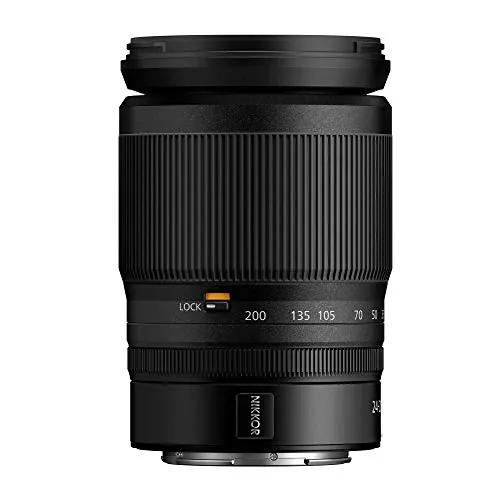
NIKKOR Z 24-120mm f/4 S vs 24-200mm f/4-6.3 VR: Constant Aperture or More Reach?
Both Nikon Z zooms start at 24mm and work on FX and DX bodies. The NIKKOR Z 24-120mm f/4 S keeps a maximum f/4 aperture across its 24–120mm range; the 24-200mm f/4-6.3 VR reaches 200mm, with a maximum aperture that varies to f/6.3 and an in-lens VR rating. The 24-200mm is listed at 570g with a 67mm filter thread, versus 630g and 77mm for the 24-120mm. Choose by your usual framing, stabilization setup, and filter/carry kit—not a claimed optical test result.
Read comparisonNIKKOR Z 24-70mm f/2.8 S vs Z 24-200mm f/4-6.3 VR: Range, Stabilization and Carry
The original NIKKOR Z 24-70mm f/2.8 S (model 20089) keeps a constant f/2.8 maximum aperture across 24–70mm and relies on compatible Z camera in-body VR for its listed five-axis stabilization behavior. The NIKKOR Z 24-200mm f/4-6.3 VR (model 20092) reaches 200mm, has lens VR, and takes smaller 67mm screw-in filters instead of 82mm. Nikon lists these lenses at 805g and 570g; screen your focal needs, camera body's stabilization, existing filters and packed size before choosing.
Read comparison