
Products compared
Nikon
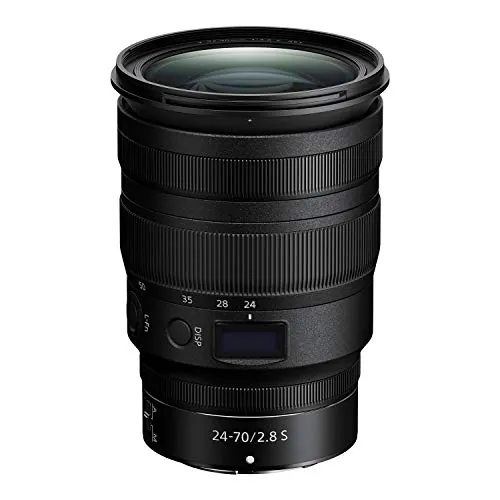
NIKKOR Z 24-70mm f/2.8 S
Original Nikon USA model 20089, FX-format Nikon Z-mount 24–70mm f/2.8 S zoom; not the later 24–70mm f/2.8 S II.
Model 20089
Amazon ASIN B07NLQ46M2
Nikon
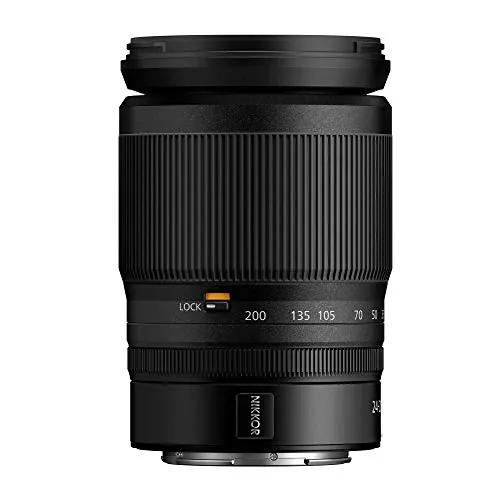
NIKKOR Z 24-200mm f/4-6.3 VR
Nikon USA model 20092, FX-format Nikon Z-mount 24–200mm VR zoom.
Model 20092
Amazon ASIN B084QP747Q
Differences that matter
What matters most to you?
Choose a priority to see what it changes.
Sources for Focal coverage and maximum aperture
Sources for Stabilization system to check against your camera body
Sources for Direct screw-in filter fit
Sources for Published packing figures
Choose from the framing and aperture you actually need
Both lenses start at 24mm, but they serve different range plans. Nikon lists the original 24-70mm f/2.8 S (model 20089) at 24–70mm with a constant f/2.8 maximum aperture through that range. The 24-200mm VR (model 20092) extends to 200mm; Nikon’s global specifications list a variable maximum aperture of f/4–6.3. A buyer whose assignments stay inside 70mm and require f/2.8 throughout the zoom has a clear spec-based reason to favor 20089. A buyer who frequently needs the 70–200mm portion may value 20092's longer reach in one lens.
This comparison does not show how either lens renders a scene or performs at a shared focal length. Treat focal coverage and maximum-aperture labels as planning facts, not a prediction of image quality, autofocus success or low-light results.
Match stabilization expectations to the camera body
Nikon's 24-70mm model 20089 page describes five-axis in-camera image stabilization when the lens is used with a Z camera that features in-camera VR. The 24-200mm model 20092 page lists VR image stabilization for the lens and advertises up to 5.0 stops under a stated condition: an FX-format camera, its VR set to NORMAL, and zoom at maximum telephoto, based on CIPA. These descriptions refer to different stabilization setups and must not be read as a matched result.
Before choosing for handheld work, identify your exact camera body and whether it has in-camera VR, then look up how Nikon says the chosen lens and body work together. Do not assume the 24-70mm page promises lens-based VR, or that Nikon's 24-200mm rating predicts your result in every focal length or shooting situation.
Check filters and bag fit before buying
The front filter threads differ: Nikon specifies an 82mm screw-in filter for model 20089 and 67mm screw-in for model 20092. If you already own filters, check their printed diameter before treating them as reusable. A ring or holder may be a separate solution, but compatibility, vignetting and handling with a particular filter setup were not evaluated here.
Nikon lists the 24-70mm at approximately 89mm diameter × 126mm long and 805g (28.4oz); the 24-200mm at 76.5mm × 114mm and 570g (20.2oz). Subtracting the manufacturer-listed weights gives an approximate 235g difference. For your bag, include the camera body, hood, caps and any adapter; these figures describe the lenses.
Finally, verify that a retailer listing says original model 20089 for the 24-70mm and model 20092 for the 24-200mm. The comparison is not about the later 24-70mm f/2.8 S II, and its part, design or specifications should not be substituted.
Product details
NIKKOR Z 24-70mm f/2.8 S
Model 20089 covers a standard 24–70mm range with Nikon's published constant f/2.8 maximum aperture. Nikon's stabilization note is tied to an in-camera-VR-capable Z body, and its larger 82mm screw-in filter size affects direct filter reuse.
- Focal range and maximum aperture
- 24–70mm; constant maximum aperture f/2.8 Source
- Stabilization setup
- Nikon lists five-axis in-camera image stabilization when used with a Z camera that has in-camera VR Source
- Screw-in filter
- 82mm Source
- Approximate dimensions and weight
- 89mm diameter × 126mm length; 805g (28.4oz) Source
NIKKOR Z 24-200mm f/4-6.3 VR
Model 20092 extends the range through 200mm and has lens-based VR listed by Nikon. Its 67mm filter thread and smaller listed dimensions/weight may suit a packing plan built around a lighter single zoom, but those figures alone do not establish a better travel experience.
- Focal range and aperture designation
- 24–200mm; variable maximum aperture f/4–6.3 Source
- Stabilization
- Lens VR listed; Nikon's page advertises up to 5.0 stops under its stated CIPA conditions Source
- Screw-in filter
- 67mm Source
- Approximate dimensions and weight
- 76.5mm diameter × 114mm length; 570g (20.2oz) Source
Before you buy
Community discussions
Choosing lenses for a Croatia and Slovenia trip
NIKKOR Z 24-200mm f/4-6.3 VR
A traveler planning this trip listed a Z 24–200 and Z 24–70/2.8 among several lenses and asked which to take. The post is a packing question, not a comparison of image quality.
What to check
Use your itinerary to decide whether carrying both a standard zoom and the 24–200 makes sense; compare the bag space and focal-range trade-off against the scenes you expect to photograph.
Common questions
Does the 24-200mm have more zoom reach?
Yes by listed focal range: model 20092 goes from 24mm to 200mm, while model 20089 goes from 24mm to 70mm. This does not establish which lens has better image quality at overlapping focal lengths.Nikon NIKKOR Z 24-70mm f/2.8 S (US model 20089)Nikon NIKKOR Z 24-200mm f/4-6.3 VR (US model 20092)
Is the 24-70mm f/2.8 S aperture constant?
Nikon's exact model 20089 page says f/2.8 is the constant maximum aperture throughout the zoom range. For model 20092, Nikon’s global specifications give a variable maximum aperture of f/4–6.3.Nikon NIKKOR Z 24-70mm f/2.8 S (US model 20089)Nikon NIKKOR Z 24-200mm f/4-6.3 VR (US model 20092)Nikon Global: 24–200mm f/4–6.3 VR specifications
Do both lenses have lens-based VR?
Nikon's 24-200mm model 20092 page explicitly lists VR image stabilization. For the original 24-70mm model 20089, Nikon describes five-axis in-camera stabilization when used with a Z body that has in-camera VR. Check the exact body; do not assume those system descriptions are equivalent performance ratings.Nikon NIKKOR Z 24-70mm f/2.8 S (US model 20089)Nikon NIKKOR Z 24-200mm f/4-6.3 VR (US model 20092)
Can my 82mm filter screw directly onto the 24-200mm?
No. Nikon lists 82mm screw-in for the original 24-70mm f/2.8 S and 67mm screw-in for the 24-200mm VR. Verify a separate adapter if you intend to share filters.Nikon NIKKOR Z 24-70mm f/2.8 S (US model 20089)Nikon NIKKOR Z 24-200mm f/4-6.3 VR (US model 20092)
Sources and scope
This guide uses Nikon USA specifications for the original model 20089 and model 20092. It is not a comparative test of image quality, autofocus, stabilization effectiveness, low-light results, handling or travel comfort. Nikon describes in-camera stabilization for the 24-70mm when used with a Z body featuring in-camera VR, while the 24-200mm specification lists lens VR; these different system descriptions are not directly compared for performance. Dimensions and weights are Nikon’s approximate lens-only figures, not a packed camera-kit total.
Related comparisons
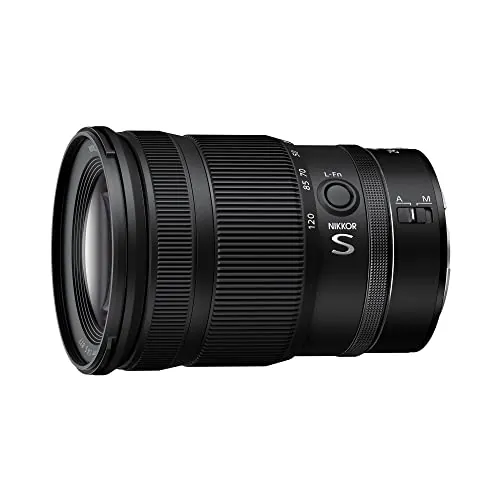
NIKKOR Z 24-120mm f/4 S vs 24-200mm f/4-6.3 VR: Constant Aperture or More Reach?
Both Nikon Z zooms start at 24mm and work on FX and DX bodies. The NIKKOR Z 24-120mm f/4 S keeps a maximum f/4 aperture across its 24–120mm range; the 24-200mm f/4-6.3 VR reaches 200mm, with a maximum aperture that varies to f/6.3 and an in-lens VR rating. The 24-200mm is listed at 570g with a 67mm filter thread, versus 630g and 77mm for the 24-120mm. Choose by your usual framing, stabilization setup, and filter/carry kit—not a claimed optical test result.
Read comparisonNikon Z 24-120mm f/4 S vs Z 24-70mm f/2.8 S: Range, Aperture and Filter Fit
The NIKKOR Z 24-120mm f/4 S (Nikon USA model 20105) keeps a single zoom going to 120mm, with a 77mm filter thread and 630g listed lens-only weight. The original NIKKOR Z 24-70mm f/2.8 S (model 20089) stops at 70mm but lists f/2.8 across its range, an 82mm filter thread and 805g lens-only weight. Both are Z-mount lenses. Decide from your framing and exposure plan, then verify the thread on your existing filter and the space in your bag with the full kit.
Read comparison