
Products compared
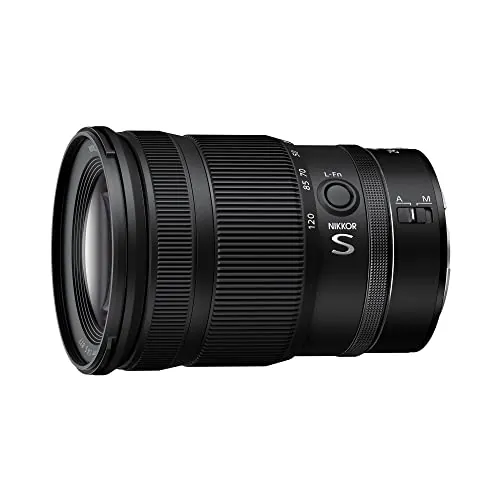
Nikon
NIKKOR Z 24-120mm f/4 S
Nikon U.S. model 20105; FX-format Nikon Z zoom, compatible with FX and DX formats.
Model 20105
Amazon ASIN B09KHB76TP
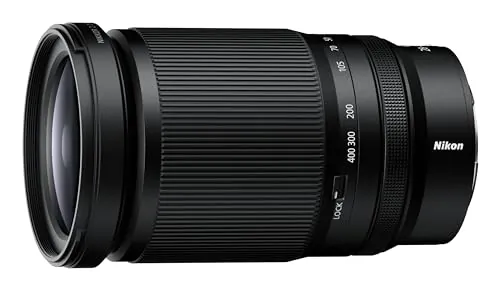
Nikon
NIKKOR Z 28-400mm f/4-8 VR
Nikon U.S. model 20125; FX-format Nikon Z zoom, compatible with FX and DX formats, with lens VR.
Model 20125
Amazon ASIN B0CZ4JX9JW
Differences that matter
What matters most to you?
Choose a priority to see what it changes.
Sources for Focal range and format-specific view
Sources for Maximum-aperture specification
Sources for Close-focus distance by zoom position
Sources for Lens stabilization statement
Sources for Listed size and weight
Start with the scene framing you need
The NIKKOR Z 24-120mm f/4 S covers a 24mm wide end through 120mm. The NIKKOR Z 28-400mm f/4-8 VR starts at 28mm and reaches 400mm. On the same camera format, that means A begins wider while B reaches farther at the telephoto end.
Both are specified as FX-format Nikon Z lenses and are listed as compatible with DX format too. Nikon publishes different angle-of-view ranges for FX and DX; use the row for your camera rather than treating the lens focal-length numbers as a promise of the same view on every body.
Match aperture, close-focus and stabilization requirements
Nikon specifies a constant maximum f/4 for the 24-120mm. For the 28-400mm, Nikon lists an f/4–8 maximum-aperture range but not every transition point in the pages cited here. That is a specification distinction, not a prediction of exposure or image quality in a particular scene.
Close-focus distance also depends on where the zoom is set. The 24-120mm is listed at 0.35m from the focal plane at every zoom position; the 28-400mm’s published table gives distances for specific focal lengths, from 0.20m at 28mm to 1.20m at 300mm and 400mm. The 28-400mm has lens VR with a 5.0-stop Nikon figure under stated CIPA conditions. Check your body’s stabilization instructions before relying on a combined system.
Use published size as a packing check, not a handling review
Nikon lists the 24-120mm at approximately 84 × 118mm and 630g, and the 28-400mm at approximately 84.5 × 141.5mm and 725g. Compare these lens-only measurements with your bag or storage space, then account for the camera body separately. The figures do not tell you how either combination will feel in use.
Product details
NIKKOR Z 24-120mm f/4 S
- Focal length and maximum aperture
- 24–120mm; constant maximum f/4. Source
- FX / DX angle of view
- FX 84°–20°20′; DX 61°–13°20′. Source
- Minimum focus distance
- 0.35m (1.15 ft) from the focal plane at all zoom positions. Source
- Listed dimensions and weight
- Approx. 84 × 118mm / 3.4 × 4.7 in; 630g / 22.2 oz. Source
NIKKOR Z 28-400mm f/4-8 VR
- Focal length and maximum aperture
- 28–400mm; maximum-aperture range f/4–8. Nikon does not list every aperture transition point on these cited pages. Source
- FX / DX angle of view
- FX 75°–6°10′; DX 53°–4°. Source
- Minimum focus distance
- 0.20m at 28mm, rising through listed positions to 1.20m at 300mm and 400mm, measured from the focal plane. Source
- Lens VR
- Nikon lists lens VR and a 5.0-stop figure measured to CIPA standards with VR NORMAL at maximum telephoto. Source
- Listed dimensions and weight
- Approx. 84.5 × 141.5mm / 3.4 × 5.6 in; 725g / 25.59 oz. Source
Before you buy
Community discussions
A prospective Zf owner checks an everyday carry plan
NIKKOR Z 24-120mm f/4 S
A prospective Zf owner considering the 28-400mm for everyday use asks whether its carry burden is meaningfully different from the 24-120mm, and names a wider-lens set they may carry alongside it.
What to check
Compare each lens's listed lens-only dimensions and weight, then add your own camera body and other lenses. The post's size comparison is the buyer's premise, not a measurement or a conclusion about how either setup feels to carry.
Common questions
Which lens starts wider?
The 24-120mm starts at 24mm; the 28-400mm starts at 28mm. Nikon gives separate FX and DX angle-of-view values for each, so choose the row that matches your camera format.NIKKOR Z 24-120mm f/4 S Lens | Nikon USA, product 20105NIKKOR Z 28-400mm f/4-8 VR Lens | Nikon USA, product 20125
Does the 28-400mm stay at f/4 through its zoom range?
No. Nikon lists a maximum-aperture range of f/4–8. The cited specifications do not give every transition point across the zoom, so check the lens documentation if a specific focal length matters.NIKKOR Z 28-400mm f/4-8 VR Lens | Nikon USA, product 20125
How should I interpret their minimum focus distances?
The 24-120mm is listed at 0.35m from the focal plane at all zoom positions. The 28-400mm’s listed distance varies by zoom position, from 0.20m at 28mm to 1.20m at 300mm and 400mm. The focal plane is the camera sensor reference, not the front of the lens.NIKKOR Z 24-120mm f/4 S Lens | Nikon USA, product 20105NIKKOR Z 28-400mm f/4-8 VR Lens | Nikon USA, product 20125
Does the 28-400mm have in-lens stabilization?
Nikon lists VR for the 28-400mm and gives a 5.0-stop figure under CIPA conditions with VR NORMAL at maximum telephoto. Check your camera’s manual for how that lens works with the body’s own stabilization.NIKKOR Z 28-400mm f/4-8 VR Lens | Nikon USA, product 20125NIKKOR Z 28-400mm f/4-8 VR | Z mount Lenses | Nikon Consumer
Sources and scope
This is a comparison of Nikon-published specifications, not a test of sharpness, distortion, autofocus, stabilization results, low-light images, or handling. Minimum focus distances are measured from the camera’s focal plane, not from the front of the lens. The 28-400mm pages give f/4–8 as a maximum-aperture range but do not specify every transition point. The 24-120mm Nikon U.S. specification page reviewed does not list lens VR; that omission does not describe stabilization in your camera body.
Related comparisons
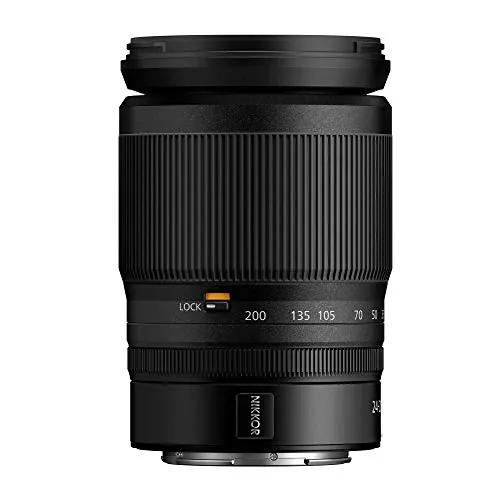
NIKKOR Z 24-120mm f/4 S vs 24-200mm f/4-6.3 VR: Constant Aperture or More Reach?
Both Nikon Z zooms start at 24mm and work on FX and DX bodies. The NIKKOR Z 24-120mm f/4 S keeps a maximum f/4 aperture across its 24–120mm range; the 24-200mm f/4-6.3 VR reaches 200mm, with a maximum aperture that varies to f/6.3 and an in-lens VR rating. The 24-200mm is listed at 570g with a 67mm filter thread, versus 630g and 77mm for the 24-120mm. Choose by your usual framing, stabilization setup, and filter/carry kit—not a claimed optical test result.
Read comparison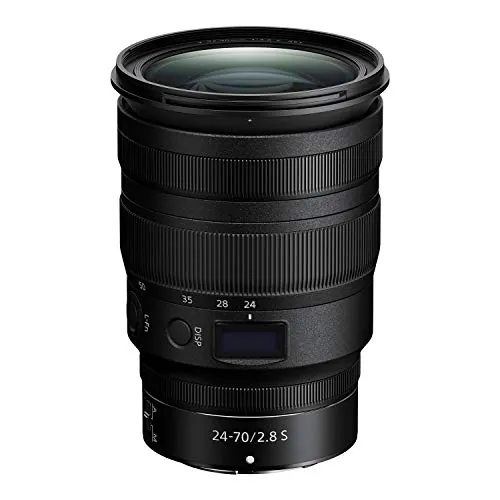
Nikon Z 24-120mm f/4 S vs Z 24-70mm f/2.8 S: Range, Aperture and Filter Fit
The NIKKOR Z 24-120mm f/4 S (Nikon USA model 20105) keeps a single zoom going to 120mm, with a 77mm filter thread and 630g listed lens-only weight. The original NIKKOR Z 24-70mm f/2.8 S (model 20089) stops at 70mm but lists f/2.8 across its range, an 82mm filter thread and 805g lens-only weight. Both are Z-mount lenses. Decide from your framing and exposure plan, then verify the thread on your existing filter and the space in your bag with the full kit.
Read comparison