
Products compared
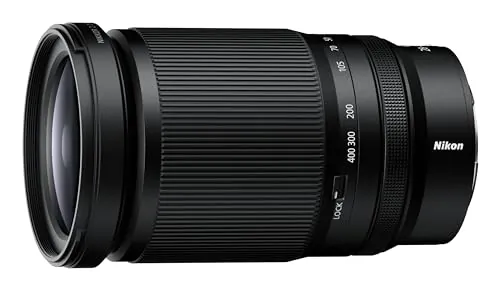
Nikon
Nikon NIKKOR Z 28-400mm f/4-8 VR
listing data-listed single Nikon Z-mount lens; Nikon identifies model 20125 as an FX-format 28-400mm zoom compatible with FX and DX formats.
Model 20125
Amazon ASIN B0CZ4JX9JW
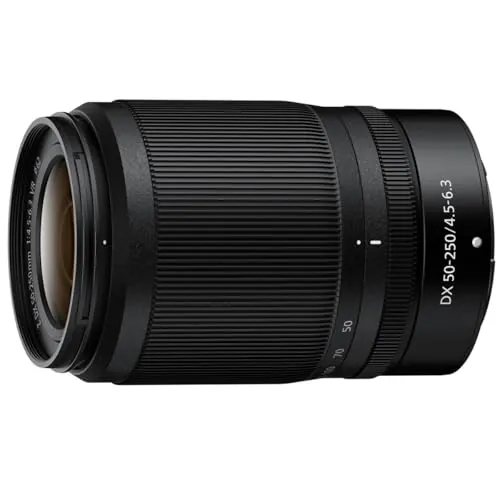
Nikon
Nikon NIKKOR Z DX 50-250mm f/4.5-6.3 VR
listing data-listed single Nikon Z-mount lens; Nikon identifies model 20085 as a DX-format 50-250mm zoom and lists DX as its compatible format.
Model 20085
Amazon ASIN B07YX9KYQZ
Differences that matter
What matters most to you?
Choose a priority to see what it changes.
Sources for Sensor format and view at the wide and tele ends
Sources for Listed maximum aperture range
Sources for Close-focus distance changes with zoom
Sources for Bag space, lens-only weight and filter diameter
Start with FX or DX camera coverage
Nikon lists the NIKKOR Z 28-400mm f/4-8 VR as an FX-format lens compatible with FX and DX cameras. Nikon lists the NIKKOR Z DX 50-250mm f/4.5-6.3 VR as DX format, with DX as its compatible format. If your body is FX and you want to use its FX image area, the maker's compatibility listing makes the 28-400mm the clearly documented fit in this pair; confirm the behavior of a DX lens with Nikon's instructions for your exact body.
On a DX camera, Nikon lists the 28-400mm's angle of view as 53° to 4° and the 50-250mm's as 31°30′ to 6°30′. These endpoints show different framing ranges: the 28-400mm begins wider and reaches a tighter telephoto angle on DX, while the 50-250mm is a DX telephoto zoom. Angle of view changes by camera format, so don't compare an FX angle figure with a DX angle figure as if they were the same sensor coverage.
Check the close-focus distance at the focal length you use
Nikon gives a minimum-focus distance for multiple zoom positions rather than one distance for the whole lens. For the 28-400mm it ranges from 0.2 m at 28mm to 1.2 m at 300mm and 400mm. For the DX 50-250mm it ranges from 0.5 m at 50mm to 1.0 m at 250mm. Both are stated from the camera's focal plane.
If you often frame nearby subjects, compare the specific focal length and distance you need. These numbers do not equal clearance from the lens front, and neither figure proves which lens produces a better close-up image. Nikon lists maximum reproduction ratios of 0.35× at 28mm for the 28-400mm and 0.23× for the DX 50-250mm; use those only as published specifications, not a quality result.
Compare lens-only dimensions with your bag and filters
Nikon lists the 28-400mm at approximately 84.5 × 141.5 mm and 725 g, with a 77mm filter thread. The DX 50-250mm is approximately 74 × 110 mm and 405 g, with a 62mm screw-in filter size. Those listed dimensions make the DX zoom the smaller and lighter lens on paper; they do not establish bag fit, handling comfort or a shooting result.
Before choosing, check your own bag opening and the filters you already own. If using one filter across lenses matters, the diameters differ; an adapter, if considered, is a separate accessory and is not included in Nikon's specifications cited here.
A practical pre-buy checklist
1. Identify whether your camera body is FX or DX and read its image-area guidance. Nikon's exact lens pages list one lens as FX/DX compatible and the other as DX.
2. Write down the widest and longest views you need, then compare angle-of-view figures for the format you will use rather than treating focal length alone as a complete framing answer.
3. If close focusing matters, check the listed minimum distance at your intended zoom setting; Nikon measures from the focal plane.
4. Measure your bag opening and check your filter set against the listed lens dimensions and 77mm versus 62mm thread sizes.
5. Confirm the exact retailer box contents. The Nikon pages reviewed here do not list a full lens-box accessory checklist, so verify hood, caps, pouch or any bundled filter directly on the specific offer.
Product details
Nikon NIKKOR Z 28-400mm f/4-8 VR
- Format and angle of view
- FX format; Nikon lists compatibility with FX and DX. Angle of view: FX 75° to 6°10′; DX 53° to 4°. Source
- Dimensions, lens-only weight and filter
- Approx. 84.5 × 141.5 mm; 725 g; 77 mm filter size. Source
- Close focus by zoom setting
- Nikon lists minimum focus distance from the focal plane as 0.2 m at 28 mm, rising to 1.2 m at 300 mm and 400 mm; maximum reproduction ratio 0.35× at 28 mm. Source
Nikon NIKKOR Z DX 50-250mm f/4.5-6.3 VR
- Format and angle of view
- DX format; Nikon lists DX as the compatible format. DX angle of view: 31°30′ to 6°30′. Source
- Dimensions, lens-only weight and filter
- Approx. 74 × 110 mm; 405 g; screw-in 62 mm filter size. Source
- Close focus by zoom setting
- Nikon lists minimum focus distance from the focal plane as 0.5 m at 50 mm, rising to 1.0 m at 250 mm; maximum reproduction ratio 0.23×. Source
Before you buy
Community discussions
Replacing a 50–250mm with a walkaround zoom
Nikon NIKKOR Z 28-400mm f/4-8 VR
A Z50 owner said they sold their 50–250mm after moving to the Z 28–400mm for everyday outings.
What to check
Think about the focal lengths you reach for on a typical outing and how much room you have for a lens in your bag.
Deciding whether to take a longer zoom on a trip
Nikon NIKKOR Z DX 50-250mm f/4.5-6.3 VR
A Z50II owner already using the 50–250mm considered the 28–400mm for a trip where they wanted more reach.
What to check
List the subjects you expect to photograph and decide how much gear you want to carry all day.
Common questions
Is the Nikon Z DX 50-250mm an FX-format lens?
Nikon identifies the 50-250mm as DX format and lists DX as its compatible format. Nikon identifies the 28-400mm as FX format and lists it as compatible with both FX and DX. For an FX body, check Nikon's instructions for that exact body before choosing a DX lens or assuming its image-area behavior.NIKKOR Z 28-400mm f/4-8 VR LensNIKKOR Z DX 50-250mm f/4.5-6.3 VR
Which one focuses closer?
There is no single minimum-focus distance for either zoom. Nikon's figures vary by focal length and are measured from the camera's focal plane. Check the distance at the zoom setting you will use; the spec does not tell you the front-element working clearance or guarantee a close-up result.NIKKOR Z 28-400mm f/4-8 VR LensNIKKOR Z DX 50-250mm f/4.5-6.3 VR
Can I reuse the same screw-in filter?
The listed filter diameters differ: Nikon specifies 77mm for the 28-400mm and 62mm for the DX 50-250mm. Do not assume one same-size filter will fit both directly; verify any accessory solution separately if that affects your kit.NIKKOR Z 28-400mm f/4-8 VR LensNIKKOR Z DX 50-250mm f/4.5-6.3 VR
Sources and scope
Nikon's size and weight figures describe lenses without the rest of your camera kit. Check the selected seller's box for the caps, hood or case you need.
Related comparisons
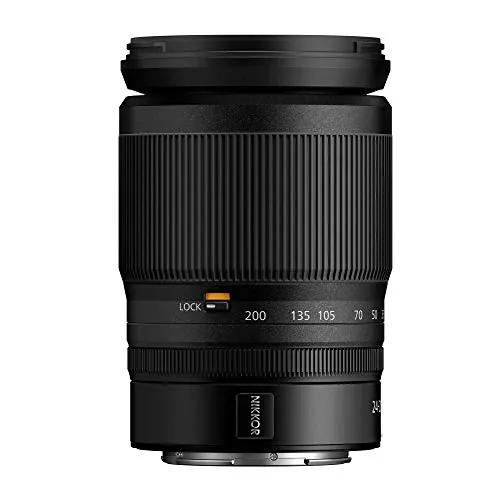
NIKKOR Z 28-400mm f/4-8 VR vs 24-200mm f/4-6.3 VR: Range and Close Focus
The 28-400mm reaches a listed 400 mm versus 200 mm but begins at 28mm; the 24-200mm starts wider at 24mm. Both have variable maximum apertures, and their published minimum focus distances change with zoom. Compare the focal position you actually use, then check lens-only mass and filter diameter: 725 g/77 mm versus 570 g/67 mm.
Read comparison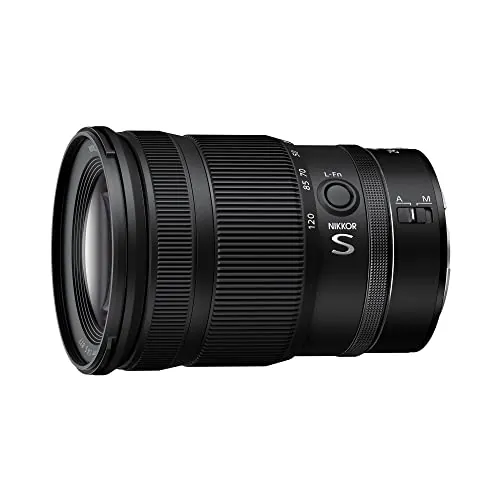
NIKKOR Z 24-120mm f/4 S vs Z 28-400mm f/4-8 VR
Both are Nikon Z-mount FX zooms that also work on DX-format bodies, but the framing differs: 24–120mm starts wider and keeps a maximum f/4 throughout; 28–400mm reaches farther, has a listed maximum-aperture range of f/4–8, and includes lens VR. Check the angle-of-view figures for your camera format and the focus distance at the focal lengths you use.
Read comparison