
Products compared
Nikon
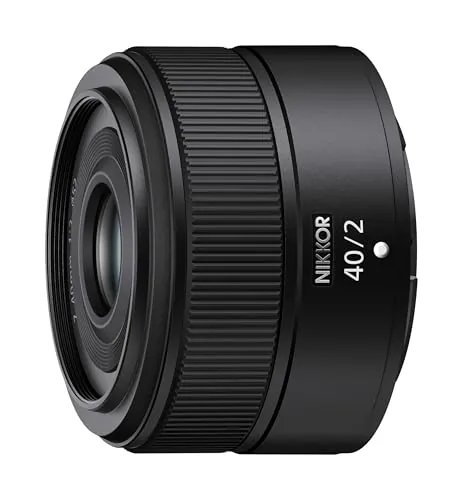
Nikon NIKKOR Z 40mm f/2
Nikon lists a 40mm focal length, f/2 maximum aperture, Nikon Z mount, FX/DX compatible formats, approximate 170 g weight, 70 × 45.5 mm diameter × length, and a 52mm screw-in filter size.
Model NIKKOR Z 40mm f/2, U.S. model 20102 (standard version)
Amazon ASIN B09G57BXZ4
Nikon
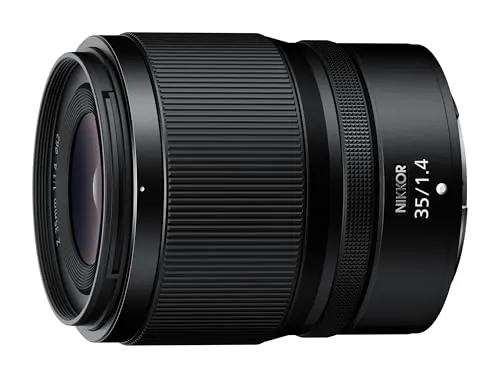
Nikon NIKKOR Z 35mm f/1.4
Nikon lists a 35mm focal length, f/1.4 maximum aperture, Nikon Z mount, FX/DX compatible formats, approximate 415 g weight, 74.5 × 88.5 mm diameter × length, and a 62mm screw-on filter size.
Model NIKKOR Z 35mm f/1.4, U.S. model 20126
Amazon ASIN B0D83PR5SQ
Differences that matter
What matters most to you?
Choose a priority to see what it changes.
Sources for Framing on FX and DX bodies
Sources for Maximum aperture
Sources for Lens weight and body dimensions
Sources for Filter accessory size
Choose the view before the aperture
On FX, Nikon lists a 57° maximum angle for the 40mm f/2 and 63° for the 35mm f/1.4. On DX, the figures are 38°50′ and 44°; Nikon also describes the lenses as 60mm-equivalent and 52mm-equivalent views, respectively. If you mostly shoot one camera format, start there: the 35mm is the wider listed view, while the 40mm is framed tighter.
Both pages list Nikon Z Mount and FX/DX compatible formats. The field-of-view figures are manufacturer specifications, not a promise that every scene or working distance will match your composition.
Treat f/1.4 as an option, not an image-quality verdict
The 35mm lens has the wider listed maximum aperture: f/1.4 against f/2. From those marked numbers, f/1.4 is about one nominal stop wider. That is useful to a buyer who intends to use the wider aperture setting, but it does not establish measured light transmission, focus performance, sharpness, bokeh quality or a better result in a particular scene.
If you usually shoot at f/2 or narrower and prefer the 40mm's view, the f/1.4 specification may not answer a need you have. If you specifically want the 35mm framing and the extra maximum-aperture option, consider whether the carry difference is acceptable.
Plan for lens-only weight and dimensions
Nikon lists the 40mm at approximately 170 g and 70 × 45.5 mm in diameter × length. The 35mm is approximately 415 g and 74.5 × 88.5 mm. Subtracting the stated lens weights gives about 245 g more for the 35mm before adding the camera, caps, filter or other kit pieces.
For a real bag plan, weigh or measure the complete camera setup and check the compartment yourself. The manufacturer numbers describe each lens, not your finished carry weight, comfort or bag fit.
Check filter size before reusing accessories
The 40mm f/2 accepts a listed 52mm screw-in filter; the 35mm f/1.4 lists a 62mm screw-on filter. If your existing filter is part of the purchase decision, read its diameter and match it to the lens page rather than assuming one direct thread size works on both.
Nikon’s cited lens pages establish the thread sizes, not the fit of a particular third-party filter, ring, hood or accessory stack. Verify those exact parts and clearances with their makers if you plan to reuse them.
Product details
Nikon NIKKOR Z 40mm f/2
- Mount and formats
- Nikon Z Mount; compatible formats FX and DX. Source
- FX/DX field of view
- Maximum angle: 57° on FX and 38°50′ on DX; Nikon also describes it as a 60mm-equivalent field of view on DX. Source
- Maximum aperture
- f/2. Source
- Listed size and weight
- Approx. 170 g; 70 × 45.5 mm diameter × length. Source
- Filter thread
- 52mm screw-in filter size. Source
Nikon NIKKOR Z 35mm f/1.4
- Mount and formats
- Nikon Z Mount; compatible formats FX and DX. Source
- FX/DX field of view
- Maximum angle: 63° on FX and 44° on DX; Nikon describes it as a 52mm-equivalent field of view on DX. Source
- Maximum aperture
- f/1.4. Source
- Listed size and weight
- Approx. 415 g; 74.5 × 88.5 mm diameter × length. Source
- Filter thread
- 62mm screw-on filter size. Source
Before you buy
Community discussions
Z5II buyer weighs a compact prime against an adapted F-mount kit
Nikon NIKKOR Z 40mm f/2
A Z5II owner with existing F-mount lenses says that carrying them with an adapter feels bulky and is considering the Z 40mm f/2 as a light, versatile prime.
What to check
Compare the complete camera-and-lens setup you already carry with the size and listed lens-only weight of the prime you are considering. Choose the framing you want first; verify any lens or weather-sealing details in Nikon’s exact model documentation.
Z6 II owner compares small lenses for a month of travel
Nikon NIKKOR Z 40mm f/2
A Z6 II owner planning a month of travel says their Z 20mm f/1.8 S feels too large and is considering the Z 40mm f/2, Z 26mm f/2.8 or a 50mm lens.
What to check
For a travel prime, decide which field of view you expect to use and how much space the mounted camera can take in your bag. Compare Nikon’s published dimensions and angles for the exact lenses rather than assuming a focal length will suit every scene.
Common questions
Will these lenses fit the same Nikon camera body?
Nikon lists both exact lenses as Nikon Z Mount and as compatible with FX and DX formats. Confirm that your camera is a Nikon Z body and check Nikon’s current body/lens compatibility guidance for any body-specific limitations; this comparison does not establish compatibility with F-mount bodies or every accessory combination.NIKKOR Z 40mm f/2 | Interchangeable lens for mirrorlessNIKKOR Z 35mm f/1.4 Lens | Mirrorless Wide-Angle Lens
How different are the two lenses on a DX camera?
Nikon describes the 40mm f/2 as a 60mm-equivalent field of view on DX and the 35mm f/1.4 as 52mm equivalent. Compare those listed framing descriptions with the view you want; they do not mean the lenses' physical focal lengths change.NIKKOR Z 40mm f/2 | Interchangeable lens for mirrorlessNIKKOR Z 35mm f/1.4 Lens | Mirrorless Wide-Angle Lens
Does f/1.4 guarantee sharper or better low-light photos than f/2?
No result like that is established here. Nikon lists maximum apertures of f/1.4 and f/2; the wider marked maximum is a feature you can choose to use, not a head-to-head sharpness or real-world low-light test.NIKKOR Z 40mm f/2 | Interchangeable lens for mirrorlessNIKKOR Z 35mm f/1.4 Lens | Mirrorless Wide-Angle Lens
Can I use the same filter on both?
The 40mm f/2 page lists a 52mm screw-in filter size; the 35mm f/1.4 page lists 62mm screw-on. Check the diameter on your exact filter and verify any adapter ring or accessory arrangement before purchase.NIKKOR Z 40mm f/2 | Interchangeable lens for mirrorlessNIKKOR Z 35mm f/1.4 Lens | Mirrorless Wide-Angle Lens
Sources and scope
This guide compares Nikon-published specifications for the exact standard NIKKOR Z 40mm f/2 (U.S. model 20102) and NIKKOR Z 35mm f/1.4 (U.S. model 20126). It does not compare sharpness, bokeh quality, autofocus, low-light results or camera handling. Listed lens weights and dimensions do not establish whole-kit weight, user comfort or fit in a particular bag. Check the camera body format and exact lens/ filter thread before buying.
Related comparisons
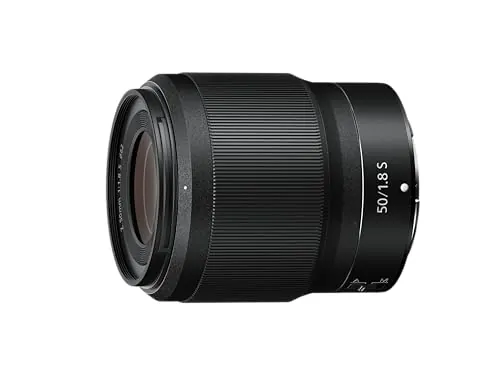
NIKKOR Z 50mm f/1.8 S vs Z 40mm f/2: Framing and Carry Fit
Both exact Nikon Z lenses work on FX and DX bodies, but their published angles of view differ on each format. The 40mm f/2 is shorter and lighter with a 52 mm filter thread; the 50mm f/1.8 S uses 62 mm filters and Nikon lists a hood and case among its supplied accessories. Check the angle for your sensor format and the exact retailer box before buying.
Read comparison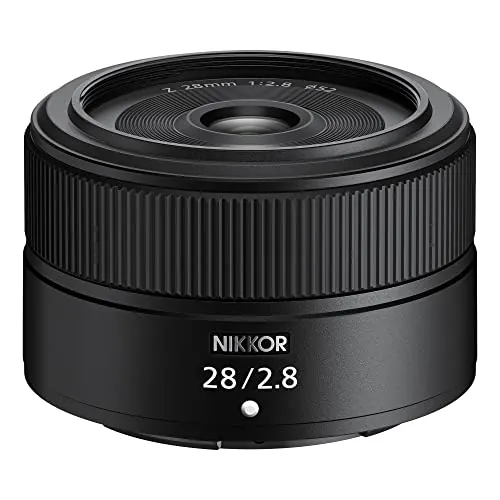
Nikon NIKKOR Z 40mm f/2 vs 28mm f/2.8: Framing, Close Focus and Filter Fit
This is the standard black NIKKOR Z 28mm f/2.8 (Nikon model 20101), not the separately listed 28mm f/2.8 SE. Both assigned products are FX-format Z-mount primes with a 52mm filter thread. On FX, Nikon lists a 75° angle of view for the 28mm and 57° for the 40mm; on DX the figures are 53° and 38°50′. The 40mm has the wider maximum aperture (f/2 versus f/2.8), while the 28mm focuses closer from the camera's focal plane (0.19m versus 0.29m). Pick based on framing and working setup, not an unverified image-quality ranking.
Read comparison