
Products compared
Nikon
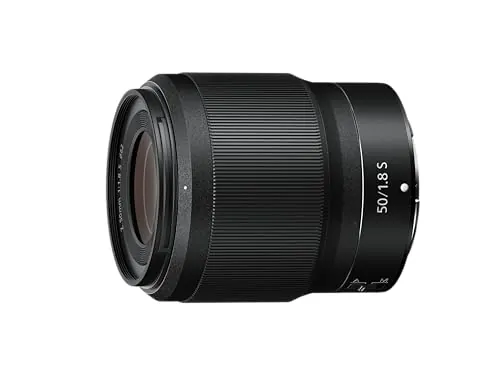
NIKKOR Z 50mm f/1.8 S
Nikon U.S. Product 20083; standard S-Line 50mm prime, not a 28mm SE variant.
Model 20083
Amazon ASIN B07GQ6FR5F
Nikon
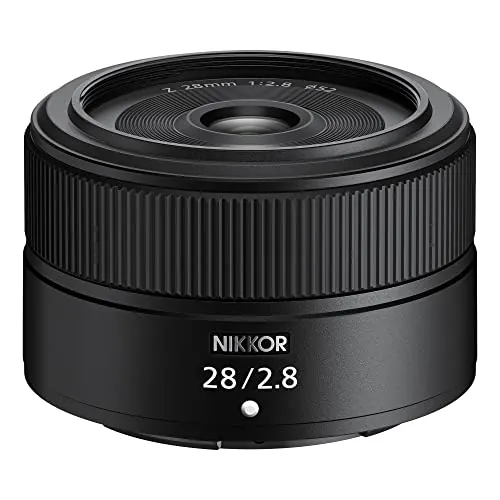
NIKKOR Z 28mm f/2.8
Nikon U.S. Product 20101; the standard 28mm f/2.8, not the separately listed 28mm f/2.8 (SE), Product 20110.
Model 20101
Amazon ASIN B09M62RJK2
Differences that matter
What matters most to you?
Choose a priority to see what it changes.
Sources for Maximum angle of view by sensor format
Sources for Listed maximum aperture
Sources for Lens-only size and weight
Choose the view for your sensor format
Both Nikon pages list FX and DX compatibility, but do not compare the FX row with the DX row. On FX, Nikon lists a 47°00′ maximum angle for the 50mm and 75° for the standard 28mm. On DX, the listed angles are 31°30′ and 53°. If you want a broader scene on the same body, the 28mm’s listed angle is wider; if you want the narrower listed framing, the 50mm points that way. This is a specification-based framing choice, not an image-quality result.
For a practical check, select the exact FX or DX row above before shopping, then compare the view with the kind of frame you need from your usual shooting position. Nikon also labels the 28mm’s DX angle as a 42mm-equivalent view on FX; do not carry that equivalence over to FX use.
Use lens-only size and weight as a packing check
Nikon lists the 50mm S at approximately 76 mm in diameter, 86.5 mm long and 415 g. The standard 28mm is about 70 mm in diameter, 43 mm long and 155 g. The resulting 260 g and 43.5 mm differences are simple arithmetic from those rounded maker figures. They can help you compare carry priorities, but they do not predict how either lens balances on a particular body or whether it fits your bag.
Before ordering for a tight camera insert, compare both diameter and length with the compartment opening and depth. Add your camera body and any hood or cap you plan to carry separately; those are outside these lens-only numbers.
Check the filter diameter and exact 28mm version
The 50mm S uses a listed 62 mm screw-in filter, while the standard 28mm uses 52 mm. If you already own a filter, inspect its marked diameter before choosing around it; the sizes do not match.
The exact assigned 28mm is Nikon U.S. Product 20101. Nikon’s 28mm f/2.8 (SE) is separately identified as Product 20110 and has its own product page. Confirm the product number and full name on a listing instead of treating the SE and standard 28mm as one bundle.
Product details
NIKKOR Z 50mm f/1.8 S
Nikon lists this Z-mount prime as compatible with FX and DX formats. Its listed angle of view is narrower than the assigned 28mm lens on either format; use the row for the sensor format in your camera.
NIKKOR Z 28mm f/2.8
Nikon lists the standard 28mm as compatible with FX and DX formats. On the same format row it provides a wider angle of view than the 50mm; its smaller lens-only dimensions and lower listed weight may matter when packing light.
Before you buy
Community discussions
Comparing a small wide prime with the lenses you own
NIKKOR Z 28mm f/2.8
A Z6 III owner with a 50mm prime wanted a wider lens and compared the standard 28mm f/2.8, its SE version and several small zooms.
What to check
Decide whether you want a second lens to cover a wider view or the tighter framing of a 50mm. Compare the shooting distance you normally have.
Common questions
Do both lenses work on Nikon Z FX and DX cameras?
Nikon lists both assigned lenses as compatible with FX and DX formats. The maximum angle of view is format-specific, so compare only the line matching your camera. Nikon describes the standard 28mm’s DX view as equivalent to 42mm on FX.NIKKOR Z 50mm f/1.8 S — Nikon Imaging USA specifications, Product 20083NIKKOR Z 28mm f/2.8 — Nikon Imaging USA specifications, Product 20101
Can I use the same screw-in filter on both?
The listed thread sizes are different: 62 mm for the 50mm f/1.8 S and 52 mm for the standard 28mm f/2.8. Check the number printed on your filter and the exact lens before buying or reusing one.NIKKOR Z 50mm f/1.8 S — Nikon Imaging USA specifications, Product 20083NIKKOR Z 28mm f/2.8 — Nikon Imaging USA specifications, Product 20101
Is this the 28mm f/2.8 SE?
No. The assigned Nikon U.S. product is the standard NIKKOR Z 28mm f/2.8, Product 20101. Nikon lists a separate NIKKOR Z 28mm f/2.8 (SE), Product 20110; check the model name and product number on the exact offer.NIKKOR Z 28mm f/2.8 — Nikon Imaging USA specifications, Product 20101NIKKOR Z 28mm f/2.8 (SE) — Nikon Imaging USA specifications, separate Product 20110
Sources and scope
This guide compares Nikon’s published specifications for these exact U.S. lens models. Nikon lists the 28mm f/2.8 and the separately named 28mm f/2.8 (SE) as different products; SE dimensions are not applied to the assigned standard 28mm model. No image-quality, autofocus, low-light, weather-sealing or hands-on performance comparison is established here. Lens-only measurements do not predict the weight or fit of a complete camera kit.
Related comparisons
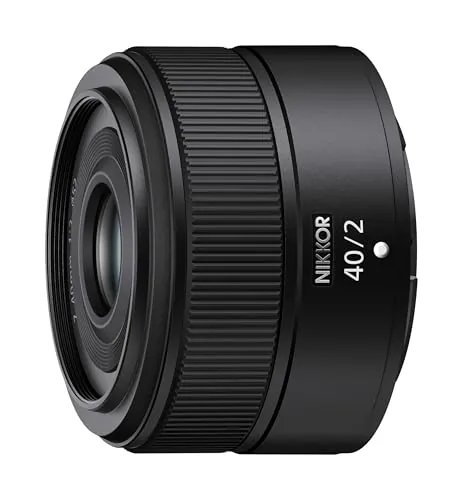
NIKKOR Z 50mm f/1.8 S vs Z 40mm f/2: Framing and Carry Fit
Both exact Nikon Z lenses work on FX and DX bodies, but their published angles of view differ on each format. The 40mm f/2 is shorter and lighter with a 52 mm filter thread; the 50mm f/1.8 S uses 62 mm filters and Nikon lists a hood and case among its supplied accessories. Check the angle for your sensor format and the exact retailer box before buying.
Read comparisonNikon NIKKOR Z 40mm f/2 vs 28mm f/2.8: Framing, Close Focus and Filter Fit
This is the standard black NIKKOR Z 28mm f/2.8 (Nikon model 20101), not the separately listed 28mm f/2.8 SE. Both assigned products are FX-format Z-mount primes with a 52mm filter thread. On FX, Nikon lists a 75° angle of view for the 28mm and 57° for the 40mm; on DX the figures are 53° and 38°50′. The 40mm has the wider maximum aperture (f/2 versus f/2.8), while the 28mm focuses closer from the camera's focal plane (0.19m versus 0.29m). Pick based on framing and working setup, not an unverified image-quality ranking.
Read comparison