
Products compared
Nikon
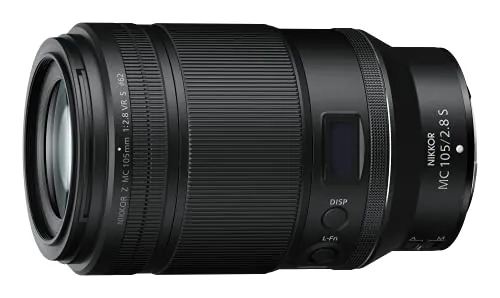
Nikon NIKKOR Z MC 105mm f/2.8 VR S
Black U.S. Nikon Z-mount macro prime, model 20100.
Model NIKKOR Z MC 105mm f/2.8 VR S (U.S. model 20100)
Amazon ASIN B096DHS1BF
Nikon
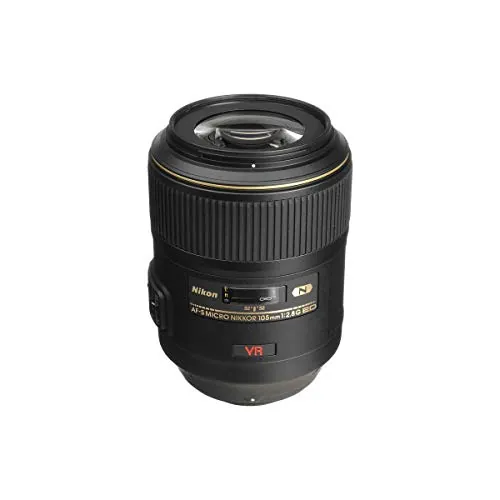
Nikon AF-S VR Micro-Nikkor 105mm f/2.8G IF-ED
Black U.S. F-mount G-type AF-S macro lens, Nikon model 2160 / part JAA630DB.
Model AF-S VR Micro-Nikkor 105mm f/2.8G IF-ED (U.S. model 2160; JAA630DB)
Amazon ASIN B000EOSHGQ
Differences that matter
Sources for Macro reproduction and focus-distance reference
Sources for Physical macro controls
Sources for Bare-lens carry and filter fit
Start with the camera body and adapter path
The NIKKOR Z MC 105mm is a Nikon Z-mount lens and the direct-mount choice for a Z body. The AF-S VR Micro-Nikkor is an F-bayonet, G-type AF-S lens. Nikon's FTZ/FTZ II guide covers F-mount lenses attached to Z cameras and lists autofocus support for AF-S Type G lenses; the AF-S lens's own manual identifies it as that type. Still check the compatibility table for your exact Z body and adapter before assuming every exposure or focusing function you need is available.
On an F-mount DSLR, the AF-S lens uses its matching mount directly. If you already own that lens and are moving to Z, compare keeping it with the adapter against the native Z lens. The dimensions and weights below are bare-lens figures; they do not include the adapter or a complete camera kit.
Plan the actual macro clearance, not only the focus-distance number
Nikon lists both lenses for 1:1 life-size reproduction: 1× for the Z lens and 1:1 in the AF-S manual. Their closest-focus figures are 0.29 m for the Z and 0.314 m for the AF-S. Nikon explicitly references the Z figure from the focal plane; the AF-S manual lists its closest focus at life size. These figures locate the focus limit for the camera/lens system, not the air gap from the front element to your subject.
For a bug, flower, coin or tabletop product, check whether the subject, front element, light, tripod and your own hands can all fit at the magnification you plan to use. Do not select the AF-S based on its 0.024 m larger minimum-focus figure or claim it gives more front clearance; neither source publishes a matched front-element working-distance measurement.
Read the f/2.8 label in a macro context
Both lens names and specifications state a maximum aperture of f/2.8, but a close-focus buyer should not read that as a promise that f/2.8 effective aperture remains available at 1:1. For the Z MC 105mm, Nikon's manual explicitly says the aperture range changes with focus distance: it is f/2.8–f/32 at infinity and f/4.5–f/51 at 0.29 m. It gives the example that a selected f/2.8 at infinity becomes an effective f/4.5 at that closest focus distance.
For the AF-S Micro-Nikkor, its manual lists f/2.8 maximum and 1:1 life-size reproduction, while Nikon's technical note for this exact lens says image brightness at the sensor decreases and effective aperture becomes larger as reproduction ratio increases. That note does not provide the same numeric aperture range as the Z manual. Treat the f/2.8 name as the nominal specification, then check the aperture and exposure shown by the exact camera/lens setup at the magnification you use. This comparison does not infer which is brighter or better at close focus.
Match the documented controls and carry trade-off
The Z lens has a control ring that Nikon says can be assigned to settings such as aperture or exposure compensation, plus a focus-range limiter. The AF-S manual instead documents distinct focus-mode, focus-limit and VR switches and a reproduction-ratio scale. Both pages list a 62mm filter thread, so an existing 62mm filter can be a shared starting point, subject to your hood and macro-lighting arrangement.
Nikon lists the Z lens at approximately 630 g and 140 mm long; the AF-S lens is approximately 720 g and 116 mm long. The Z model is about 90 g lighter but about 24 mm longer by those bare-lens figures. If adapting the F-mount lens to Z, add the adapter when planning carry; this guide does not estimate the combined mass or packed size.
Product details
Nikon NIKKOR Z MC 105mm f/2.8 VR S
- Mount and macro ratio
- Nikon Z mount; maximum reproduction ratio 1× Source
- Minimum focus
- 0.29 m (0.96 ft) from focal plane Source
- Close-focus aperture range
- At 0.29 m, f/4.5–f/51; the lens manual says f/2.8 at infinity becomes effective f/4.5 at 0.29 m Source
- Approximate bare-lens size and mass
- 85 × 140 mm; 630 g Source
- Filter
- 62 mm screw-in Source
Nikon AF-S VR Micro-Nikkor 105mm f/2.8G IF-ED
Before you buy
Community discussions
List everything you would need to mount each lens
Nikon NIKKOR Z MC 105mm f/2.8 VR S
A Nikon Z6 II owner weighed the NIKKOR Z MC 105mm against a used AF-S Micro 105mm for the same camera.
What to check
Compare the lens alone and the lens with the adapter your body requires. Check the supported controls for the exact lens and adapter you would buy.
Common questions
Can I use the AF-S VR Micro-Nikkor 105mm on a Nikon Z camera?
It is an F-mount G-type AF-S lens, so Nikon's FTZ/FTZ II adapter is the documented route to attach it to a Z body. Nikon's compatibility table lists autofocus for AF-S Type G lenses, but confirm your exact Z model and the functions you rely on before purchase.AF-S VR Micro-Nikkor 105mm f/2.8G IF-ED | Nikon USA, model 2160AF-S VR Micro-Nikkor 105mm f/2.8G IF-ED Instruction ManualCompatible F Mount Lenses with FTZ II/FTZ | Nikon
Do both lenses provide 1:1 macro?
Yes. Nikon lists 1× maximum reproduction for the Z MC 105mm, and the AF-S manual specifies 1:1 life-size reproduction. The published close-focus distances are not front-element working-distance measurements, so leave room for the subject and any lighting you use.NIKKOR Z MC 105mm f/2.8 VR S | Nikon USA, model 20100AF-S VR Micro-Nikkor 105mm f/2.8G IF-ED Instruction Manual
Are both lenses f/2.8 at 1:1?
Both are labeled f/2.8 maximum, but do not treat that label as a matched effective aperture at maximum magnification. Nikon's Z-lens manual gives an effective f/4.5 at 0.29 m; Nikon's technical note for the exact AF-S lens says effective aperture increases as reproduction ratio rises but does not give the same close-focus number. Use the exposure information from your camera/lens setup.NIKKOR Z MC 105mm f/2.8 VR S User's Manual and SpecificationsAF-S VR Micro-Nikkor 105mm aperture behavior note | Nikon TC-20E III Instruction Manual
Which controls and filter size differ?
The Z model has an assignable control ring and focus-range limiter; the AF-S manual documents separate focus-mode, focus-limit and VR switches plus a reproduction-ratio scale. Both published models use 62 mm filters.NIKKOR Z MC 105mm f/2.8 VR S | Nikon GlobalAF-S VR Micro-Nikkor 105mm f/2.8G IF-ED Instruction ManualNIKKOR Z MC 105mm f/2.8 VR S | Nikon USA, model 20100
Is the 0.29 m versus 0.314 m difference the usable gap in front of the lens?
No. The Z manual says 0.29 m from the camera focal plane and the AF-S manual lists a closest-focus distance of 0.314 m at life-size. Neither figure directly states front-element clearance. Check actual subject, lens, body, lighting and support positions for the working distance you need.NIKKOR Z MC 105mm f/2.8 VR S User's Manual and SpecificationsAF-S VR Micro-Nikkor 105mm f/2.8G IF-ED Instruction Manual
Sources and scope
This is an exact-model, manufacturer-documentation comparison, not a lens test. Nikon's general FTZ table covers lens types and Z bodies; check the exact camera body and adapter for specific functions. The AF-S lens's published size and mass are lens-only and exclude the adapter. Minimum-focus values are not front-element clearance or a measured usable insect/product working distance. Nikon's Z manual quantifies effective aperture at its closest focus; the cited AF-S sources explain that effective aperture increases with reproduction ratio but do not supply the same numerical close-focus range, so no numeric aperture winner is claimed. No sharpness, autofocus speed, VR effectiveness, bokeh or lighting result is inferred.
- NIKKOR Z MC 105mm f/2.8 VR S | Nikon USA, model 20100
- NIKKOR Z MC 105mm f/2.8 VR S User's Manual and Specifications
- NIKKOR Z MC 105mm f/2.8 VR S | Nikon Global
- AF-S VR Micro-Nikkor 105mm f/2.8G IF-ED | Nikon USA, model 2160
- AF-S VR Micro-Nikkor 105mm f/2.8G IF-ED Instruction Manual
- Compatible F Mount Lenses with FTZ II/FTZ | Nikon
- AF-S VR Micro-Nikkor 105mm aperture behavior note | Nikon TC-20E III Instruction Manual
Related comparisons
Nikon Z MC 105mm f/2.8 VR S vs Z 85mm f/1.8 S: Macro or Portrait Setup
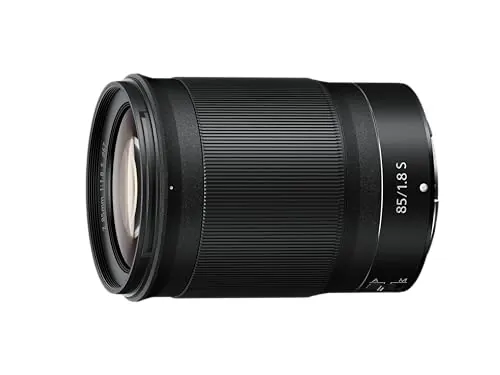
Nikon lists the Z MC 105mm f/2.8 VR S at 1:1 maximum reproduction and the Z 85mm f/1.8 S at 0.12x, so start with the size of subject detail you need. The MC 105mm manual also explains how to set a reproduction ratio and why its effective aperture changes as you focus close: f/2.8 selected at infinity is f/4.5 effective at the 0.29m focus distance. Nikon measures those minimum-focus distances from the focal plane; they are not the space between the lens front and your subject. The 85mm is shorter and lighter by Nikon's lens-only figures, while its listed maximum aperture is f/1.8.
Read comparison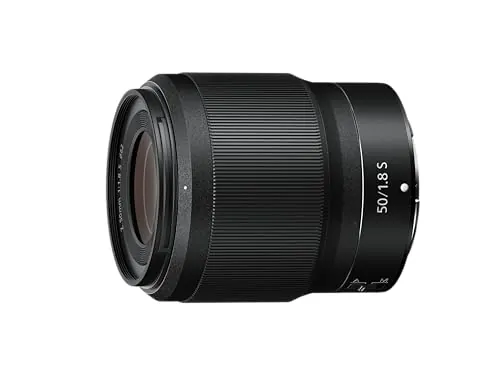
NIKKOR Z 50mm f/1.8 S vs Z 40mm f/2: Framing and Carry Fit
Both exact Nikon Z lenses work on FX and DX bodies, but their published angles of view differ on each format. The 40mm f/2 is shorter and lighter with a 52 mm filter thread; the 50mm f/1.8 S uses 62 mm filters and Nikon lists a hood and case among its supplied accessories. Check the angle for your sensor format and the exact retailer box before buying.
Read comparison