
Products compared
Nikon
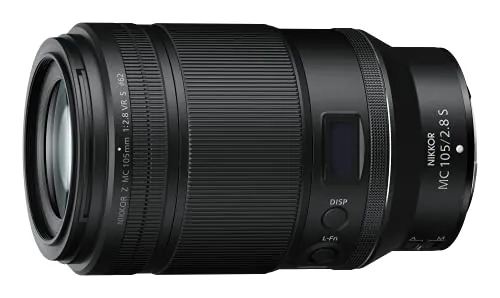
Nikon NIKKOR Z MC 105mm f/2.8 VR S
Nikon Z-mount 105mm FX-format macro prime, U.S. model 20100. Nikon lists 1:1 maximum reproduction; its reference guide describes setting the reproduction ratio on the lens display and a focus-distance-dependent effective aperture.
Model Nikon USA model 20100
Amazon ASIN B096DHS1BF
Nikon
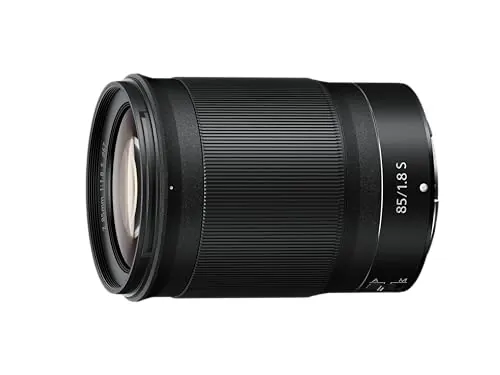
Nikon NIKKOR Z 85mm f/1.8 S
Nikon Z-mount 85mm FX-format prime, U.S. model 20090. Nikon lists f/1.8 maximum aperture, 0.12x maximum reproduction and a 0.8m minimum focus distance from the focal plane.
Model Nikon USA model 20090
Amazon ASIN B07VQWGNHR
Differences that matter
What matters most to you?
Choose a priority to see what it changes.
Sources for Maximum subject reproduction
Sources for Minimum focus distance and real subject clearance
Sources for Maximum aperture for portrait framing
Sources for MC 105mm effective aperture at close focus
Sources for Lens-only carry and filter check
Start with subject size, then check framing distance
For a small subject such as a coin, flower detail or component, the key listed difference is maximum reproduction: Nikon gives 1x for the Z MC 105mm and 0.12x for the Z 85mm. The 105mm is the clearly documented choice between these two if life-size reproduction is required. That does not establish which lens resolves more detail in a photograph.
Nikon lists minimum focus at 0.29m for the MC 105mm and 0.8m for the 85mm, but the values are measured from the focal plane. They are not working distances in front of the lens. Include the hood, lighting and how close you are willing to position the subject, then verify the actual gap with your camera setup.
Use the 105mm lens display for a repeatable macro setup
The MC 105mm reference guide gives a repeatable way to set magnification: switch to manual focus, display the reproduction ratio on the lens, turn the focus ring until the desired ratio is selected, then move the camera forward or back to bring the subject into focus. For example, the guide explains that the displayed 1 corresponds to 1:1 life size and 2 to 1:2 half life size. The panel's displayed focus distance, depth of field and reproduction ratio are approximations, so treat them as setup references rather than precision measurement tools.
At close focus, account for the documented effective-aperture change. Nikon says f/2.8 selected at infinity becomes f/4.5 effective at 0.29m; its aperture range at 0.29m is f/4.5–f/51. This is relevant to exposure planning for the 105mm macro workflow, not a claim that the lens performs worse or better than the 85mm.
Plan portrait composition around focal length and the job
Nikon describes the MC 105mm as also usable for portraits; the 85mm is a shorter focal length, and Nikon lists f/1.8 maximum aperture for that model. From a fixed camera position, 105mm frames more tightly than 85mm. If you switch lenses for a portrait, check the subject distance and framing again rather than expecting the same composition from the same mark on the floor.
The numbers support different setup priorities: 105mm if you want one lens that also provides Nikon-specified 1:1 macro, or 85mm if you prefer its shorter focal length, listed f/1.8 maximum aperture and smaller lens-only dimensions. They do not prove a particular background, subject separation, focus success, low-light result or portrait preference.
Check the assembled kit, filter and subject workspace
Nikon lists the MC 105mm at about 85 × 140mm and 630g, with a 62mm filter attachment. For the 85mm, Nikon lists about 75 × 99mm and 470g with a 67mm screw-in filter size. Use those lens-only values to check your bag and existing filter, then add your body, hood, caps and other accessories.
For close-up work, make the fit check at the actual camera-to-subject position you plan to use. A shorter listed minimum focus distance does not guarantee more working space at the front of the lens. Include your light, tripod or copy stand if used and verify that the composition can be focused without contacting or crowding the subject.
Product details
Nikon NIKKOR Z MC 105mm f/2.8 VR S
- Maximum reproduction and minimum focus
- Maximum reproduction ratio 1x; minimum focus distance 0.29m from the focal plane. Source
- Close-focus aperture behavior
- Nikon gives f/2.8–f/32 at infinity and f/4.5–f/51 at 0.29m; selecting f/2.8 at infinity yields f/4.5 effective at 0.29m. Source
- Lens-only dimensions and mass
- Approx. 85 × 140mm and 630g; dimensions extend from the camera lens-mount flange to the end of the lens. Source
Nikon NIKKOR Z 85mm f/1.8 S
Before you buy
Community discussions
Check framing at the distance you usually shoot
Nikon NIKKOR Z MC 105mm f/2.8 VR S
A Z7 owner shopping for outdoor portraits included the Z MC 105mm and Z 85mm f/1.8 S on their shortlist.
What to check
Think about how far you can stand from your subject and how much of the scene you want in frame. Try both focal lengths before deciding.
Plan for the subjects you would photograph with one lens
Nikon NIKKOR Z MC 105mm f/2.8 VR S
A Z MC 105mm owner uses it for flower close-ups and photographs of their dog.
What to check
List how often you frame small details and how often you photograph larger subjects. Check whether you regularly need the macro lens’s close-focus range.
Common questions
Which lens can reproduce a small subject at life size?
Nikon lists a 1x (1:1) maximum reproduction ratio for the Z MC 105mm f/2.8 VR S. The Z 85mm f/1.8 S is listed at 0.12x, so it does not offer the same specified life-size framing. This states the manufacturer's maximum reproduction figures, not comparative sharpness.Nikon Imaging USA: NIKKOR Z MC 105mm f/2.8 VR S, model 20100Nikon Imaging USA: NIKKOR Z 85mm f/1.8 S, model 20090
Does the 105mm's 0.29m minimum focus distance mean I have 29cm of space in front of the lens?
No. Nikon's reference guide defines the 0.29m minimum focus distance from the focal plane. It is not the distance from the front of the lens to the subject. Set up the camera, lens hood, lights and actual subject at the reproduction ratio you plan to use, then check the remaining working room directly.Nikon Reference Guide: NIKKOR Z MC 105mm f/2.8 VR S
What happens to the 105mm's aperture at its close-focus distance?
Nikon's MC 105mm guide says the aperture range is f/2.8–f/32 at infinity and f/4.5–f/51 at 0.29m. In its example, selecting f/2.8 at infinity gives f/4.5 effective when focus reaches 0.29m. Check the camera's effective-aperture display for your setup; this is not a comparison test against the 85mm.Nikon Reference Guide: NIKKOR Z MC 105mm f/2.8 VR S
Which is easier to carry for portraits?
Nikon's lens-only figures are approximately 470g and 75 × 99mm for the 85mm, versus 630g and 85 × 140mm for the MC 105mm. Add the camera body, caps, hood and filter, then compare your assembled kit; the published lens specifications do not measure comfort or balance.Nikon Reference Guide: NIKKOR Z MC 105mm f/2.8 VR SNikon Imaging USA: NIKKOR Z 85mm f/1.8 S, model 20090
Sources and scope
This guide uses Nikon's published specifications and the MC 105mm reference guide; it is not a hands-on macro, portrait, focus, sharpness, stabilization or low-light test. Minimum focus distance is measured from the focal plane and is not subject-to-front-element working distance. The MC 105mm's cited effective-aperture change is specific to Nikon's stated focus-distance example and is not a head-to-head exposure or image-quality result. Check the working room with your camera, hood and actual subject before relying on close-up clearance.
Related comparisons
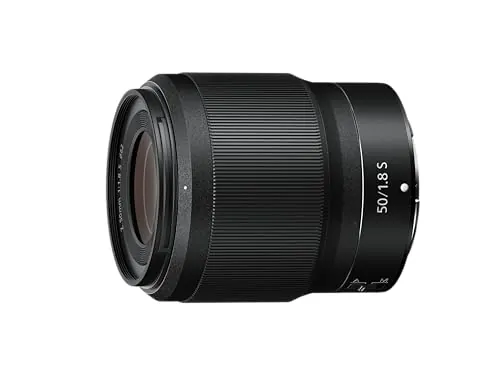
Nikon NIKKOR Z 50mm f/1.8 S vs 85mm f/1.8 S: Framing, Filters and Carry
Both are Nikon Z-mount f/1.8 prime lenses, but the 50mm records a wider listed angle of view and is shorter, lighter and built for a 62mm filter; the 85mm gives a tighter listed angle and uses a 67mm filter. Nikon markets the 85mm toward portraits and similar tighter subjects. Choose by your camera format, subject distance, existing filters and bag space. These published specifications do not establish a sharpness, autofocus or background-rendering winner.
Read comparison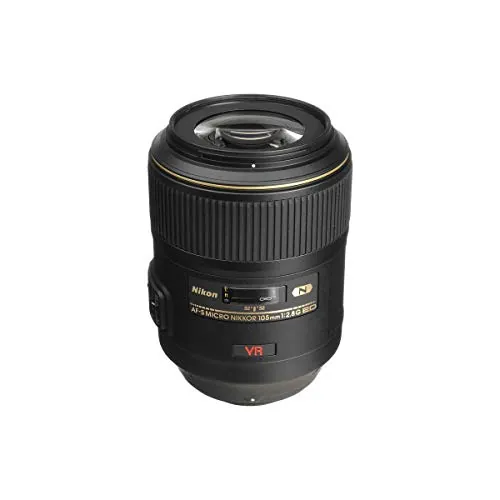
Nikon Z MC 105mm vs AF-S VR Micro-Nikkor 105mm: Mount, Macro Setup and FTZ
The Nikon NIKKOR Z MC 105mm f/2.8 VR S (U.S. model 20100) mounts directly on Z bodies. The AF-S VR Micro-Nikkor 105mm f/2.8G IF-ED (U.S. model 2160) is an F-mount lens; on a compatible Z body it requires Nikon FTZ or FTZ II, while on a compatible F-mount DSLR it mounts directly. Both are listed for life-size 1:1 reproduction and a 62mm filter. Choose by body/adapter path, control layout and macro workflow. Nikon's f/2.8 maximum-aperture labels do not mean f/2.8 effective aperture at close focus.
Read comparison