
Products compared
Nikon
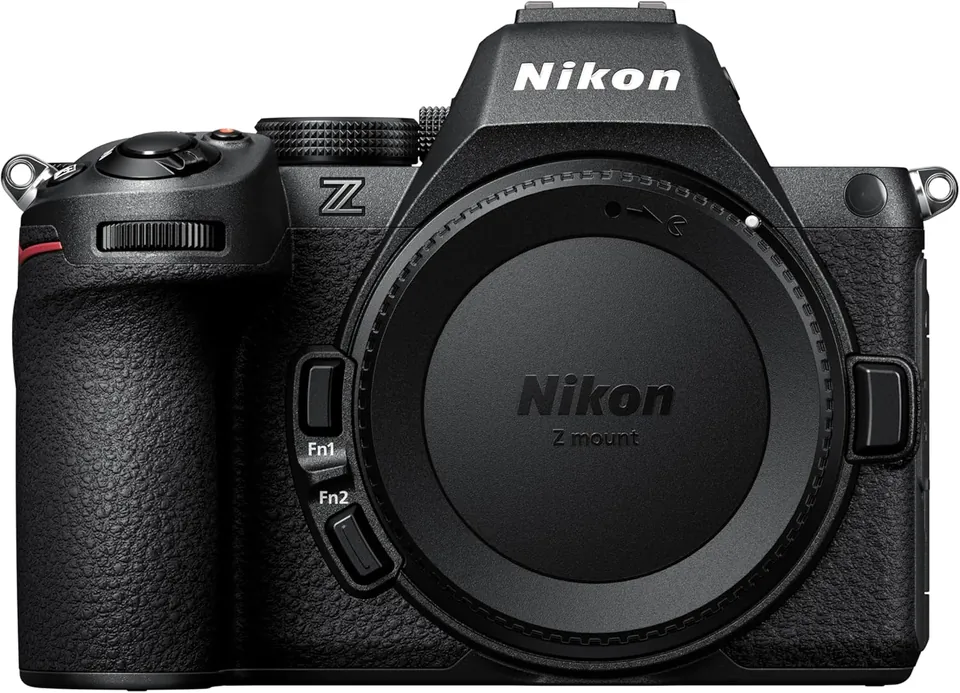
Nikon Z5 II Full-Frame Mirrorless Camera
U.S. model 1680; black camera configuration. Confirm whether a specific retailer listing is body-only or a kit.
Model Z5 II, Nikon model 1680
Amazon ASIN B0F3HJD64Y
Nikon
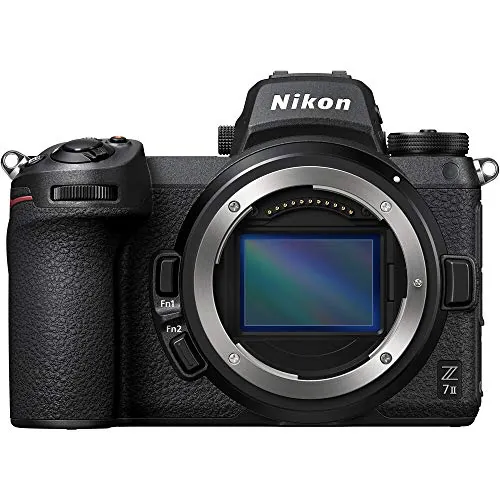
Nikon Z 7II Full-Frame Mirrorless Camera
Nikon USA model 1653; confirm whether a specific retailer listing is body-only or a kit.
Model Z 7II, Nikon model 1653
Amazon ASIN B08L614R6K
Differences that matter
Sources for FX Large still-image output
Start with the still file you need to deliver
Nikon lists 24.5 million effective pixels and a 6,048 × 4,032 FX Large still for Z5 II. Z 7II is listed at 45.7 million effective pixels and 8,256 × 5,504 in FX Large. That gives Z 7II more recorded pixels to draw on for a crop or larger output, but the figures do not tell you which camera will make the better-looking photograph.
Use your actual delivery size as a filter: if the final image and planned crop fit comfortably inside the Z5 II's chosen raster, the higher pixel count may not settle the purchase. If your work repeatedly needs a tighter crop or a larger raster, the Z 7II's listed output may be useful. Recheck the selected aspect ratio, FX/DX area and attached lens before treating either number as your final frame.
Match video modes to the post-production path
Z5 II offers internal 10-bit H.265 and 12-bit N-RAW. Nikon's mode table lists N-RAW FX and DX frame sizes through 30p; 4K UHD/60p is available as H.265, and Nikon says that 4K/60p uses a 1.5× crop. Nikon describes N-RAW as a format intended for later RAW processing and editing on a high-performance computer, so account for both the mode limit and the editing workflow.
Z 7II records internal 4K/60p in 8-bit and Nikon's manual says the image area is FX with actual coverage about 93% of its 4K/30p FX mode. Nikon documents an external-recorder path for 10-bit N-Log or HLG. If 60p and 10-bit are both firm requirements, compare the recorder, connection and file workflow before choosing; do not assume the in-camera 4K/60p mode meets that bit-depth requirement.
Check card inventory before choosing a recording setup
Both bodies have two card slots, but Z5 II uses two SD slots while Z 7II pairs an SD slot with a CFexpress Type B/XQD slot. If you already own cards or readers, check whether the type you have covers each slot and any recording mode you plan to use.
Nikon's recommendations are mode-specific: it recommends V90 SD for Z5 II N-RAW 12-bit, and at least 250 MB/s cards for specified high-rate modes. For Z 7II 4K/60p or 50p, Nikon recommends CFexpress/XQD or UHS Speed Class 3+ SD cards rated at least 250 MB/s. Treat those as Nikon's card recommendations, not a guarantee that a card with a similar label will work for every combination.
Product details
Nikon Z5 II Full-Frame Mirrorless Camera
Nikon model 1680. Nikon specifies 24.5 million effective pixels and an FX Large still size of 6,048 × 4,032. Its internal video formats and frame-rate combinations vary by selected mode.
- Effective pixels and FX Large still size
- 24.5 million effective pixels; FX Large 6,048 × 4,032 Source
- Internal video options
- N-RAW 12-bit, H.265 10-bit/8-bit and H.264 8-bit; N-RAW FX/DX modes are listed up to 30p Source
- Card slots
- Two SD slots; UHS-I and UHS-II SD/SDHC/SDXC supported Source
Nikon Z 7II Full-Frame Mirrorless Camera
Nikon model 1653. Nikon specifies 45.7 million effective pixels and an FX Large still size of 8,256 × 5,504. Its dual slots accept CFexpress Type B/XQD and SD media.
- Effective pixels and FX Large still size
- 45.7 million effective pixels; FX Large 8,256 × 5,504 Source
- Internal 4K/60p
- 4K UHD/60p is 8-bit and restricted to FX format with about 93% of the 4K/30p FX coverage; external recorder is required for Nikon's documented 10-bit N-Log/HLG workflow Source
- Card slots
- Two slots: CFexpress Type B or XQD in one, SD/SDHC/SDXC in the other Source
Before you buy
Community discussions
Planning a second copy on a separate card
Nikon Z5 II Full-Frame Mirrorless Camera
A photographer who moved from a Z50II to a Z5 II reported a card read error on their computer and was glad they had set up a second card.
What to check
Check the media types you would need for both slots on each body. If you use both slots for backups, verify the selected recording mode makes a second copy.
Common questions
Does the Z 7II's 45.7MP specification guarantee better-looking images?
No such result is established here. Nikon lists 45.7 million effective pixels for Z 7II and 24.5 million for Z5 II, and their FX Large outputs differ. Those numbers describe file dimensions and pixel count, not a matched test of image quality, dynamic range, autofocus or low-light results.Nikon Z5II, model 1680: Overview and Technical SpecificationsNikon Z 7II, model 1653: Overview and Technical Specifications
Can the Z5 II record 12-bit N-RAW at 4K/60p?
Nikon's Z5 II frame-size table lists N-RAW 12-bit FX and DX options up to 30p. The 4K UHD/60p option appears under H.265, not N-RAW; Nikon separately describes 4K/60p as using a 1.5× crop.Z5II Reference Guide: Video Frame Size and Rate OptionsNikon Announces the Nikon Z5II
Do both cameras use the same memory cards?
Both have two slots and accept SD cards, but Z5 II uses two SD slots while Z 7II pairs SD with a CFexpress Type B/XQD slot. Nikon's high-rate video card recommendations also differ by mode, so check the card manual for the exact format and frame rate.Nikon Z5II, model 1680: Overview and Technical SpecificationsNikon Z 7II, model 1653: Overview and Technical SpecificationsZ5II Reference Guide: Approved Memory CardsZ 7II/Z 6II Online Manual: Approved Memory Cards
Sources and scope
This guide compares Nikon-published output dimensions, video modes and media requirements. It does not compare image quality, dynamic range, autofocus, noise, reliability or measured recording performance. Crop and file options depend on the selected frame rate, file type, image area and lens. Verify the exact listing and any included lens before purchase.
- Nikon Z5II, model 1680: Overview and Technical Specifications
- Nikon Z 7II, model 1653: Overview and Technical Specifications
- Z5II Reference Guide: Video Frame Size and Rate Options
- Z5II Reference Guide: Video File Types
- Nikon Announces the Nikon Z5II
- Z5II Reference Guide: Approved Memory Cards
- Z 7II/Z 6II Reference Guide: Movies
- Z 7II/Z 6II Online Manual: Approved Memory Cards
Related comparisons
Nikon Z6 III vs Nikon Z 7II: Still Resolution or Internal Video Modes?
Both are Nikon full-frame mirrorless bodies, but their documented output paths differ. Nikon lists the Z 7II at 8256 × 5504 pixels for FX Large stills, versus 6048 × 4032 on the Z6 III. The newer Z6 III adds internal 6K/60p N-RAW in FX and 4K/120p in DX; the Z 7II records internal 4K/60p in 8-bit FX with about 93% of its 4K/30p FX coverage. Choose by the still-file dimensions and exact video deliverable you need, then verify cards and framing before a shoot.
Read comparisonNikon Z6 III vs Z5 II: Choose by Video Format, Crop and Cards
This US body-only comparison is for buyers planning a video workflow. The Nikon Z6 III body (model 1890) records FX 6K/60p N-RAW and FX 4K/60p; its 4K/120p option is fixed to DX area. The Z5 II body (model 1680) offers FX 4K/30p and N-RAW, while its 4K/60p option is also fixed to DX area. The Z6 III pairs SD with CFexpress Type B/XQD; the Z5 II has two SD slots. Choose by the deliverable’s frame rate and framing, then verify cards, slot roles and your preferred on-body controls. This is a specification-based fit guide, not a footage test.
Read comparison