
Products compared
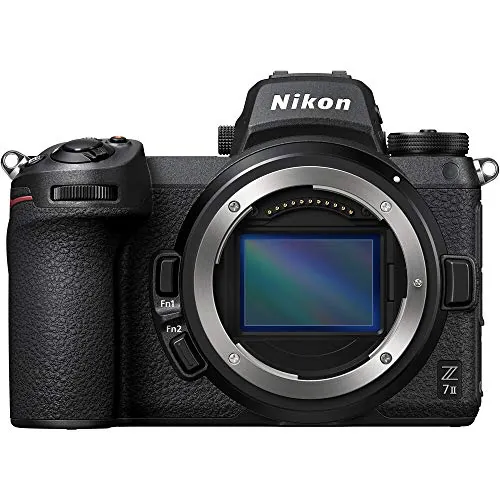
Nikon
Nikon Z 7II Full-Frame Mirrorless Camera Body
Nikon U.S. model 1653; body-only comparison. Nikon lists 45.7 effective megapixels.
Model Z 7II (U.S. model 1653)
Amazon ASIN B08L614R6K
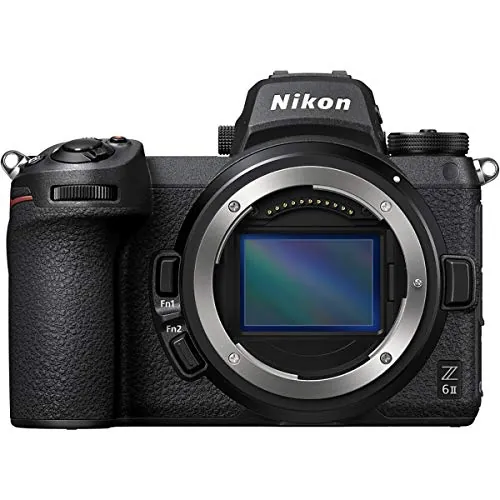
Nikon
Nikon Z 6II Full-Frame Mirrorless Camera Body
Nikon U.S. model 1659; body-only comparison. Nikon lists 24.5 effective megapixels.
Model Z 6II (U.S. model 1659)
Amazon ASIN B08L5Z4355
Differences that matter
Sources for Maximum FX still image size (Large)
Sources for Internal 4K UHD 60p recording area and bit depth
Sources for Card-slot and recording workflow
Start with the file you need to deliver
Nikon lists 45.7 effective megapixels for the Z 7II and 24.5 for the Z 6II. At FX area and Large still size, the manual gives 8256 × 5504 and 6048 × 4024 pixels respectively. Put your final output size and likely reframing into the decision: the Z 7II records more pixels, while the spec alone does not prove better image quality.
The shared card layout makes your current media relevant
Both cameras use one CFexpress Type B/XQD slot and one SD slot. Nikon describes backup and split-file choices for both. Check the exact card types and reader already in your kit; the manual's recommended card performance for 4K UHD 60p/50p is a separate requirement from the slot shape. The matching slot arrangement means card count is not a reason by itself to favor one body.
For 4K60, plan around the recorded area and bit depth
Nikon's manual fixes the Z 7II to FX area at 4K UHD 60p/50p and gives an approximate recorded area of 33.4 × 18.8 mm. The Z 6II uses DX area at those rates, about 23.4 × 13.2 mm. With the same lens and camera position, consider whether the tighter Z 6II framing fits the scene you need; do not treat the mode label as a quality verdict. Both makers' U.S. pages specify 8-bit for internal 4K60, so check that against the delivery specification.
A practical check before you buy
Write down the still dimensions your client, publication or print workflow requires, then note the lens and framing for any 4K60 work. Confirm your existing cards and reader against Nikon's guidance. If the Z 6II's 60p option is important, inspect the installed firmware version; Nikon added 60p/50p in C firmware 1.10 and directs users to update if those menu options are absent. Finally, compare the exact body-only listing and seller terms, since this guide does not verify current bundle contents.
Product details
Nikon Z 7II Full-Frame Mirrorless Camera Body
- Effective pixels
- 45.7 million Source
- Maximum FX still size
- Large: 8256 × 5504 pixels (about 45.4 million recorded pixels) Source
- Card slots
- One CFexpress Type B/XQD slot and one SD slot; Nikon documents backup and separate-file workflows Source
- Internal 4K UHD 60p
- 8-bit; fixed FX image area, with recorded area about 33.4 × 18.8 mm Source
Nikon Z 6II Full-Frame Mirrorless Camera Body
- Effective pixels
- 24.5 million Source
- Maximum FX still size
- Large: 6048 × 4024 pixels (about 24.3 million recorded pixels) Source
- Card slots
- One CFexpress Type B/XQD slot and one SD slot; Nikon documents backup and separate-file workflows Source
- Internal 4K UHD 60p
- 8-bit; fixed DX image area, with recorded area about 23.4 × 13.2 mm; 60p/50p options were added in C firmware 1.10 Source
Before you buy
Community discussions
Planning an in-camera backup before buying a second card
Nikon Z 6II Full-Frame Mirrorless Camera Body
A Z 6II owner who normally saved to SD was considering a CFexpress card for an in-camera backup at important shoots.
What to check
List the cards and readers you already own. Check the supported card types and the second-slot recording options before choosing what to buy.
Common questions
What is the maximum full-frame still image size for each camera?
At FX image area and Large size, Nikon lists 8256 × 5504 pixels for the Z 7II and 6048 × 4024 for the Z 6II. Nikon separately lists their effective pixel counts as 45.7 million and 24.5 million. These numbers help plan output size and cropping; they are not a matched image-quality test.Nikon Z 7II/Z 6II Online Manual — Still Images and image dimensionsNikon Z 7II U.S. product page (model 1653)Nikon Z 6II U.S. product page (model 1659)
Can both cameras record internal 4K UHD at 60p?
Yes. Nikon documents the Z 7II in fixed FX area and the Z 6II in fixed DX area for 4K UHD 60p/50p; the manufacturer pages specify 8-bit for those modes. The recorded area is about 33.4 × 18.8 mm on Z 7II and 23.4 × 13.2 mm on Z 6II. Nikon added the Z 6II options in C firmware 1.10; check its firmware and menu before a shoot.Nikon Z 7II U.S. product page (model 1653)Nikon Z 6II U.S. product page (model 1659)Nikon Z 7II/Z 6II Online Manual — Movies and recorded image areasNikon Z 6II official firmware history
Do the Z 7II and Z 6II use different memory-card formats?
Their broad slot layout is the same: one CFexpress Type B/XQD slot and one SD slot. Nikon's manual supports UHS-I and UHS-II SD cards and gives card guidance for movie recording; check the exact card and reader against Nikon's compatibility notes, especially for 4K60/50 recording.Nikon Z 7II U.S. product page (model 1653)Nikon Z 6II U.S. product page (model 1659)Nikon Z 7II/Z 6II Online Manual — Approved Memory Cards
Sources and scope
This guide compares Nikon U.S. model-specific specifications and operating documentation. It does not report hands-on still, autofocus, noise, dynamic-range, or video-quality testing; more recorded pixels or a different recording area alone does not establish a better-looking result. Body-only package contents and current offer terms must be checked on the exact listing.
- Nikon Z 7II U.S. product page (model 1653)
- Nikon Z 6II U.S. product page (model 1659)
- Nikon Z 7II/Z 6II Online Manual — Still Images and image dimensions
- Nikon Z 7II/Z 6II Online Manual — Movies and recorded image areas
- Nikon Z 7II/Z 6II Online Manual — Approved Memory Cards
- Nikon Z 6II official firmware history
Related comparisons
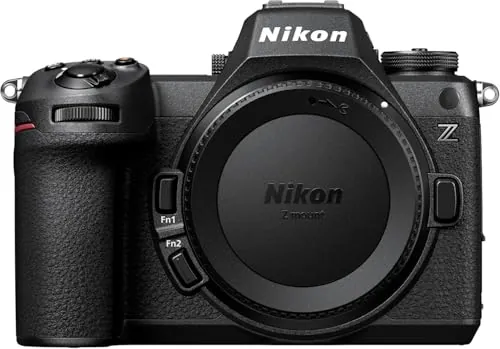
Nikon Z6 III vs Z 6II: Video Modes, Cards and Recorder Setup
This body-only US comparison is about recording workflow, not image quality. Nikon documents 6K/60p internal RAW and 4K/120p on the Z6 III. The Z 6II can record internal 4K/60p after firmware 1.10, but Nikon specifies DX image area and 8-bit; its separate external 10-bit N-Log workflow is documented at 4K/30p, 25p and 24p. Both bodies use CFexpress Type B/XQD plus SD card slots, but their HDMI ports differ: Type A on Z6 III and Type C on Z 6II. Check your exact delivery format, card/reader and recorder cable before changing bodies.
Read comparisonNikon Z6 III vs Nikon Z 7II: Still Resolution or Internal Video Modes?
Both are Nikon full-frame mirrorless bodies, but their documented output paths differ. Nikon lists the Z 7II at 8256 × 5504 pixels for FX Large stills, versus 6048 × 4032 on the Z6 III. The newer Z6 III adds internal 6K/60p N-RAW in FX and 4K/120p in DX; the Z 7II records internal 4K/60p in 8-bit FX with about 93% of its 4K/30p FX coverage. Choose by the still-file dimensions and exact video deliverable you need, then verify cards and framing before a shoot.
Read comparison